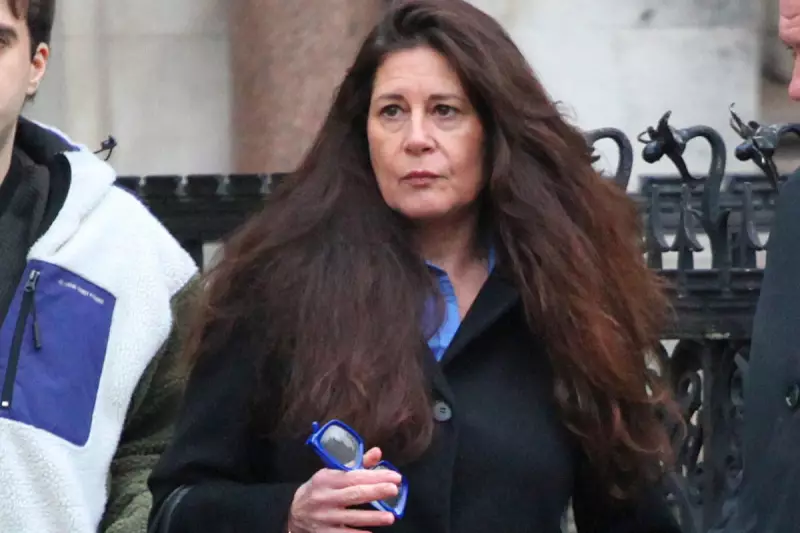
British Airways Flight Attendant Sues for £72,500 After Turbulence Incident
A British Airways flight attendant who suffered serious injuries when she was flung into the air during severe turbulence is suing the airline for £72,500, claiming her pilot flew dangerously close to a storm cloud.
Violent Drop Over Mumbai
Laura Lanigan, 56, from Richmond, Surrey, was working as a crew member on a BA Boeing 777 flight from London Heathrow to Mumbai in June 2019 when the incident occurred. The veteran flight attendant, who had worked for British Airways for nearly three decades, was in the aircraft's galley preparing for landing when the plane experienced what she described as a "violent drop."
The sudden and severe turbulence caused Mrs Lanigan to be hurled into the air before crashing back to the floor, resulting in a fractured knee and dislocated shoulder. To compound her injuries, an unsecured drinks canister then fell on top of her during the chaotic incident.

Claims of Flying in 'Danger Zone'
Mrs Lanigan's legal team argues that the accident was preventable, claiming the pilot should have identified a nearby cumulonimbus cloud - described as a "large, dark storm cloud" - and maintained a safe distance of more than 20 miles as per standard aviation protocol.
"We say that the path that was being taken was sufficiently proximate to the cumulonimbus cloud that it was within the danger zone," stated her barrister, Sinclair Cramsie, during proceedings at Central London County Court.
Mrs Lanigan described the turbulence as "the worst turbulence that she had experienced in circa 30 years flying," with expert weather evidence suggesting the low-altitude bump was likely caused by thermal turbulence from cumulonimbus clouds.
British Airways Defends Pilot Actions
British Airways is vigorously contesting the damages claim, with company barrister Peter Savory telling the court that the pilot made proper observations and saw no visual evidence of a storm cloud. The airline maintains there was nothing on the weather radar to suggest dangerous conditions.
"The defendant's case is quite simply that the pilot made proper observations," Mr Savory stated. "Whatever they saw, the pilots say it wasn't a cumulonimbus. In using the weather radar on the aircraft, they didn't see anything indicative of a cumulonimbus."
The airline's legal team described the incident as "a single bump of turbulence" and "nothing more," noting that crew had been briefed about possible weather conditions before takeoff and that a concerning cyclone had been successfully avoided.
Flight Details and Aftermath
The court heard that the nine-hour flight was approaching its conclusion when Mrs Lanigan suffered her injuries. Passenger seat belt warning signs had been activated due to "mild to moderate" turbulence towards the end of the journey, but shortly before landing, the plane experienced a more extreme jolt.
Mrs Lanigan told the court that although the flight had been too "bumpy" to serve hot drinks during breakfast service, the severe movement that caused her injury was "unexpected." She described trying to move after her fall but being unable to reach a seat as turbulence continued during landing.
"I remember trying to move. It felt like forever," she testified, explaining that as a crew member she used her judgment about when to remain working rather than taking a seat, since staff must continue looking after passengers.
The flight attendant was eventually taken off the plane in a wheelchair following the incident, which has led to ongoing legal proceedings that continue at Central London County Court before Judge David Saunders.