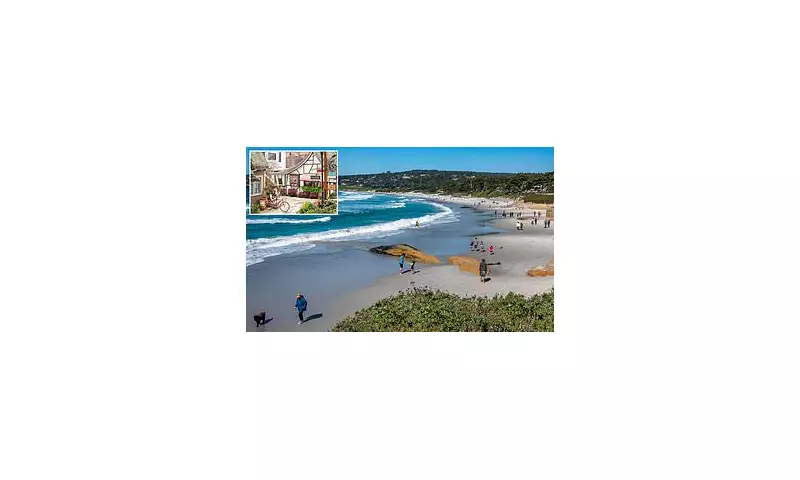
The enchanting coastal community of Carmel-by-the-Sea in California is set to undergo a significant transformation, marking the end of a 109-year tradition. This charming town, nestled near Monterey and famed for its whimsical home names like Seashell and Jelly Haus, will soon introduce conventional street addresses to all properties.
A Safety Imperative for an Ageing Population
This historic change is driven primarily by urgent safety concerns for the town's substantial elderly demographic. With a median age of 69 and over half of its 3,200 residents aged 65 or older, officials grew increasingly worried that the lack of clear addresses was creating unacceptable risks during emergencies.
Karen Ferlito, a former City Council member, highlighted the critical issue to The Los Angeles Times, stating, 'With over half of our residents age 65 or older, [and] no streetlamps, our aging population faces unacceptable risk during nighttime emergencies. We can’t wait for tragedy to force our hand.'

The Old System: A Recipe for Delay
For over a century, residents relied on a descriptive system to direct visitors, delivery drivers, and crucially, emergency services. To locate a home, one would need to provide the street name, cross streets, and then a description of the property itself. This process proved cumbersome and time-consuming, particularly in critical situations.
Police Chief Paul Tomasi explained the operational delay, noting that for fire or medical emergencies, calls are routed to the Monterey County dispatcher. 'If you have a medical emergency or a fire and you need that service, you’re essentially calling 911 twice, which slows the response,' he told The Times. The need to verbally guide an unfamiliar dispatcher to a nameless home added precious minutes to response times.
Practical Challenges and Resident Frustrations
The absence of numerical addresses created daily hurdles beyond emergencies. Council Member Hans Buder described how '[The lack of addresses] just kind of turns these normal chores, like getting insurance or creating a business entity or registering for a Real ID, into, you know, a time-sucking odyssey of frustration.'
Residents shared personal anecdotes of delivery failures. Karen Ferlito recounted a situation where her husband had to sit at the end of their driveway with a sign after a watch failed to arrive after two attempts. The emotional weight of the issue was further underscored by a resident who frequently requested addresses so he could 'die peacefully at his house knowing that someone would find him if he was in trouble.'
Embracing Change While Preserving Charm
The new system, which could be implemented as early as May following a unanimous city council vote, will see homes assigned addresses like 662 Monte Verde Street. This move will finally bring Carmel-by-the-Sea into compliance with the California Fire Code.
Importantly, town officials are keen to preserve the community's unique character. Residents are still encouraged to maintain their beloved home names. The tradition of collecting mail from the local post office will also continue, as the town has no plans to implement home mail delivery.
From Reluctance to Acceptance
The shift has seen evolving attitudes among the populace. Nancy Twomey, a member of the research-focused Address Group, admitted she was initially against the change. However, after participating in the research process, her perspective shifted. She told SF Gate, 'There is no question that our dependencies on technology are increasing at a really high rate. And we can’t kind of close ourself to the world of the internet and all the advantages that some of those tools can bring to our security and the like.'
She observed that even the 'reluctant traditionalists' are now coming on board, recognising the practical benefits for safety and modern living in a town once home to stars like Doris Day and former mayor Clint Eastwood.
As the final map is approved, this iconic Californian town prepares to blend its cherished, storybook past with the practical necessities of the present, ensuring its residents can live both charmingly and safely.