Congo Mine Landslide Tragedy Claims Over 200 Lives in Rebel-Held Territory
A catastrophic landslide at an artisanal coltan mine in eastern Congo has resulted in the deaths of at least 200 people, with grieving families now confronting the harsh reality of loss while some survivors feel compelled to return to the same dangerous work.
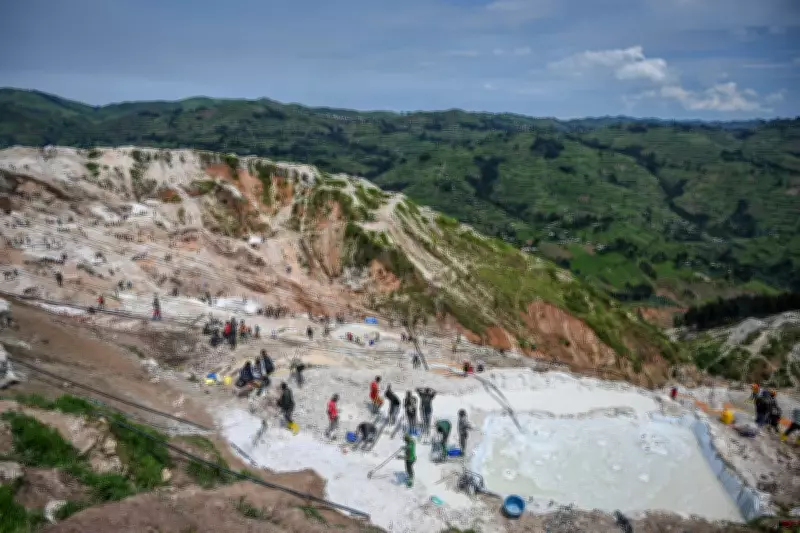
The disaster struck last Wednesday at the Rubaya mining complex, approximately 25 miles west of Goma, following intense seasonal rainfall. The collapse of a network of hand-dug tunnels trapped numerous miners, with an unknown number still missing as recovery efforts continue in the challenging terrain.
Families Mourn Lost Loved Ones Amidst Ongoing Danger
In Goma's Mugunga neighborhood, the family of 39-year-old Bosco Nguvumali Kalabosh gathered to mourn his death. Relatives, neighbors and friends have been visiting the family home since last Thursday, sitting solemnly around a photograph of the deceased miner placed against a wall.

"He was supposed to return to Goma on Thursday," revealed his older brother, Thimothée Kalabosh Nzanga, highlighting the sudden nature of the tragedy that has devastated this mining community.
Kalabosh had worked as a miner for over a decade, continuing a family tradition of artisanal mining passed down through generations. He leaves behind a widow and four young children, the eldest being just five years old, with the family yet to receive any form of compensation for their devastating loss.
Survivors Face Impossible Choice: Risk or Starvation
For those who survived the collapse, the pressure to return to mining work remains overwhelming despite the evident dangers. Tumaini Munguiko, a survivor who came to offer condolences to Kalabosh's family, explained the grim reality facing many in the region.
"Seeing our peers die is very painful. But despite the pain, we are forced to return to the mines to survive," Munguiko stated, revealing he had experienced several similar disasters during his mining career.
"It has almost become normal. We accept it because it is our means of survival. I was saved this time, but I lost five friends and my older brother," he added, illustrating the heartbreaking calculus many miners must make between safety and sustenance.
Systemic Safety Failures in Artisanal Mining Operations
According to former miner Clovis Mafare, who spoke to The Associated Press, the Rubaya mining complex suffers from fundamental safety deficiencies that make such disasters almost inevitable.
"People dig everywhere, without control or safety measures. In a single pit, there can be as many as 500 miners, and because the tunnels run parallel, one collapse can affect many pits at once," Mafare explained, detailing the precarious nature of the mining operations.
The tunnels are dug by hand with limited structural support and no safe evacuation routes in case of collapse. During the rainy season, the clay soils become particularly unstable, creating hazardous conditions that miners must navigate daily.
Mafare also highlighted the lack of insurance for diggers and the complex, lengthy process for families seeking compensation. "They might receive some money for the funerals, but that small amount isn't compensation," he noted, underscoring the financial vulnerability of mining families.
Geopolitical Tensions Surround Strategic Mineral Resources
The Rubaya mines have become a focal point in the ongoing conflict in eastern Congo, changing hands multiple times between government forces and rebel groups. For over a year, the site has been controlled by Rwandan-backed M23 rebels, adding a layer of geopolitical complexity to the humanitarian tragedy.
The mines produce coltan, an ore containing tantalum and niobium - both classified as critical raw materials by major global powers including the United States, European Union, China and Japan. These minerals are essential components in mobile phones, computers, automotive electronics, aircraft engines, missile components and GPS systems.
This strategic importance has drawn thousands of artisanal miners to the region despite the persistent dangers, with many seeking steady income in an area plagued by poverty and chronic insecurity.

Communication Blackout and Official Responses
For the past two weeks, Rubaya has been virtually isolated from the outside world, with no mobile network or reliable internet connection available to residents. Poor infrastructure combined with ongoing conflict has created communication challenges, forcing locals to pay approximately 5,000 Congolese francs (just over $2) for 30 minutes of connection via a private Starlink system.
Congo's government issued a statement expressing solidarity with victims' families while accusing rebels of illegally and unsafely exploiting the region's natural resources and blaming Rwanda for supporting the M23 group. An M23 spokesperson countered by accusing the government of politicizing the tragedy and pointing to similar collapses at government-controlled mines.
As families continue to mourn their losses, survivors like Munguiko and Nzanga face the difficult decision to return to the mines. "I have no choice. Our whole life is there," Munguiko concluded, encapsulating the desperate circumstances that drive people back to dangerous work despite recent tragedy.