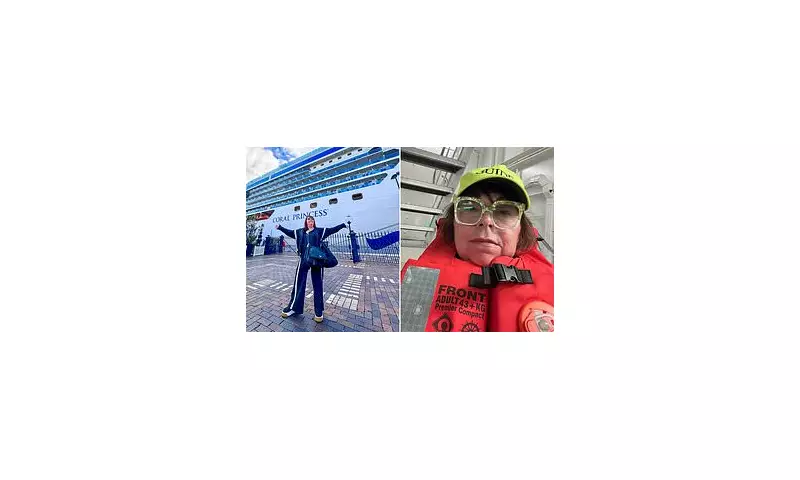
A woman who sold her home to embrace a full-time existence aboard a cruise ship has exposed the startling drawbacks of maritime living, challenging romanticised notions of life on the ocean waves. Sue Barr, originally from New Jersey, spent over three decades building a successful career as a photographer, specialising in editorial, portrait, and fine art work. However, as she entered her sixties, financial pressures began to mount, leading to overwhelming debt that stifled her dreams of travel.
The Breaking Point That Led to a Radical Change
Barr described her financial situation as feeling like "playing whack-a-mole," where any extra money seemed insufficient to make a meaningful impact. Her turning point came when she had saved enough for a trip to Costa Rica, only for her home's furnace to fail, forcing her to cancel the holiday and divert funds to repairs. This incident made her realise that homeownership was no longer serving her aspirations but was instead obstructing her pursuit of happiness.
"That was the moment I realised it was time to sell the house," Barr explained during a conversation with the Daily Mail. "I didn't know what came next, but a friend who worked as a sommelier on cruise ships seemed to have the life I craved." Inspired by this, she began searching for cruise ship employment, and her online algorithms soon presented opportunities for Master Photographer roles, which she promptly applied for.

A Dream Job That Quickly Lost Its Lustre
To her astonishment, Barr secured a contract as the master photographer with Princess Cruises, a premium luxury cruise line. She sold her home and most of her possessions, embarking on what she envisioned as an idyllic new chapter filled with gourmet cuisine, sunny days, and global exploration. However, the reality proved far less glamorous than anticipated.
Her living conditions were a far cry from luxury, as she was assigned a windowless cabin with a bottom bunk so low she couldn't even sit up in bed. Barr noted that crew areas were poorly maintained compared to guest spaces, with malfunctioning mini-fridges, hot water issues that sometimes triggered fire alarms, and random inspections by officers.
The Gruelling Work Schedule and Lack of Freedom
The job itself shifted from creative photography to a sales-focused role with strict branding requirements. Barr was compelled to work seven days a week with minimal downtime, severely limiting her ability to explore the ports of call. "Every third port we were required to stay on board, and even when we were allowed off, we often had to wait hours for guests to disembark before we could explore," she shared.
Her limited free time was heavily controlled, making socialising nearly impossible due to her packed schedule. Additionally, she discovered that life onboard operates on a rigid hierarchy, with a ranking system governing every aspect of daily activities. "Everything is regimented, from how you work to how you move through the ship," Barr stated, highlighting the stark contrast between maritime labour laws and American regulations.
Physical Demands and Culinary Disappointments
Navigating the ship presented its own challenges, as crew members were barred from using guest elevators. The crew elevators were often congested with food carts and cleaning staff, forcing Barr to power-walk up and down ten to fifteen flights of stairs multiple times daily while carrying camera gear in business casual attire.
The culinary experience also fell short of expectations, with food designed for an older demographic and minimal seasoning. "After a while, everything on the buffet started to taste the same," Barr admitted, underscoring the monotony of onboard dining.
Financial Upsides and a Reality Check
Despite these hardships, Barr acknowledged one significant advantage: her financial situation improved dramatically. With room, board, and food provided free of charge, her largest expense—her home—was eliminated. Although the pay was modest, her spending was minimal, offering a pathway to financial stability.

Reflecting on her experience, Barr offered candid advice to those considering a similar move. "My advice to anyone considering this life is to go in clear-eyed. This isn't a vacation," she urged. "It's hard, structured work. But if you need financial stability, can live small and don't mind giving up control, it can be a viable reset."
Her story serves as a poignant reminder that while life at sea may appear enchanting from afar, it demands considerable sacrifices and adaptability, revealing a world far removed from the carefree voyages advertised to passengers.