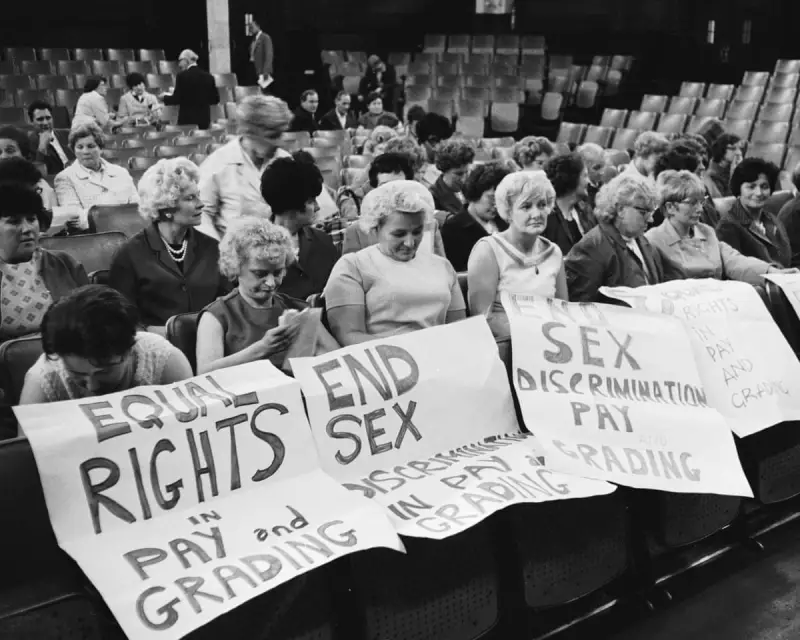
In the summer of 1968, a pivotal moment in the history of British labour and women's rights unfolded on the outskirts of London. The event, often simplistically remembered as a fight for equal pay, had a more nuanced and profound objective at its heart.
The Spark: A Matter of Grading, Not Just Gender
On 28 June 1968, striking female sewing machinists from the Ford plant in Dagenham attended a significant women's conference on equal rights in industry. The gathering was held at Friends House in Euston, London. This public act highlighted a deep-seated grievance that had brought Ford's mighty production lines to a standstill.
The core issue was not solely about matching men's wages. The 187 sewing machinists were outraged by a new job grading structure introduced by the Ford Motor Company in 1967. The company had evaluated their complex work, sewing car seat covers, as grade B (unskilled). The women vehemently believed their intricate work was at least semi-skilled and deserved the higher grade C.

Castle's Intervention and a Temporary Resolution
The strike's impact was so severe that it compelled the government to act. Barbara Castle, the then Secretary of State for Employment and Productivity, was brought in to negotiate with the strikers. Following her intervention, the machinists agreed to return to work.
The settlement offered them an increase in pay, which would raise their earnings from 85% to 100% of the male grade B rate over two years. While this addressed a pay disparity, it crucially did not resolve the fundamental grievance: the official recognition of their work's skill level.
The Final Victory: Justice Delayed Until 1984
The machinists' fight for proper recognition was far from over. It took another strike in 1984, which again halted Ford's production, for their case to be fully and fairly addressed.
This time, they lodged a claim under the new Equal Value (Amendment) Regulations of 1983. A panel convened by the Advisory, Conciliation and Arbitration Service (ACAS) examined their case. The panel unanimously concluded that the machinists' job was indeed skilled work, evaluating it as grade C.
This 1984 ruling was the ultimate victory. After a 16-year struggle, the Dagenham sewing machinists finally won formal recognition for the skill and value of their work. Their perseverance laid crucial groundwork for broader equality legislation and reshaped the conversation around women's labour in industrial Britain.