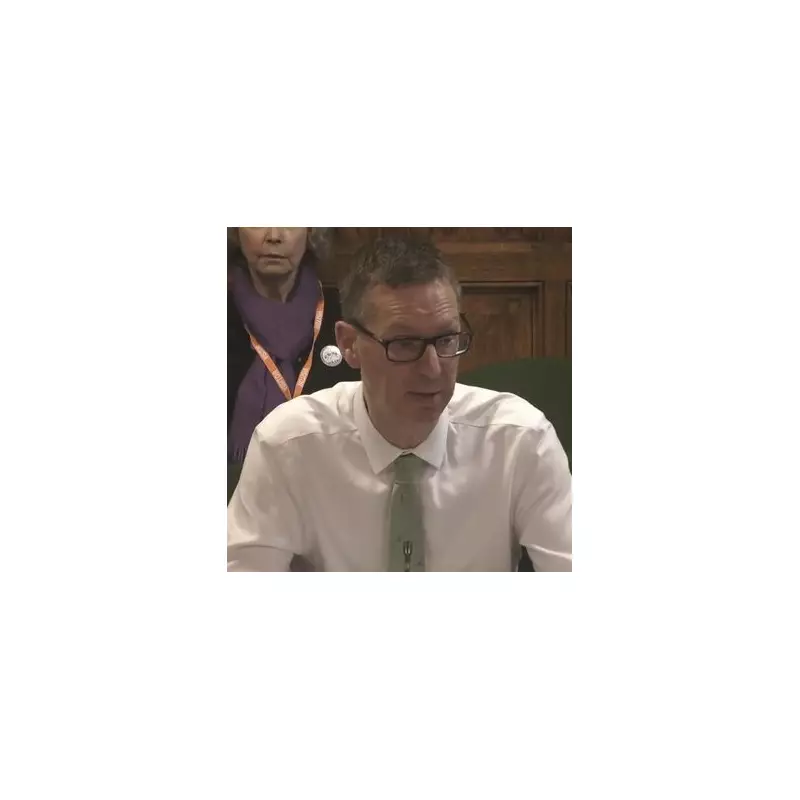
The Department for Work and Pensions has provided comprehensive details about sweeping changes to the benefits system, with senior officials confirming ambitious targets to dramatically reduce incorrect payments across Universal Credit and other welfare programmes.
Parliamentary Scrutiny Reveals Scale of Challenge
High-ranking DWP leaders appeared before the Work and Pensions Committee to answer detailed questions about their department's operations and future plans. The session provided unprecedented insight into the government's strategy for overhauling benefit administration and tackling systemic payment errors.
Universal Credit Overpayments Under Microscope
The committee focused particularly on Universal Credit, where the overpayment rate reached 9.7 percent during the 2024/2025 tax year. This resulted in more than £6.3 billion being wrongfully distributed to claimants, representing a staggering threefold increase from the £1.7 billion recorded in 2019/2020.

DWP permanent secretary Peter Schofield provided historical context, explaining that Universal Credit overpayments stood at 9.4 percent before the pandemic, peaked at 14.7 percent in 2021/2022, before decreasing to the current 9.7 percent level.
"That's My Target" - Schofield's Ambitious Vision
Mr Schofield expressed strong optimism about future improvements, telling MPs: "The OBR as part of their forecast in the Autumn produced their assessment of where all our measures would get us going forward. That showed us going down with fraud and error in Universal Credit going down to 4.7 percent in 2028/2029. That's well below the pre-pandemic level."
The senior civil servant outlined even broader ambitions for the entire welfare system: "If you apply that across the whole benefits system, then that would take fraud and error in the entire benefits system to 2.8 percent, which on a comparable basis is lower than it has ever been before. That is what I'm aiming for, that is my target."
New Legislative Powers and Bank Checks
Fresh legislation has recently become law, introducing a comprehensive suite of new anti-fraud measures that will fundamentally change how benefits are administered. The most significant development involves new powers for the DWP to conduct bank account checks to verify the eligibility of Universal Credit claimants.
These enhanced eligibility verification procedures will also apply to recipients of Pension Credit and Employment and Support Allowance, with potential extension to other benefits in the future. Mr Schofield emphasised: "We've also had the Budget, new measures announced, we've had the act of Parliament, that gives us new tools."
Targeted Reviews and Resource Allocation
The DWP is implementing a targeted case review process that involves officials examining claimants' entitlement, payments, and unreported changes in circumstances. Approximately £300 million has been allocated to this initiative for the current year, with around 4,000 agents dedicated to reviewing cases.
Mr Schofield explained the department's strategic approach: "Where we've focused on fraud and error really hard - and we've started with Universal Credit because it was the biggest area of loss we've seen big improvements - we can now turn our attention to Pension Credit as well."
Broader Benefit System Improvements
Beyond Universal Credit, the DWP leaders discussed their comprehensive efforts to ensure all claimants receive correct benefit amounts. This includes ongoing work to rectify historical problems with state pension underpayments, as well as addressing overpayments for other benefits such as Carer's Allowance.
The committee showed particular interest in hearing about the department's multi-faceted approach to combating incorrect and fraudulent payments across the entire welfare system. Mr Schofield assured MPs that tackling fraud and error represents "a big focus" for the department, building on measures implemented since the pandemic.

The permanent secretary detailed the department's strategic evolution: "Coming out of the pandemic, we set out a tackling fraud and error plan, to really drive down fraud and error, and a number of measures that we took." This comprehensive approach now appears to be yielding measurable results while setting the stage for further improvements through newly acquired legislative powers.