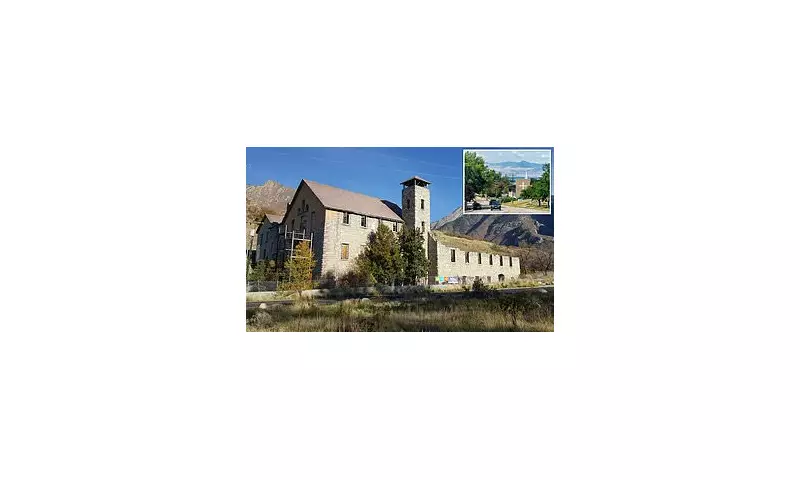
Community Fury Over Cottonwood Paper Mill Demolition Proposal
Residents in Utah are expressing profound anger and disappointment over controversial plans to demolish the historic Cottonwood Paper Mill, a landmark that has stood at the mouth of Big Cottonwood Canyon for more than a century. The proposal to replace the structure with what locals describe as boring and bland alternatives has sparked significant backlash during a recent public meeting.
A Century of History Under Threat
The Cottonwood Paper Mill holds a special place in Utah's industrial heritage, having been declared a historic site by the Daughters of the Utah Pioneers back in 1966 and listed on the prestigious National Register of Historic Places. For generations, this structure has served as both a physical landmark and a symbolic anchor point for the community, representing the area's paper-making history and providing employment for local residents during its operational years.
Despite its historical significance, the mill has stood vacant for many years, with owner Doug Shelby now seeking permission to raze the building entirely. In his demolition application, Shelby has characterized the structure as an attractive nuisance, an imminent danger to public safety, and structurally unsalvageable. He contends that the building's decline stems not from neglect by current or previous owners, but from fundamental flaws in its original construction materials and design.

Safety Concerns Versus Historical Value
Supporting documentation for the demolition request paints a concerning picture of the mill's current condition. A 2022 review cited in the application declared rehabilitation or preservation efforts to be infeasible and fiscally irresponsible, noting that the structure lacks proper foundation, features walls at risk of collapse, and presents multiple hazards. The building was deemed unfit for use as far back as 2005 due to earthquake safety code violations.
According to a more recent 2024 building report, a complete overhaul of the historic mill could exceed $45 million in costs. Additionally, representatives for the owner have reported multiple incidents daily of trespassing and vandalism at the site, describing it as a popular location for break-ins. Attorney Dan Hammer, representing Shelby, even acknowledged his own teenage trespassing at the mill, stating I snuck over the fence when I was in high school and went there.
Community Backlash and Emotional Testimony
During Wednesday's Cottonwood Heights Planning Commission meeting, residents voiced passionate opposition to the demolition plans. Alan Brown called the proposal a very sad day for the community and criticized what he perceived as blatant disregard for historic preservation. It means something to the city, Brown emphasized, highlighting the emotional connection many residents feel toward the structure.
Neighbor Shawna Bland, who lives adjacent to the old mill, placed responsibility for the building's deteriorated state squarely on the owners. They let it for years just become dilapidated, she stated, noting extensive graffiti covering the structure. Meanwhile, Mike Young, who resides just over a thousand feet from the historic site, described the mill as evidence of the lack of stewardship that the owners have given their property over decades.
Young, whose son recently moved into a home nearby, expressed personal investment in the matter, saying We have much of our life savings invested and this is personal. He acknowledged that demolition might represent an initial step in the future development of our canyon, but like many residents, he expressed disappointment with the proposed replacement options.
Inadequate Replacement Proposals
The owner has suggested three mitigation options to address environmental and cultural impacts of demolition, but residents have largely dismissed these as insufficient. The proposals include:

- Preserving unspecified elements of the mill for incorporation into the city's proposed center, with architects and engineers determining how to honor the structure
- Installing a commemorative bronze plaque using blocks from the mill, an idea pitched by the Daughters of Utah Pioneers
- Creating a digital history of the mill through the Cottonwood Heights Historic Society
Robyn Taylor-Granada articulated the sentiment of many preservation advocates, telling ABC4 I want to see it reused and revitalized so it can be part of the community, instead of something people just remember. Brandy Strand, executive director of Preservation Utah, suggested to Building Salt Lake that the mill didn't need complete restoration to perfection to remain useful, advocating instead for adaptive reuse that would serve contemporary community needs.
Regulatory Context and Next Steps
It's important to note that inclusion on the National Register of Historic Places does not prevent demolition, as demonstrated by Nebraska's Jobbers Canyon Historic District, which was listed in 1986 but largely demolished by 1989. The Cottonwood Heights Planning Commission will continue discussions about the mill's future during its next public meeting scheduled for March 4.
The final decision rests with the city council, though regulatory requirements mandate at least a one-year waiting period before any demolition could proceed. Notably, the current proposal does not specify what would ultimately replace the historic mill site, leaving residents uncertain about the future character of their community landmark.