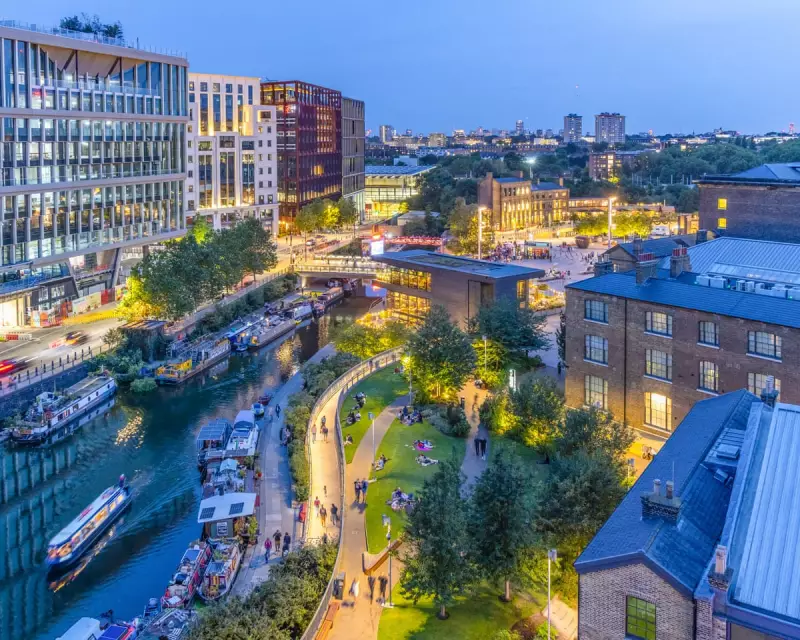
The government has unveiled draft planning guidelines that aim to make green spaces, heritage preservation, and community amenities the standard for all new housing developments across England. The proposals highlight successful projects like King's Cross in London as potential models for future neighbourhoods.
Vision for Community-Focused Developments
According to the newly published Design and Placemaking Planning Practice Guidance, new housing should ideally feature shops, schools, public transport links, and possibly pubs within easy reach. The guidelines emphasise the importance of integrating green spaces and access to nature while preserving local heritage.
The document points to several exemplary developments that embody this vision. King's Cross in London is highlighted as a prime example, where former industrial buildings have been transformed into shops, restaurants, and public spaces. The area now blends social and private housing with schools and care homes, all situated near a revitalised canal and nature reserve.

Regional Success Stories
Other developments praised in the guidelines include Temple Gardens near Bath, where a vacant Grade II-listed pub was restored and reopened alongside new homes. The Ministry of Housing, Communities and Local Government describes this as "the kind of community-focused development these reforms will deliver."
The guidelines note: "Bath shows how neighbourhood identity, shaped by local history, culture and landscape is reflected in building types, facades and architectural details. This allows people to connect to their local heritage."
Additional developments mentioned as positive examples include Kampus in Manchester and the Malings in Newcastle upon Tyne, both celebrated for their community-oriented approach to urban design.
Environmental Considerations and Criticisms
The guidelines also recommend incorporating provisions for nature, such as swift bricks and hedgehog highways, alongside protections against flooding that is becoming more prevalent due to the climate crisis.
However, a significant concern raised by environmental experts is that these guidelines lack mandatory requirements, meaning developers could potentially ignore them entirely. This voluntary approach has drawn criticism from green building advocates who argue stronger regulations are needed.
Expert Responses and Calls for Stronger Action
Anna Hollyman, co-head of policy and places at the UK Green Building Council, acknowledged that the plans recognise "the urgent need to raise the bar for new builds and to integrate liveability with climate mitigation, resilience and nature."
However, she added: "Yet in light of the stark national security assessment on global ecosystems published yesterday, this is clearly not enough." Hollyman called for a more systemic government response that treats biodiversity and climate resilience as critical infrastructure for every neighbourhood.
Rachel Hackett, a planning and development manager at the Wildlife Trusts charity, echoed these concerns, stating: "We need a bolder, more ambitious plan that cements nature firmly into the housebuilding rules. Nature-friendly design measures like swift bricks and hedgehog highways will only make a significant difference for wildlife if they are mandatory for all developments."
Implementation and Future Regulations
The guidelines are intended to help local authorities establish their own design codes for housing in their areas. In theory, developers who adhere to these standards should find it easier to obtain planning permission for their projects.
Housing and Planning Minister Matthew Pennycook commented: "Exemplary development should be the norm, not the exception, so that more communities feel the benefits of new development and welcome it. These standards will help ensure new homes and neighbourhoods are attractive, well-connected, sustainable and built to last."
The government has yet to publish its regulations governing how new houses are constructed, which are expected to make solar panels, heat pumps, and high insulation standards mandatory for nearly all new homes. The long-delayed Future Homes Standard is now anticipated "early this year."