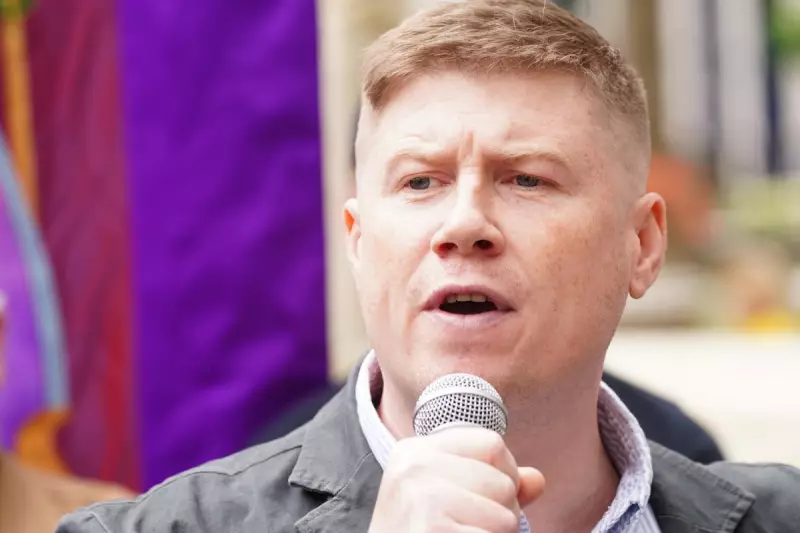
Freshly uncovered footage has placed a senior UK trade union leader at a controversial event in Russian-occupied Ukraine, where he was seen holding a Communist flag alongside individuals chanting pro-Russia slogans.
2015 Donbas Visit Under Scrutiny
Eddie Dempsey, the General Secretary of the National Union of Rail, Maritime and Transport Workers (RMT), travelled to the Donbas region of Ukraine in 2015. This was one year after the initial Russian invasion and annexation of Crimea. The trip, organised by the Anti-Fascist Forum, was described by Mr Dempsey as a "humanitarian convoy".
However, video obtained by The Telegraph reveals a different dimension to the journey. The footage shows Mr Dempsey exiting a coach and filming Aleksey Mozgovoy, the founder of the pro-Russian separatist Prizrak Brigade. Mozgovoy, who died just two weeks after the visit, can be heard criticising the Ukrainian government. In one sequence, Dempsey is seen holding a red Communist Party flag while those around him chant Russian slogans including "United, we will never be defeated" and "The Donbas, the tomb of fascism".

Union's Firm Defence and Ongoing Controversy
An RMT spokesperson provided a robust defence of Mr Dempsey's actions. They stated his decision to join the convoy was "motivated by the appalling House of Trade Unions fire in 2014" in Odesa, which killed at least 42 people following clashes involving far-right nationalists.
The spokesperson emphatically said: "Mr Dempsey has at no time supported Russia's invasion of Ukraine and has repeatedly called for a peaceful resolution to the conflict." They also highlighted his lifelong anti-fascist and anti-racist record.
Further images from the trip show the union leader posing in front of a statue of Lenin and wearing a T-shirt depicting the coat of arms of Novorossiya – a historical Russian imperial province that encompassed parts of modern southern and eastern Ukraine.
Political Repercussions and Union Policy
The emergence of this 2015 footage adds context to the RMT's recent contentious political stance on Ukraine. Under Mr Dempsey's leadership, the union last year passed a motion calling for the UK to cease military aid to Ukraine, accusing Britain of a "belligerent role in international relations".
This position, combined with the visuals from his visit to the occupied territory, is likely to intensify scrutiny of the union's foreign policy alignments and its leader's past associations. The incident underscores the complex and often controversial intersection of trade union activism and international geopolitical conflicts.