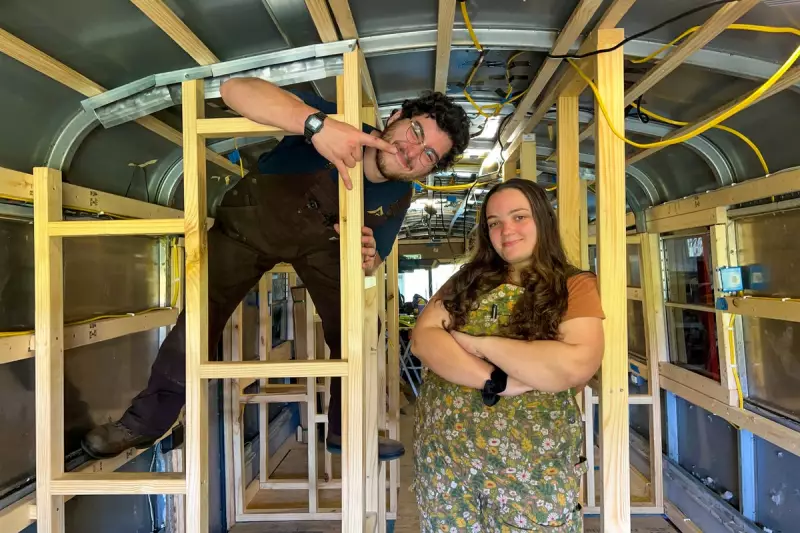
School Bus Conversions: The DIY Housing Solution for Millennials and Gen Z
As the cost of homeownership continues to climb across the United Kingdom, a growing number of young people are turning to unconventional DIY solutions. The "skoolie" movement, which involves transforming decommissioned school buses into full-time living spaces, has gained significant traction as an alternative to traditional housing.
The Rise of Mobile Minimalism
Forget conventional mortgages and rental agreements. Young Britons are increasingly trading traditional housing for the bright yellow school buses many remember from their childhood years. This growing trend represents a deliberate choice to embrace both minimalist living and financial freedom while navigating the challenging property market.
The skoolie phenomenon has gained momentum through social media platforms, with thousands documenting their conversion projects on TikTok, YouTube and Reddit. These digital communities frame bus life as both a cheaper alternative to homeownership and a pathway to greater personal freedom.

Economic Drivers Behind the Movement
The surge in skoolie conversions comes as many Generation Z and millennial Britons face unprecedented housing challenges. With property prices continuing to outpace wage growth and affordable housing remaining scarce, unconventional living arrangements have become increasingly attractive.
While exact UK comparisons vary, the fundamental economic pressures mirror those driving similar movements internationally. Young people are seeking creative solutions to the housing affordability crisis, with converted vehicles offering both mobility and reduced living costs.
Real Stories from the Road
For those who have embraced skoolie living, the reality proves far more complex than social media portrayals suggest. Most converts didn't initially plan to transform school buses into permanent homes, with many beginning their journey simply seeking a different way of living or greater geographical flexibility.
Obtaining suitable buses has varied considerably between individuals. Some have found vehicles through online marketplaces, while others have participated in government auctions for decommissioned transport. The initial purchase typically represents just the beginning of a substantial renovation project.
The Conversion Challenge
Regardless of their different paths into skoolie living, most converts share one common reality: few possess the technical expertise required to transform a vehicle into a safe, functional home. The conversion process typically begins with completely gutting the bus interior, removing seats, flooring, insulation and windows before beginning reconstruction.
Most skoolie builders turn to online communities and digital resources to bridge their knowledge gaps. YouTube tutorials, specialised forums and shared experiences within the skoolie community provide essential guidance for those undertaking these complex projects.
Practical Realities of Mobile Living
While the romanticised version of bus life circulates widely online, those who have actually lived the experience emphasise the practical challenges. Parking represents one of the most significant obstacles, with converted buses requiring careful consideration of road conditions, turning spaces and legal parking options.
Professional commitments can further complicate skoolie living, particularly for those needing to remain within specific geographical areas for work. The mobility that initially attracts many to bus life can become restrictive when combined with employment requirements.
Beyond the Social Media Glamour
Skoolie owners consistently emphasise that their lifestyle demands resilience, technical problem-solving and constant adaptation. While social media often portrays converted bus living as carefree and inexpensive, the reality involves substantial upfront investment, ongoing maintenance and logistical challenges.
Despite these difficulties, many skoolie residents describe their experience as profoundly valuable. Beyond providing housing solutions, the process of converting and living in a mobile home often becomes an experiment in independence that reshapes how individuals think about space, stability and personal freedom.

The skoolie movement represents more than just an alternative housing solution. It reflects a broader cultural shift among younger generations who are redefining what constitutes a home and exploring creative responses to economic pressures that traditional systems have failed to address adequately.