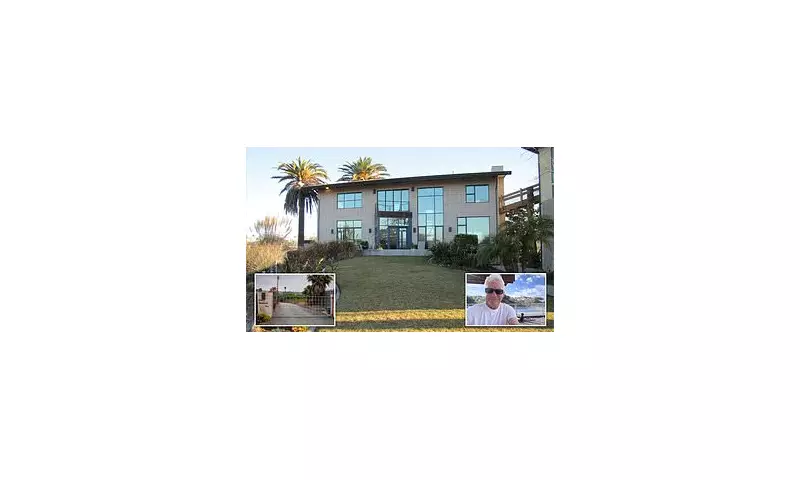
A wealthy California businessman is mounting a fierce legal challenge against a staggering $2.4 million fine imposed by state regulators over alterations to his luxury coastal mansion, including a pickleball court and gates allegedly blocking public beach access.
The Core of the Multi-Million Dollar Dispute
John Levy, 73, has filed a lawsuit against the California Coastal Commission, the powerful state agency that governs shoreline use. The commission levied the massive penalty, accusing Levy of violating the Coastal Act at his $2.8 million home near Carlsbad, just north of San Diego. The property borders the scenic Buena Vista Lagoon and the North Pacific Ocean.
The agency claims Levy illegally installed gates that prohibited public access to the beach and water, and constructed a pickleball court without the required permission. Furthermore, they allege he removed vegetation within a protected wetland buffer zone, harming shorebird habitat.

Levy's Defence and Allegations of Bias
In his complaint, Levy argues the commission is violating his constitutional due process rights, acting with "an inherent and unconstitutional bias." He contends the body functions as "prosecutor, judge, and beneficiary of the penalties it imposes." Levy is seeking a writ of mandate to cancel the orders, reimbursement of legal costs, and other relief.
Regarding the beach access, Levy states his pedestrian gate was "lawfully locked" to prevent trespassing and that opening his vehicle gate would itself be unlawful. He asserts that only the local beach homeowners association has the authority to manage that entry point. The commission, however, insists Levy "refused" to comply for years, forcing their intervention. They also claim the current access is insufficient for disabled beachgoers and want a new path from Mountain View Drive, which Levy has rejected.
The Pickleball Court and Vegetation Flashpoints
The pickleball court has become a significant point of contention. Levy alleges his contractor "mistakenly believed that no permit was required" to build it and that he is now seeking an after-the-fact permit. He strongly denies the court was built in a protected setback area.
On the charge of clearing vegetation, Levy counters that the issue was "resolved" as the plants grew back. He claims the disturbance in 2013 was caused by guests parking cars without his knowledge.
The mansion was rented out from 2009 to approximately 2016 and occasionally hosted weddings. Levy, who now resides in New Zealand, has not rented it since. His attorneys from the Pacific Legal Foundation have framed the case as an example of regulatory overreach. Lawyer Jeremy Talcott criticised the commission for imposing multi-million dollar penalties "with virtually none of the procedural protections" of a standard court hearing.
The commission's enforcement counsel, Rob Moddelmog, defended the action, stating they had been asking for compliance for years and were forced to issue the order to compel Levy to address the violations. Levy has vowed to continue his fight, calling the enforcement "politically charged" and a threat to private property rights, and has indicated a readiness to take the case to Superior Court. The state agency has several months to formally respond to the lawsuit.