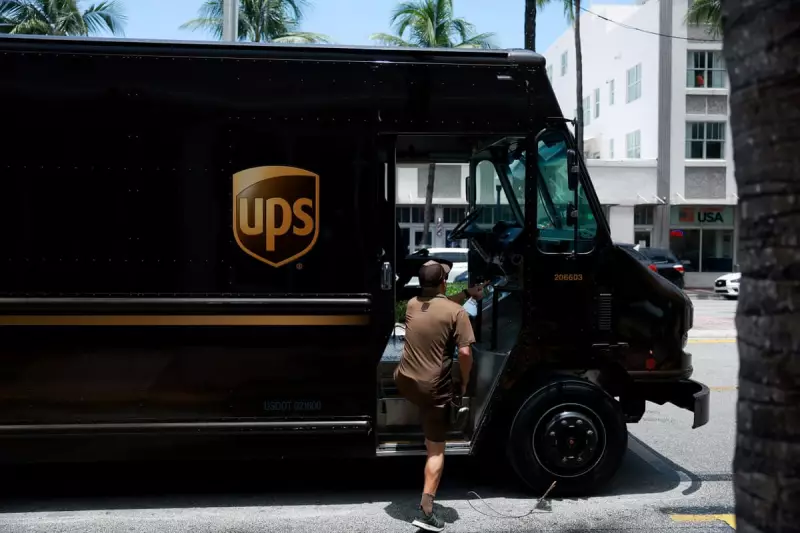
United Parcel Service (UPS) has revealed plans to cut up to 30,000 operational jobs in 2026, as part of a broader strategy to accelerate its financial turnaround. This announcement adds to the significant workforce reductions the company implemented last year, underscoring its shift away from low-profit deliveries, particularly those for Amazon.
Strategic Shift Towards Higher Margins
The delivery giant is pivoting towards higher-margin shipments to rebuild profitability and stabilise volumes. This move comes in response to the end of US duty-free, "de minimis" low-value e-commerce shipments, which have impacted the industry. UPS has described its business with Amazon, its largest customer, as "extraordinarily dilutive" to margins, leading to a decision to slash millions of such deliveries.
Financial Performance and Forecasts
In a positive development, UPS beat Wall Street estimates for its quarterly results during the crucial holiday period. The company has forecast a surprise rise in annual revenue, projecting 2026 revenue to reach $89.7 billion, compared to $88.7 billion reported last year. This exceeds analyst expectations, which averaged $87.94 billion according to LSEG data.

Implementation of Job Reductions
The workforce reduction will be managed through attrition, and UPS plans to offer a second voluntary separation program for full-time drivers, as stated by Chief Financial Officer Brian Dykes on a post-earnings call. This follows earlier cost-cutting measures, including the elimination of 48,000 jobs, driver buyouts, and the closure of 93 facilities in 2025, all aimed at achieving about $3 billion in savings by 2026.
Operational Challenges and Adjustments
UPS has faced operational hurdles, including a non-cash, after-tax charge of $137 million related to writing off its MD-11 fleet following a deadly crash in November. The company confirmed it completed the retirement of this fleet in the fourth quarter. Despite these challenges, UPS shares were down only 1% in premarket trading, indicating a measured market response to the news.
Overall, UPS's restructuring efforts highlight the evolving dynamics in the delivery and e-commerce sectors, as companies adapt to changing market conditions and competitive pressures.