Australia Confronts Potential Fuel Rationing Amid Export Threats
The federal government has consistently dismissed any immediate likelihood of fuel rationing or restrictions, yet Energy Minister Chris Bowen indicated on Friday that such measures could not be entirely ruled out. This statement comes as energy experts issue stark warnings that major suppliers like Malaysia and South Korea might reduce exports to Australia to meet their own domestic fuel requirements.
Export Cuts Loom as Suppliers Prioritise Local Markets
Malaysia, Australia's primary source of crude oil, has signalled through its embassy that it would "prioritise our own needs" before considering overseas demand. While Minister Bowen stated he was unaware of any specific cuts to Australian imports from Malaysia, analysts deem the warning profoundly significant.
Kevin Morrison, an energy finance analyst at the Institute for Energy Economics and Financial Analysis, emphasised the gravity of the situation. "The Malaysian official's warnings are really significant, considering Australia's heavy dependence on the country for petroleum products, especially crude oil for our domestic refineries," he explained.

Morrison further highlighted the risk that other regional suppliers, including top provider South Korea, might follow suit. "South Korea, Japan, and India are all very vulnerable due to their reliance on oil imports. If crude supplies decline with no end to conflict in sight, they would obviously prioritise their domestic markets over exports," he added.
Government Holds Rationing Powers as Shortages Emerge
Minister Bowen reiterated that rationing is not currently imminent but acknowledged governments possess "powers" to implement such measures if fuel supplies face severe disruption. "That's not been contemplated as something we need to do in the immediate future. Of course, governments have powers should supply be very severely disrupted," Bowen told a press conference.
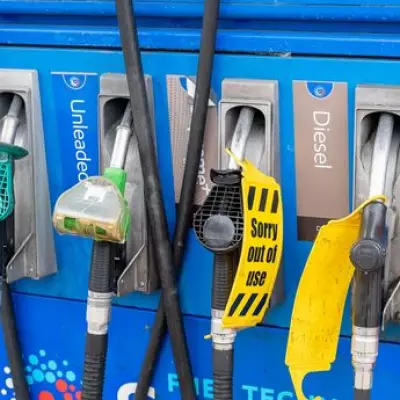
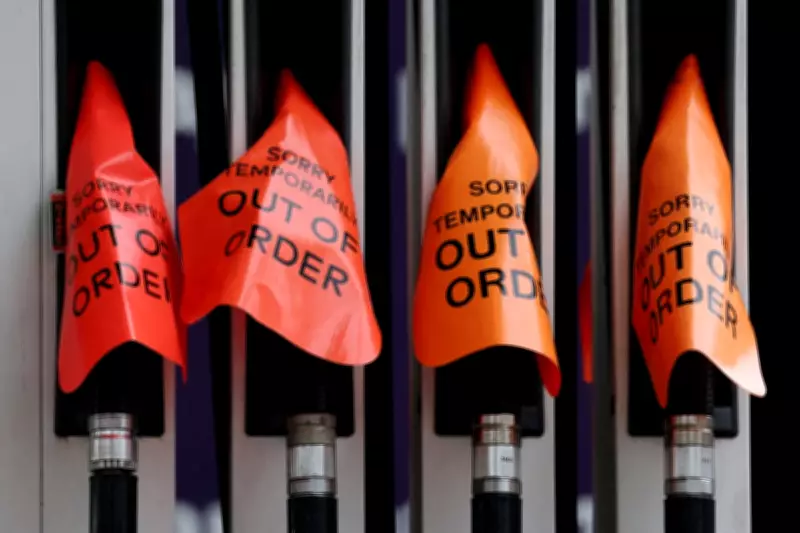
He attributed current pressures to a surge in demand rather than supply chain failure, urging Australians to "buy as much fuel as you need – not more, not less." However, concrete shortages are already evident. New South Wales Premier Chris Minns reported that at least 107 petrol stations in the state had no diesel, with 42 completely out of fuel, out of roughly 3,000 statewide.
States Activate Contingency Plans and Data Collection
In response, NSW Energy Minister Penny Sharpe has written to major fuel companies requesting historical data on storage, stocks, sales, and future forecasts. "This will help us deal with emerging distribution issues and plan for future interventions, should they become necessary," Sharpe stated.
Premier Minns confirmed preparations for all eventualities, including prioritising fuel for hospitals, emergency services, and generators. Under NSW legislation, an "energy supply emergency" can be declared if fuel supply is significantly disrupted, granting the energy minister extensive control over distribution.
Other states have also responded. Queensland Premier David Crisafulli highlighted the critical need for fuel in decentralised regions, while South Australia and Western Australia assured citizens that supplies are secured until at least May, framing the issue as a distribution challenge rather than a supply problem.
Political Divisions Surface Over Long-Term Solutions
The crisis has ignited political debate. Federal Nationals leader Matt Canavan advocated for opening oil drilling in the Great Australian Bight, echoing Donald Trump's "drill baby drill" slogan. He argued that without new domestic oil projects, Australia remains at the mercy of international conflicts.
In contrast, Minister Bowen emphasised that any resource extraction would require stringent environmental approvals, stating the government would only consider it in appropriate areas. This division underscores the broader policy tensions surrounding energy security and environmental sustainability.

Analysts Stress Vulnerability of Global Supply Chains
Vinh Thai, a professor of logistics and supply chain management at RMIT University, reinforced concerns, noting that countries like India and Vietnam are also anxious about maintaining sufficient fuel for their citizens and industries. "Of course a government has to first act in the interests of their own citizens. If India needs to reserve energy for manufacturing, they may impose export bans, directly impacting Australian imports," Thai explained.
As the situation evolves, the federal and state governments continue to monitor supplies closely, balancing public reassurance with contingency planning. The prospect of fuel rationing, while not immediate, remains a tangible possibility if export cuts materialise or demand escalates further.