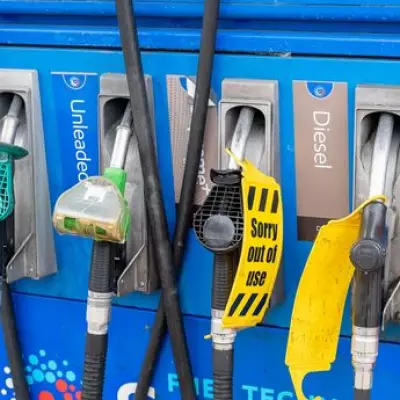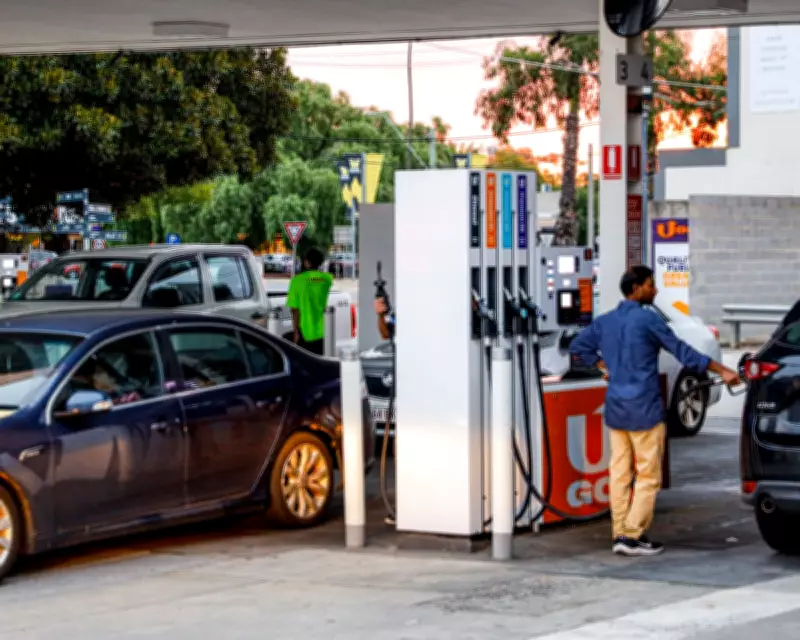
Australia's Fuel Crisis: Could Rationing Return Amid Global Oil Shock?
Australia depends on imports for a staggering 90% of its liquid fuel requirements, with the majority of petrol, diesel, and jet fuel sourced from refineries across Asia. This heavy reliance has thrust the nation into a precarious position as global oil prices skyrocket, driven by the ongoing US-Israel war on Iran and the closure of the Strait of Hormuz, a critical chokepoint for 20% of the world's oil trade.
Historical Context: When Rationing Last Occurred
The last instance of forced fuel rationing in Australia dates back to mid-1979, during the second oil crisis of that decade, which followed the Iranian revolution. Authorities implemented a system where motorists with odd-numbered licence plates could refuel on specific days, alternating with those holding even-numbered plates. However, this measure was not triggered by a global energy shock but rather by a strike at the now-defunct Caltex Kurnell oil refinery.
According to a 2014 research paper by Acil Allen Consulting, despite the disruptions and chaos of the 1970s, "there were no interruptions to supply to or in Australia." Kevin Morrison, an energy finance analyst at the Institute for Energy Economics and Financial Analysis, highlights a stark contrast: "We were largely self-sufficient in the 1970s," he notes, underscoring that Australia's fuel supplies were far more secure then compared to today's import-dependent landscape.

Current Crisis: Why Rationing Is Back on the Table
The current global energy shock is unprecedented, with the International Energy Agency labeling it the most extraordinary in history. Luke Yeaman, chief economist at CBA, points out that this crisis differs from past events in two key ways: the scale of supply disruptions and the lack of spare capacity. "The famous 1970s oil shocks affected only around 5–7% of global oil supply; today around 15% is at risk," Yeaman explains. "In the 1970s, global spare oil capacity was around 5–8%; today it is lower at around 3–5%."
Analysts predict that these disruptions will persist for months, not weeks, raising the specter of fuel rationing as a potential response. Morrison warns, "Oil is about 40% of the total energy we consume each year. We keep talking about how we are such a key global supplier of coal and gas, but we have neglected our own energy security. That has been a real failure of policy."
Government Response and Contingency Plans
The federal government has focused on reassuring the public, with Climate Change and Energy Minister Chris Bowen stating that fuel shipments are "locked in" for the immediate future. However, he acknowledged uncertainty beyond late April, depending on international developments. The government has released 20% of national fuel reserves to address supply gaps in regional areas and is exploring contingencies with states, fuel companies, and motoring groups.
Bowen emphasized that rationing "has not been contemplated as something we need to do in the immediate future," adding, "We're not there and we're not close to there." Despite this, the release of reserves leaves Australia with less than a month's supply, heightening concerns.
Alternative Measures to Mitigate the Crisis
Beyond rationing, several options are being considered to manage demand and ease pressure on fuel supplies:

- Work-from-Home Initiatives: Encouraging remote work to reduce commuting and fuel consumption.
- Public Transport Incentives: The Greens have advocated for free public transport during the crisis to lower reliance on private vehicles.
- Speed Reductions and Carpooling: The world's energy watchdog recommends lowering highway speeds and promoting carpooling.
- International Precedents: Countries like Sri Lanka and the Philippines have implemented four-day working weeks for public servants to cut petrol use.
Shane Oliver, AMP's chief economist, urges proactive measures: "We should be moving now to curtail demand in ways that are least disruptive to business – like encouraging or allowing workers who can to work from home, encouraging more reliance on public transport, and encouraging greater use of E10 fuel. The longer we leave it the greater the risk of real disruption."
As Australia navigates this energy crisis, the debate over fuel security intensifies, with historical lessons from the 1970s and wartime rationing serving as cautionary tales. The nation's heavy import reliance underscores the urgent need for robust policy responses to safeguard against future shocks.