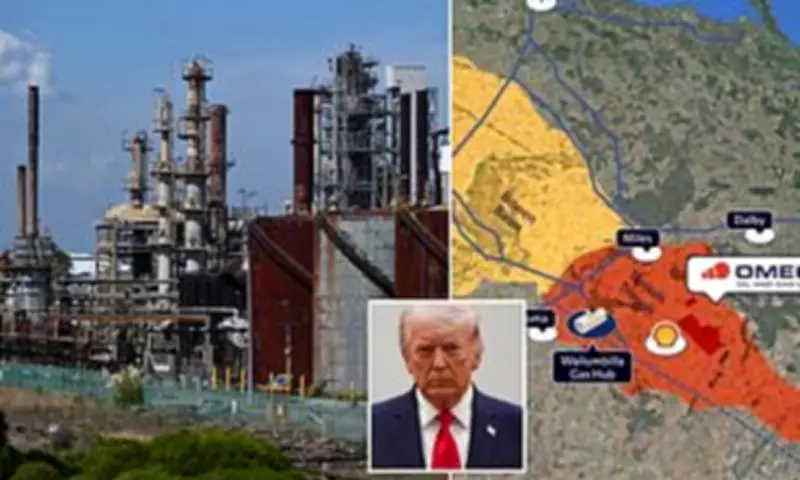
Australia's Fuel Self-Sufficiency Dream Crushed by Limited Reserves and High Costs
Australia is highly unlikely to ever become fuel self-sufficient, and even if it briefly produced enough petrol and diesel to meet domestic demand, prices could surge rather than fall. Experts have revealed that if all of Australia's crude oil reserves were refined locally, it would not yield the types of fuel the nation depends on and would only last approximately two years.
Global Conflicts Expose Fuel Vulnerabilities
The recent attacks by the US and Israel on Iran have triggered severe fuel shortages, with critical supply lines through the Strait of Hormuz effectively blocked. In response, former US President Donald Trump issued a blunt warning to allies, urging them to 'get your own oil' and be prepared to 'fight for yourself'. On his Truth Social network, Trump advised countries seeking jet fuel to 'build up some delayed courage' and venture into the Strait themselves, highlighting a shift in US support amid escalating tensions.
Domestic Production and Refining Challenges
The Middle East conflict and rising fuel prices have prompted Australians to question whether the country could produce sufficient petrol, diesel, and jet fuel independently. However, Australia imports most of its fuel from Asian refineries, which source crude oil from the Middle East. Domestic oil production has plummeted by about 90% since 2000, reaching only 69 million barrels last year, with over 90% of that exported to Asian refineries.

Ben Jefferson, an associate at the Grattan Institute's Energy and Climate Change Program, explained in a LinkedIn post that Australia's chances of fuel self-reliance are slim. 'We export crude oil, why shouldn't we use it locally? There are several reasons we can't become self-reliant on our own oil. The main one is that we don't have very much of it,' he wrote. Australia consumes 2,238 petajoules of petroleum products annually, but its proven and provable crude oil reserves total just 1,475 petajoules, with contingent resources at 3,316 petajoules. Jefferson noted that even with a 100% yield, these resources would be exhausted in two years.
Refining Capacity and Economic Hurdles
Australia also faces significant refining challenges. The country had eight major refineries in 2005, but high transport and labour costs led to a shift towards importing refined products. Today, only two refineries remain: Ampol's facility in Brisbane and Viva Energy's in Geelong. Jefferson emphasized that to meet annual consumption, Australia would need to triple its refining capacity, requiring new refineries costing between $5 billion and $15 billion each. 'Operating smaller refineries at a higher cost than international operators would likely mean the price of fuel was passed on to consumers,' he said.
Furthermore, existing refineries cannot process Australian crude or condensate without costly retrofits. Condensate reserves, which can be used for petrol, are insufficient for diesel production and would last only about six years. Tony Wood, a senior fellow at Grattan, added that Australia would need four new refineries, each with the combined capacity of current ones, to meet domestic demand, but technical limitations and high costs make this strategy 'doomed to failure.'
Alternative Solutions and Future Prospects
In light of these barriers, experts suggest focusing on alternatives to oil-derived products and increasing fuel reserves. Australia has unconventional shale oil reserves that could last 35 years at current consumption rates, but these are unproven and would require massive investment. Samantha McCulloch, chief executive of Australian Energy Producers, advocates for developing new oil basins, such as Queensland's Taroom Trough, to enhance fuel security. 'New supply is key to putting downward pressure on prices and ensuring reliable, affordable energy,' she stated.
In the short term, Australia's fuel excise has been halved for three months to alleviate costs. However, in the longer term, the nation appears set to continue relying on overseas supplies for its petrol, diesel, and aviation fuel, underscoring the persistent challenges in achieving energy independence.