Energy Markets in Turmoil as Iran-Israel Conflict Escalates
Global energy markets have been thrown into disarray following a significant escalation in hostilities between Iran and Israel, with attacks on key gasfields triggering sharp rises in oil and gas prices. The month-ahead UK wholesale gas price surged by 23% on Thursday morning to reach 172p a therm, marking its highest level since August 2022. This dramatic increase comes as fears mount over prolonged disruption to international energy supplies.
Price Surges and Market Reactions
Brent crude, the global oil benchmark, experienced an 8% jump to $116 per barrel, bringing the total increase to 60% since the US-Israeli war on Iran commenced on 28 February. European gas prices followed suit, with the Dutch wholesale gas price climbing 24% to €68 per megawatt hour, reaching its highest point since the end of December 2022.
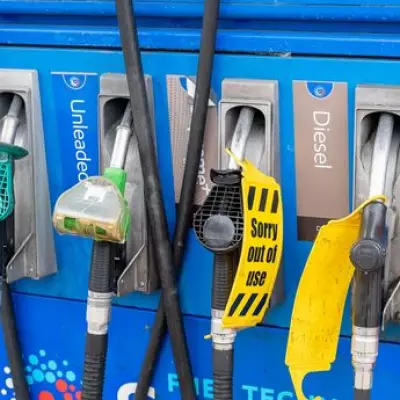
UK gas prices have more than doubled since late February, a development that is likely to drive up household energy bills significantly. While current prices remain well below the peak of 800p a therm briefly touched in March 2022, the recent escalation has created renewed anxiety among consumers and traders alike.

Infrastructure Attacks and Regional Impact
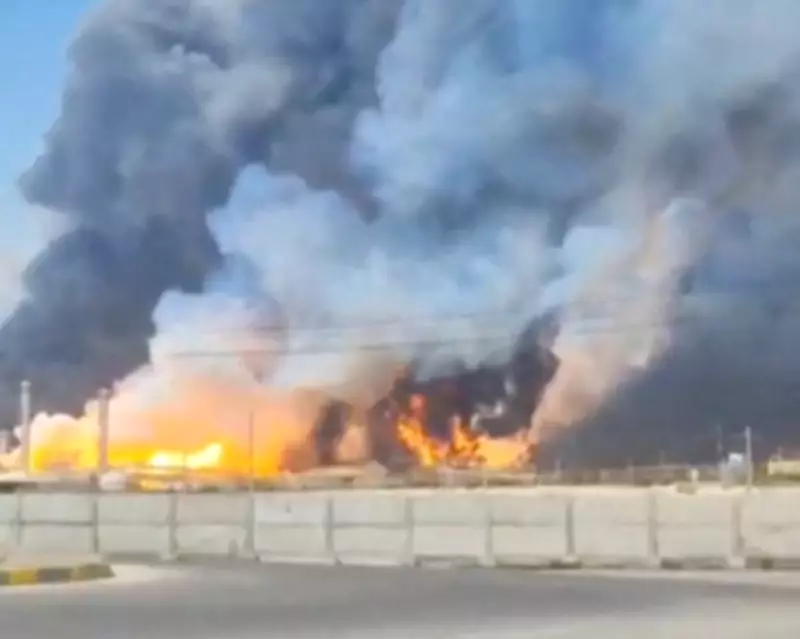
The price surges are directly linked to military actions targeting critical energy infrastructure. Israel's attack on Iran's South Pars gasfield prompted retaliatory strikes by Tehran, which caused substantial damage to Ras Laffan – the world's largest liquefied natural gas facility located in Qatar. QatarEnergy, the state-run company, confirmed that the facility suffered "extensive damage" from these strikes.
Shell reported that the attack on Ras Laffan also damaged its Pearl gas-to-liquids facility, though the fire was quickly extinguished without reported injuries. Meanwhile, authorities in Abu Dhabi were forced to shut down operations at both the Habshan gas facility and Bab oilfield due to Iranian attacks.
Broader Economic Consequences
The conflict's impact has extended far beyond energy markets, triggering a sharp sell-off across global stock exchanges. Japan's Nikkei index tumbled 3.4%, South Korea's Kospi fell 2.7%, and Hong Kong's Hang Seng dropped 2%. European markets followed Asia's downward trend, with the UK's FTSE 100 declining nearly 3%, Germany's Dax down 2.3%, and France's CAC decreasing 2.2% by early afternoon trading.
Susannah Streeter, chief investment strategist at Wealth Club, warned that "fears of a sustained energy shock have resurfaced" and noted that "the prospect of a longer, more drawn-out conflict is in sharp focus, as both sides ratchet up attacks on energy infrastructure." She highlighted Europe's particular vulnerability due to its reliance on LNG exports from Qatar as countries continue weaning themselves off Russian energy dependence.
Inflationary Pressures and Policy Implications
The energy price surge has raised serious concerns about inflationary effects. Thomas Pugh, chief economist at RSM UK, cautioned that higher energy prices could trigger "second-round inflationary effects," potentially pushing inflation toward 5% if prices remain elevated into the summer. Such a scenario would make interest rate hikes "much more likely" from the Bank of England.
Financial markets have already adjusted their expectations, with money markets now fully pricing in a quarter-point interest rate increase by July, which would return the Bank rate to 4%. This represents a significant shift from previous expectations of rate cuts.
Transportation and Security Concerns
The conflict has also raised security concerns for maritime transportation in the region. Richard Meade, editor-in-chief of Lloyd's List Intelligence, noted that Israel's strike on an operational gasfield marked "a significant shift" that "expands the risk profile" for the entire Middle East Gulf energy and logistics system.
Meade warned that anchored ships are "not as safe as thought" and cautioned against assuming that payments or national affiliations guarantee safe passage through contested waters. Several governments, including China, India, Pakistan, Iraq, and Malaysia, have reportedly entered direct negotiations with Iran to secure safe passage for their vessels.

Industry Warnings and Future Outlook
Energy consultancy Wood Mackenzie indicated that attacks on Qatar's LNG hub have "fundamentally altered the global gas market outlook," with initial expectations of a two-month disruption likely to be exceeded. Each additional month of disruption removes approximately 1.5% from annual global LNG availability.
The aviation industry is already feeling the effects, with major European airlines including Lufthansa warning that fares will increase if the fuel price surge persists for months. Airlines are urging passengers to book early as fuel hedging strategies begin to unwind.
Donald Trump has further escalated tensions by threatening to "massively blow up" South Pars completely if Iran attacks Qatar again, adding another layer of uncertainty to an already volatile situation. As the conflict continues to evolve, energy markets remain on edge, with traders closely monitoring developments that could further disrupt global energy supplies.