UK Faces Energy Rationing Threat as Middle East Crisis Escalates
British citizens have been issued a stark warning to prepare for potential energy rationing as the escalating Middle East crisis threatens global oil supplies. Former Downing Street energy specialist Nick Butler has cautioned that Iran's effective closure of the Strait of Hormuz will create significant worldwide oil shortages within weeks.
Expert Analysis of Impending Crisis
Professor Butler, who served as an energy adviser to former Prime Minister Gordon Brown and spent nearly thirty years working for BP, emphasized that government ministers must urgently prepare to protect the economy's most vital sectors. His sobering assessment comes as politicians across the political spectrum scramble to mitigate the impact of the ongoing US-Israeli conflict with Iran.
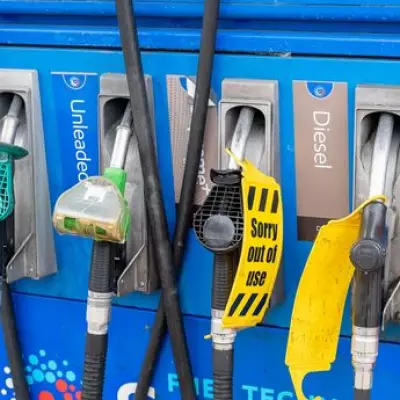
The situation has already begun affecting consumers, with pump prices soaring dramatically across the country. There is growing concern that the energy price cap could see another substantial increase when it undergoes its scheduled adjustment in July, placing additional financial pressure on households already struggling with cost-of-living challenges.

Global Supply Chain Disruption
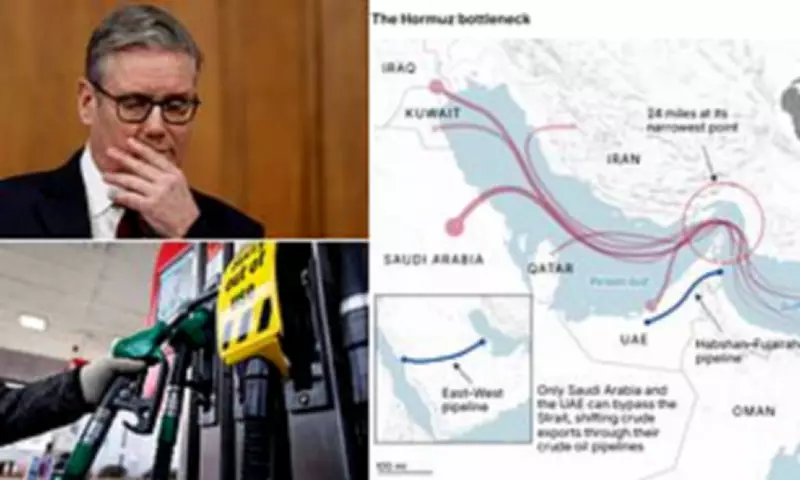
The Strait of Hormuz, through which approximately twenty percent of global oil supplies typically flow, has seen virtually no tanker traffic for more than a week according to Professor Butler's analysis. Speaking on BBC Radio 4's Today programme, the energy expert stated: "We've now had more than a week of almost no tankers coming out of Hormuz, that will continue this week... And there will be a real shortage, a physical shortage of supply in a few weeks' time."
He further explained that governments, including the UK administration, must now prepare for "a significant shortfall of supply over the next two months" with the duration of the disruption remaining uncertain.
Practical Implications for British Citizens
When questioned about the practical consequences for ordinary Britons, Professor Butler, currently a visiting professor at King's College London, responded unequivocally: "I think it does mean a form of rationing." He drew parallels with the 2000 tanker drivers dispute, noting that "oil and gas supplies are absolutely crucial to the running of the economy and you can't bring on new supplies quickly."
The energy specialist outlined a prioritization approach, stating: "In the short-term, we have to look at what supply we have and look at the crucial sectors, the health service, food supply, hospitals, those are key elements that must be protected. And beyond that, it is then for the government to decide how to ration what is left if we get to that situation."
International Dimensions and Market Volatility
Professor Butler highlighted that the shortage "implies price volatility, it implies competition between countries for supply," noting that the UK is not alone in facing this challenge. "Europe is 90 percent dependent on imports of both oil and gas. We are about 60-65 percent. Everybody will be looking for whatever is available," he added, emphasizing the competitive international landscape for energy resources.
Former US President Donald Trump has reportedly appealed to multiple nations including the United Kingdom, France, Canada, and even China to assist tankers in navigating the critical Strait. Meanwhile, the United States has identified Russia as the only country capable of making a "significant contribution" to closing the supply gap, though such cooperation would be politically unacceptable to Western nations.
Professor Butler acknowledged this geopolitical paradox, noting ironically that "the only country that could fill the gap in oil supplies was Russia, but that would not be acceptable to the West."
Long-term Energy Strategy Considerations
While advocating for increased oil and gas activities in the North Sea as part of a longer-term energy strategy, Professor Butler conceded that such measures would not provide immediate relief for the current crisis. The unfolding situation underscores the vulnerability of global energy markets to geopolitical instability and highlights the urgent need for diversified energy policies that can withstand international tensions.