Energy Minister Chris Bowen has firmly stated that the Australian government is not currently considering the imposition of fuel rationing, despite escalating global tensions and regional shortages. This declaration comes amid heightened scrutiny as the war in the Middle East intensifies, with Iran's blockade of the Strait of Hormuz—a critical global oil chokepoint—sending oil prices soaring and disrupting international shipping lanes.
Global Shockwaves Hit Australian Supply Chains
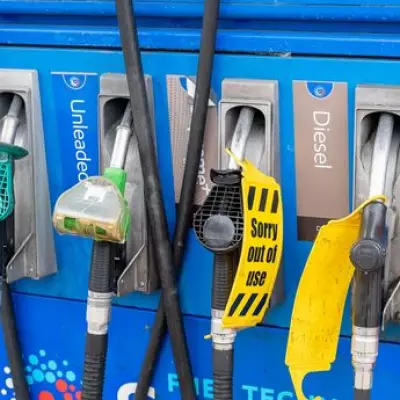
The shock from these disruptions has rippled through supply chains worldwide, contributing to sharp fuel price spikes across Australia. Service stations, particularly in regional areas of New South Wales, Victoria, Queensland, and Western Australia, have reported running out of fuel, leaving motorists stranded and anxious.
Bowen Highlights Strong Emergency Reserves
In an interview on ABC Insiders, Bowen revealed that despite the turmoil, Australia's emergency fuel reserves have actually grown since the conflict began. He detailed, 'We have 38 days' worth of petrol and 30 days' worth of diesel and jet fuel, and both our refineries are working at absolute full pelt and 100 percent dedicated to Australian supply.'

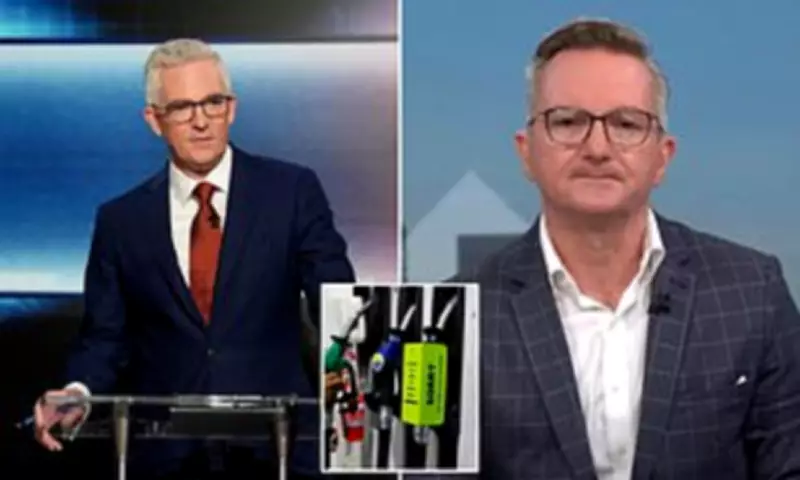
Host David Speers pressed him on whether rationing might be required within weeks if crucial shipments failed to arrive. Bowen dismissed the suggestion, asserting, 'We are a long way from that.' He explained, 'If we receive around 74 of the 80 ships expected in April and May and our refineries are running at full capacity, that indicates strong supply.'
Acknowledging Distribution Challenges
Bowen acknowledged the public perception of a contradiction: fuel stocks remain high on paper, yet service stations are running dry. He clarified, 'Both things can be true. We can have strong national fuel imports and still have unacceptable distribution challenges.' He maintained that ship arrivals have not collapsed, noting, 'The arrival of fuel shipments has actually increased a little.'
However, he warned of uncertainty looming from mid-April as global shipping patterns could become less predictable. 'That gives us some context of what we're dealing with,' he said, stressing that the situation is difficult but 'not catastrophic.'
Dispelling Fears of Total Supply Collapse
Bowen also pushed back against fears of a sudden, total collapse in supply. 'People think that one day all the ships will stop. That is hardly likely to be the case. It is much more likely that there will be bumps in supply that we will manage,' he said.
Surge in Demand Blamed for Shortages
Speers turned to the issue hitting Australians most directly: empty bowsers in several regions. Bowen attributed the shortages to a sudden and dramatic spike in consumer behaviour. 'We saw a 100 per cent increase in demand in a few days, and when demand doubles, no supply chain is going to cope,' he explained.
Pressed again on the possibility of rationing in the next two to three weeks, Bowen refused to nominate any trigger point. 'We are not contemplating needing to use any of those powers,' he said, urging the public to avoid panic-buying. 'Please buy as much fuel as you need, but no more, no less.'
Government Response and Opposition Criticism
The government has vowed to address the ongoing supply-chain problems by appointing former Energy Regulator CEO Anthea Harris as a new 'fuel tsar.' Her role will involve coordinating with states and territories and overseeing national fuel management to mitigate disruptions.
However, the Opposition has argued that her appointment was unnecessary, asserting that responsibility should rest squarely with Energy Minister Chris Bowen. Shadow Energy Minister Dan Tehan said earlier this week, 'This is all necessary because Chris Bowen has failed at his job,' highlighting political tensions over the handling of the fuel crisis.