Australia's Fuel Reserve Figures Include In-Transit Shipments, Minister Admits
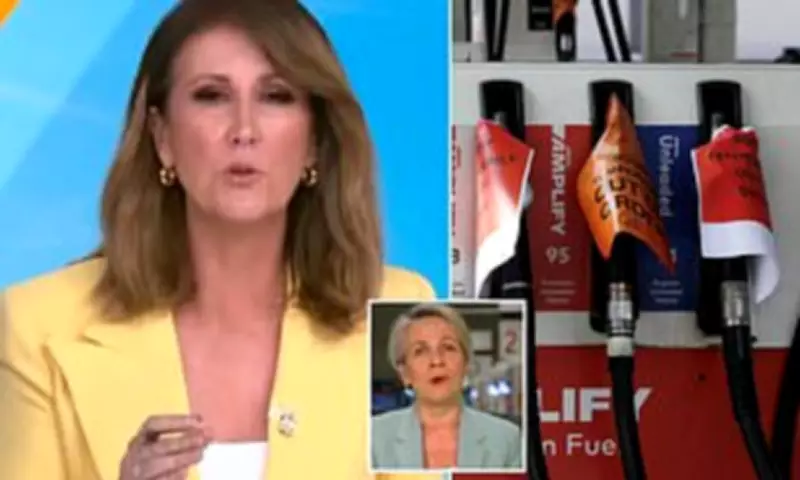
Environment Minister Tanya Plibersek has publicly acknowledged that Australia's frequently cited 30-day fuel reserve calculation encompasses not only domestic stocks but also shipments that are currently en route to the country. This clarification emerged during a heated exchange on the Sunrise television program, where host Nat Barr pressed the minister on the federal government's handling of escalating fuel shortages.
Fiery Television Exchange Reveals Calculation Method
The revelation came as six tankers destined for Australia had their journeys cancelled or postponed due to the ongoing conflict in the Middle East, exacerbating supply concerns. Barr directly questioned Plibersek about the widely referenced 30-day reserve figure, asking whether it represented actual fuel physically present within Australia.
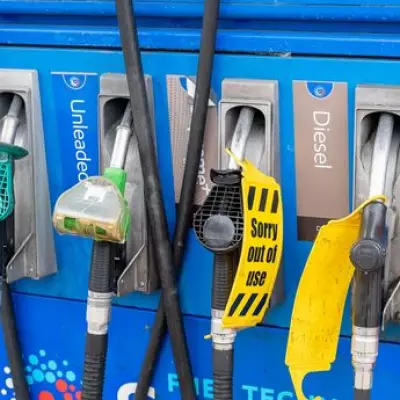
Plibersek responded that fuel security measurements have remained consistent with historical practices. 'It's measured in the fuel stocks that we've got in Australia, and ships that are headed here as well,' she explained during the broadcast. The minister acknowledged particular difficulties in maintaining fuel supplies to regional areas, though Barr countered that shortages had also affected numerous stations in metropolitan Sydney.

Government Response to Distribution Challenges
In response to the emerging crisis, the government has implemented several measures to address distribution issues. These include releasing petrol from emergency reserves and appointing a national fuel coordinator to manage logistical challenges. Plibersek urged the public to exercise restraint, stating 'The most helpful thing people could do is just buy the fuel they need and no more.'
The minister emphasized that Australia's two domestic refineries are operating at maximum capacity, with their entire output remaining within the country. Additionally, the government is engaged in negotiations with regional partners to ensure continued fuel supplies despite global disruptions.
International Dimensions and Alternative Solutions
Prime Minister Anthony Albanese has been personally contacting global counterparts to secure Australia's fuel stocks in the coming weeks. Assistant Foreign Minister Matt Thistlethwaite revealed that Australia is exploring leveraging its natural gas exports as an incentive for countries like South Korea to maintain fuel shipments to Australia.
Energy Minister Chris Bowen confirmed that six tankers bound for Australia had been affected by Middle East hostilities, prompting fuel companies to increase imports from the United States. Labor minister Mark Butler noted this represents a significant shift, stating 'We're seeing an increase in shipments from the US that we haven't seen for many, many years.'
Political Responses and Economic Implications
Deputy Opposition Leader Jane Hume criticized the government's handling of the situation, arguing that stronger supply chains represent the fundamental solution to the fuel crisis. 'Without that, the economy simply runs to a stop,' she warned during an ABC television interview.
The International Energy Agency has suggested encouraging remote work to reduce petrol demand, a proposal the Australian government described as sensible. This comes as Australia's heavy reliance on fuel imports—particularly from South Korea and Singapore, which themselves depend on Middle Eastern oil—leaves the nation vulnerable to global supply chain disruptions.
As the situation develops, motorists continue to face uncertainty, with Barr noting during the Sunrise interview that many remain confused about the reasons behind station closures and fuel shortages across both regional and metropolitan areas.