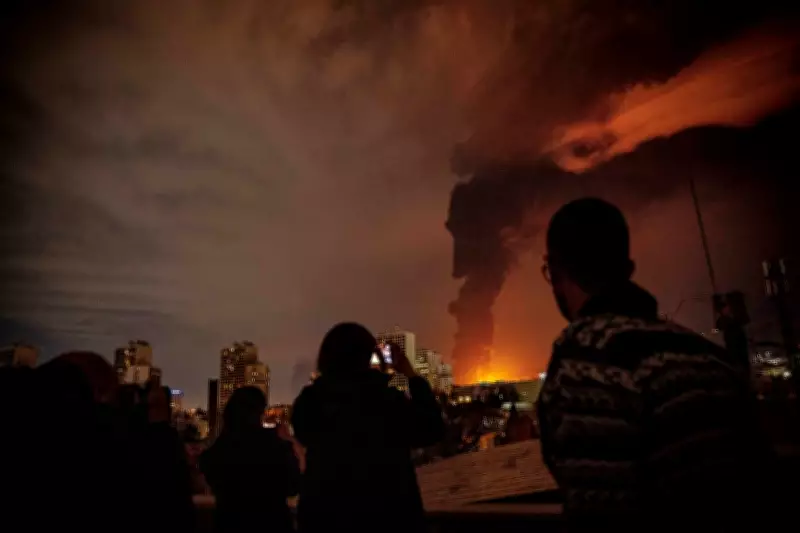
Persian Gulf Energy Infrastructure Under Siege, Threatening Global Stability
Intensifying assaults on critical oil and gas facilities across the Persian Gulf have dramatically elevated the risk of prolonged disruptions, potentially triggering extended periods of inflated prices for essential commodities ranging from gasoline and electricity to computer chips and food supplies. The situation escalated on Thursday, 19 March 2026, when Iran launched retaliatory strikes against key Gulf infrastructure, responding to an Israeli attack on a natural gas field that supplies the majority of Iran's domestic gas needs.
Tit-for-Tat Strikes Deepen Market Fears
This cycle of retaliatory actions has amplified concerns that the initial price shocks witnessed at the onset of the conflict could become entrenched, leading to a sustained economic burden on consumers and industries globally. Gulf nations have already been forced to reduce production at oil wells after the looming threat of Iranian strikes effectively blocked most tanker traffic through the strategically vital Strait of Hormuz, leaving vast quantities of oil with no viable export route.
Even if security conditions in the Strait of Hormuz improve rapidly, allowing tankers to resume transit, a significant delay is anticipated before oil and gas flows normalize. The intricate process of restarting refineries and other complex facilities, compounded by potential damage from ongoing attacks, could extend recovery timelines considerably.

Asia Bears the Brunt of Supply Disruptions
Asian economies are experiencing the most severe impacts, as the majority of oil and gas exiting the strait is destined for the region. In response to the crisis, government offices in the Philippines have shifted to a four-day workweek, accompanied by directives to limit air conditioning usage. Vietnam has similarly urged citizens to adopt remote working practices to conserve energy.
The repercussions extend beyond oil and gas. Critical raw materials, such as helium essential for computer chip manufacturing and sulfur used in fertilizer production, have been obstructed, threatening imminent shortages. This disruption risks cascading down supply chains, elevating prices for a wide array of consumer goods.
Key Infrastructure Targeted in the Conflict
South Pars Gas Field, Iran
As the world's largest natural gas field, shared between Iran and Qatar, South Pars supplies the bulk of natural gas for heating and electricity generation in Iran. An Israeli strike on facilities connected to the field prompted Iranian threats against oil and gas sites in other Gulf countries. U.S. President Donald Trump stated that Israel would refrain from further attacks on South Pars but warned on social media that continued Iranian strikes on Qatar's energy infrastructure would trigger U.S. retaliation, potentially devastating the entire field.
Ras Laffan LNG Terminal, Qatar
The world's largest liquefied natural gas export facility sustained extensive damage from an Iranian attack on Thursday, following an earlier drone strike that prompted its shutdown by state-owned QatarEnergy. Drawing gas from the Qatari side of the shared North Field, this terminal is crucial for supplying LNG, primarily to Asia. The attack has delivered a severe shock to global energy markets, given Qatar's role in producing 20% of the world's liquefied natural gas, with Europe already grappling with sharply higher prices.
Kharg Island, Iran
This tanker terminal handles nearly all of Iran's prewar crude exports, approximately 1.6 million barrels per day, mostly destined for China. While the U.S. bombed military sites on Kharg Island on 13 March, sparing oil infrastructure, Trump has threatened that these facilities could be targeted next. Some tankers continue to load there, with reports suggesting Iranian oil is being exported via a "dark fleet" using deceptive practices to evade sanctions.
East-West Pipeline, Saudi Arabia
Saudi Aramco's pipeline from the Abqaiq processing center to Yanbu port on the Red Sea bypasses the Hormuz chokepoint, allowing substantial oil exports to continue. However, its capacity is insufficient to fully compensate for the Strait's closure. Concerns have mounted after Saudi Arabia reported a hit on its SAMREF refinery at Yanbu, jeopardizing export capabilities through that port.

Fujairah Oil Terminal, United Arab Emirates
A key terminal on the Gulf of Oman, enabling Abu Dhabi to export oil via a pipeline from the Habshan field without traversing the Strait of Hormuz, has been disrupted by two strikes but has reportedly resumed operations.
Mina al-Ahmadi and Mina Abdullah Refineries, Kuwait
Fires at these facilities, following a drone attack, were extinguished on Thursday, though damage assessments remain unclear. These refineries are vital to Kuwait's oil production; without them, wells may need to shut down due to lack of storage. Restarting refineries is a time-intensive safety process, likely keeping wells inactive until operations resume.
Port of Salalah and Gas Products Facility, Oman
An $800 million facility producing liquid petroleum gas for export to Asia, where it is commonly used as cooking fuel, has suspended operations as a precaution after drone strikes. The impact is already felt in India, where restaurants are shortening hours and removing energy-intensive dishes like curries and deep-fried foods from menus.
Shah Gas Field, Abu Dhabi
Supplying about 20% of Abu Dhabi's natural gas, this site is also a major source of sulfur for fertilizer and chemical production. Operations were suspended on Tuesday due to a drone strike, exacerbating supply constraints.
The cumulative effect of these attacks underscores a fragile global energy landscape, with long-term implications for economic stability and everyday living costs worldwide.