Iran Declares 'Full-Scale Economic War' with Threat to Cripple Global Energy Market
Iran has dramatically escalated the Middle East crisis by threatening to launch missile attacks on oil and gas facilities in neighbouring Gulf countries, declaring a "full-scale economic war" that could cripple global energy markets. The regime warned that strikes could occur within "the coming hours," prompting evacuations at facilities across the region.
Israeli Strike on South Pars Gas Field Sparks Retaliation Threats
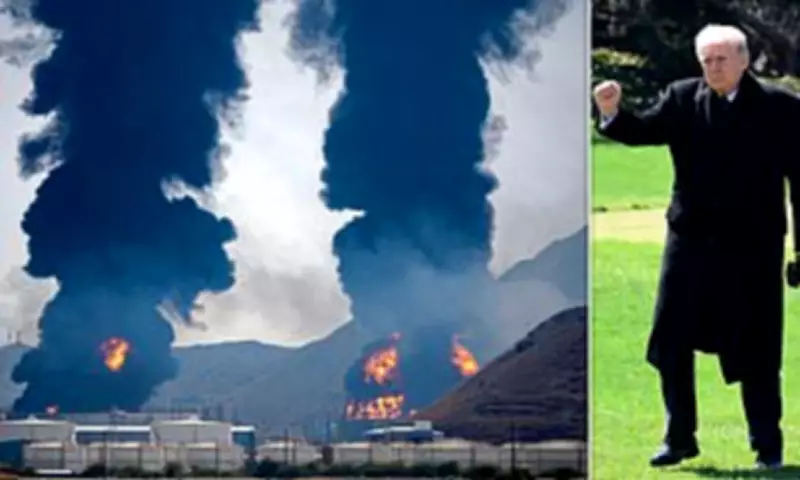
The threats follow an Israeli air strike on South Pars, the world's largest natural gas field located in Iran. Qatar, which shares the gas field with Iran, condemned the attack as "dangerous and irresponsible" and warned it had put global energy security at serious risk. As fires burned at the facility overnight, Iranian officials vowed retaliation against energy infrastructure throughout the Gulf region.
Eskandar Pasalar, an Iranian regional governor, proclaimed: "The pendulum of war has swung to a full-scale economic war." Iran's new leadership declared that energy sites in Saudi Arabia, the United Arab Emirates, and Qatar "have become direct and legitimate targets" for missile strikes.

Oil Prices Surge as Markets React to Escalating Crisis
Oil prices shot up five percent yesterday as markets responded to the heightened tensions. The attack on the Pars gas field represents the first reported strike on Iranian energy infrastructure since the conflict began at the end of last month. Fuel prices for British motorists have surged to their highest level in more than eighteen months, with petrol reaching nearly 143p per litre and diesel climbing to almost 163p.
Danni Hewson, head of financial analysis at investment platform A J Bell, commented: "Iranian threats of retaliation against regional energy infrastructure after Israeli strikes on its massive South Pars gas field have helped dial up the temperature once again. Any solution to the blockage of the Strait of Hormuz looks pretty distant at this point."
Strait of Hormuz Closure Creates Global Energy Supply Crisis
At the heart of the escalating crisis is the closure of the Strait of Hormuz, through which approximately one-fifth of the world's oil and gas passes. This strategic chokepoint has been effectively blocked, cutting off up to ten million barrels of oil daily and creating what analysts describe as the biggest energy supply crunch in history, surpassing even the 1970s oil crisis.
The blockade has already sent oil prices surging from $72 before the conflict to nearly $110 per barrel, with Iran warning the world to prepare for prices reaching $200. The situation has prompted extraordinary measures, including Donald Trump authorising foreign-flagged ships to transport fuel to the United States by suspending the century-old Jones Act shipping regulations.
International Response and Military Developments
Labour leader Keir Starmer warned that the longer the crisis continues, the worse its impact will be on the cost of living for British households. Speaking at Prime Minister's Questions, Sir Keir defended his approach, insisting he would not allow UK forces to be drawn into a "wider war" and resisting pressure to deploy Royal Navy warships to the Strait of Hormuz.
The United Kingdom has sent air defence destroyer HMS Dragon to help defend Cyprus from drones and missiles, though the vessel is reportedly making slow progress. Meanwhile, the Ministry of Defence revealed that British pilots and gunners had destroyed more than forty Iranian drones in recent operations.
In a significant military development, the United States has ordered a "911 force" of 2,500 marines to redeploy from Japan to the Middle East, signalling the potential for American ground forces to become involved in the conflict. Iran's deputy foreign minister described this as a "reckless" move and vowed his country would fight for as long as necessary.
Economic Consequences and Global Repercussions
The economic consequences of the crisis are spreading rapidly. Government borrowing costs rose yesterday as investors dumped UK bonds, known as gilts. Bonds across global markets have been affected by Middle East turmoil, but Britain's are seen as particularly vulnerable due to the country having the highest inflation among G7 advanced economies.

Thomas Pugh, chief economist at accountancy firm RSM UK, noted that Britain's "weaker economic backdrop" means the country "is more vulnerable to shocks than many comparable countries." Traders remain jittery about the possibility of a government bailout for household energy customers similar to subsidies provided during the Ukraine war energy price spike.
The World Health Organisation has warned it is preparing for the possibility of nuclear weapons being used in Iran, while the US Federal Reserve stated the conflict would hike inflation and negatively impact "disposable personal income" worldwide. At least twelve people were killed in Beirut as Israel intensified bombing raids, and Abu Dhabi suspended operations at its Habshan gas facility and Bab oil field after missile attacks targeted the sites.
As the situation continues to deteriorate, global leaders face mounting pressure to find diplomatic solutions before the energy crisis triggers broader economic collapse across multiple continents.