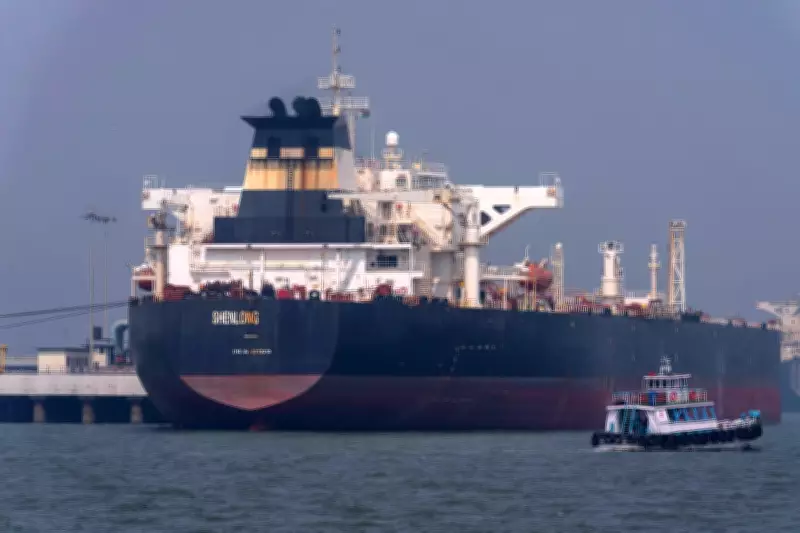
Global Energy Crisis Deepens as Iran Conflict Disrupts Vital Supply Routes
The escalating military conflict with Iran is thrusting numerous nations into a state of energy triage, compelling governments to make stark choices about cutting demand, absorbing skyrocketing costs, and prioritising dwindling fuel supplies. This global scramble is exposing vulnerabilities in energy security and forcing difficult trade-offs between economic activity and essential household needs.
Asia Bears the Brunt of Supply Disruption
Asia faces the most immediate exposure due to its heavy reliance on imported fuel, much of which traditionally transits the now-blockaded Strait of Hormuz. This narrow maritime passage, situated offshore from Iran, serves as the primary conduit for approximately one-fifth of the world's crude oil and liquefied natural gas (LNG) trade. Governments across the region are urgently adjusting strategies, which include auditing oil reserves, implementing energy conservation mandates, fiercely competing for available supplies, and deploying measures to blunt the impact of soaring prices on consumers.
These actions, however, come with significant economic consequences. "Even relatively modest constraints on energy use can create a drag on industrial activity," warned Linh Nguyen, an analyst with the consultancy Control Risks. She highlighted Vietnam's energy-intensive export industries, noting that higher fuel costs or mandatory conservation could swiftly elevate production expenses and decelerate factory output. Analysts caution that these harsh dilemmas may soon extend beyond Asia to other fuel-importing economies in Africa and elsewhere as global competition for scarce resources intensifies.
"The situation is common across the board," stated Putra Adhiguna of the Jakarta-based Energy Shift Institute. "There is no easy decision for the short term."
Southeast Asia Implements Stringent Rationing Measures
With oil prices surging despite limited strategic reserve releases, Southeast Asian nations are stretching thin energy reserves by urging households, businesses, and government agencies to drastically reduce power consumption. In the Philippines, officials have instituted a four-day workweek to curtail fuel use and slash government energy consumption by a fifth. Offices have been instructed to power down computers during lunch breaks and maintain air conditioning at no lower than 24°C (75°F). Vietnam has promoted remote work, while Thailand's prime minister has even advised officials to use stairs instead of elevators.
These conservation efforts impose a direct cost on businesses and individuals. Dieu Linh, a vegetable seller in Hanoi, explained that even a 10% rise in fuel costs would severely erode her already slim profit margins. "If my costs go up by even a little, the profit is almost gone," she said. Concurrently, countries are competing for limited supplies at elevated prices. Vietnam has directed refineries and distributors to maintain high fuel inventories, while Thailand is managing its roughly two-month oil reserve and exploring alternative domestic energy sources. Both nations are utilising price support mechanisms to cushion households from the full brunt of rising costs.
Thailand's decision to halt fuel exports to protect its own reserves has contributed to severe shortages, leading to the closure of nearly one-third of Cambodia's approximately 6,000 gas stations.
East Asia Seeks New Suppliers and Taps Strategic Reserves
More than 80% of the LNG that passed through the Strait of Hormuz in 2024 was destined for Asia, primarily Japan, South Korea, and Taiwan, according to U.S. Energy Information Administration data. Japan's primary defence is its vast strategic oil stockpile, equivalent to around 254 days of supply, a system established after the 1970s oil crises. This week, Japan began releasing approximately 45 days' worth of oil reserves to prevent fuel price spikes as crude imports slow, a tactic last employed following Russia's 2022 invasion of Ukraine.
This release aims to sustain Japan's energy-intensive industries, including automobile, steel, and heavy machinery manufacturing, where companies like Toyota, Mitsubishi, and Nippon Steel depend on consistent fuel supplies. South Korea plans to release 22.46 million barrels from its reserves as part of the International Energy Agency's largest-ever coordinated stock draw.
However, analysts stress that tapping reserves is not a sustainable, long-term solution. Muyu Xu of the energy consultancy Kpler noted that such releases provide refineries with "some buffer" against disruptions but do not increase a nation's overall supply unless it can purchase oil released by other countries. If the crisis persists, crude shortages could re-emerge, potentially forcing production slowdowns within weeks. "The fundamental difficulties will not be solved by this action," said Mika Ohbayashi of the Renewable Energy Institute in Japan, advocating for renewable energy as a long-term solution while criticising the Japanese government's current disinterest.
Analysts indicate that Japanese Prime Minister Sanae Takaichi's upcoming meeting with U.S. President Donald Trump will likely address plans to purchase more American LNG and restart nuclear power plants.
Populous Nations Prioritise Households Amid Mounting Pressure
India is prioritising household needs for its limited supply of liquefied petroleum gas (LPG), used for cooking and vehicle fuel. Under a federal scheme to protect low-income households, the government has absorbed over half of the price increase driven by global market disruptions, according to Indian Petroleum Minister Hardeep Singh Puri. Nevertheless, shortages are already affecting restaurants and hotels in the world's second-largest LPG importer, leading to reduced hours, temporary closures, and menu adjustments that omit long-simmered curries and deep-fried snacks.
The immense demand in India, the world's most populous nation, limits the duration for which consumer prices can be effectively capped. Duttatreya Das of the think tank Ember warned that the situation could deteriorate within a week if government subsidies lapse, noting that gas supplies represent the most immediate concern. "You can't store a lot of gas," Das said, adding that fertilizer factories and small industries would be the first to feel the pinch.
Indonesia, Southeast Asia's most populous nation with 287 million people, faces similar hard choices. While the government has pledged to maintain fuel prices throughout the Eid al-Fitr holiday, Adhiguna noted there is "no clarity about what will happen after that," implying potential post-holiday price increases. Thailand is also ensnared in a dilemma; ending subsidies would spike living costs and potentially trigger panic if reserves decline further, explained Areeporn Asawinpongphan of the Thailand Development Research Institute.
If the conflict continues, Indonesia may be forced to choose between maintaining customer-protecting subsidies or cutting funding to adhere to budgetary limits, a move that could fuel inflation. With Indonesia's limited 20-day reserve, Adhiguna cautioned that price fluctuations in its fuel market would be swift and severe. "It will eventually reach a breaking point," he concluded.
Europe Intensifies Clean Energy Strategy Amid Crisis
The European Union is reinforcing its long-term clean energy strategy to reduce consumption and control prices that have risen sharply across the 27-nation bloc since the war's onset. Officials convened in Brussels this week to explore methods for enhancing regional energy security. "We are looking at how we can reduce people’s energy bills," stated European Commissioner for Energy Dan Jørgensen. "We are working on immediate measures to help businesses and our most vulnerable citizens."