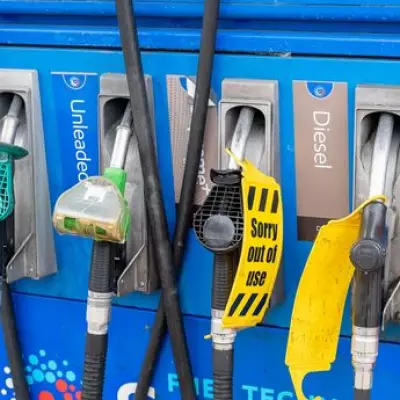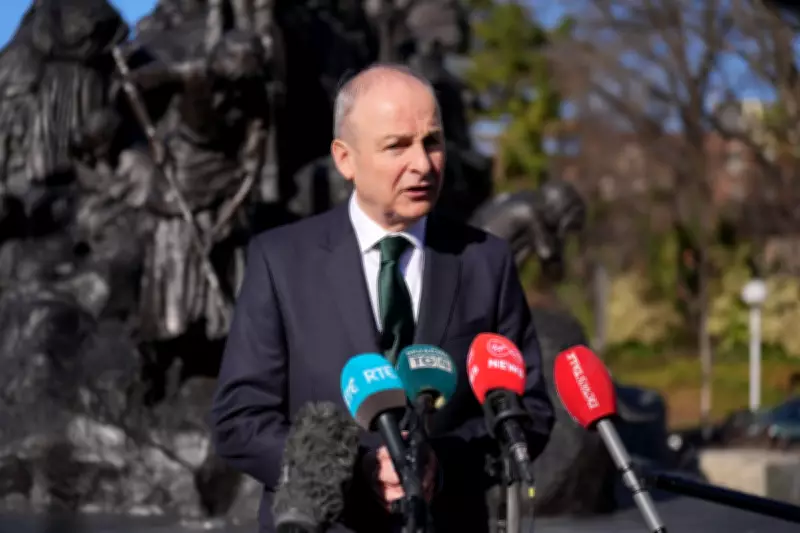
Irish Taoiseach Micheal Martin has expressed reluctance to establish a specific timeline for a potential government intervention regarding soaring fuel prices, attributing the uncertainty to the fluid geopolitical situation in the Middle East. The conflict involving Iran, the United States, and Israel has triggered significant increases in energy costs, placing considerable strain on Irish households.
Government Under Pressure to Address Energy Crisis
The Irish Government faces mounting pressure to take action as fuel prices continue to escalate. Reports indicate that petrol and diesel costs have reached alarming levels, with the Dail parliament informed that home heating oil prices have effectively doubled to approximately 800 euro per 500 litres. This sharp rise is directly linked to the recent bombing of Iran and the ongoing tensions in the region.
Complex Framework of Energy Costs
During engagements in Philadelphia for St Patrick's Day, Mr Martin outlined the multifaceted nature of energy pricing, describing it as operating under a "very complex" framework. He identified four key components: generation costs, grid charges, taxes and levies, and the Emissions Trading System (ETS).

"I'm reluctant to put timeframes on it, but obviously it's a very moving situation," Mr Martin stated at a famine memorial in Philadelphia. "We will be, as I said, keeping it under active review on a number of fronts."
Targeted Assistance and Careful Consideration
The Taoiseach emphasized that any potential government measures would need to be precisely targeted to assist those most vulnerable and severely impacted by the price hikes. "Anything we do, we want to target and make sure that we help those most in need, those furthest behind who would be most impacted," he explained.
He further noted that the government is examining various potential issues and maintaining a thorough review process. Drawing parallels to the energy crisis following Russia's invasion of Ukraine in 2022, Mr Martin highlighted that the government did not act immediately but instead took a measured approach. "We're not going to get to specifics, but take it when I say active review, that means active review," he asserted.
Flexibility in Taxes and Levies
Mr Martin pointed out that member states retain flexibility regarding taxes and levies within the energy cost structure. This flexibility provides potential avenues for intervention, though the government remains cautious in committing to a definitive course of action amidst the volatile international landscape.
The situation remains under continuous assessment as the Irish Government navigates the complexities of global energy markets and domestic economic pressures, striving to balance immediate relief with long-term stability.