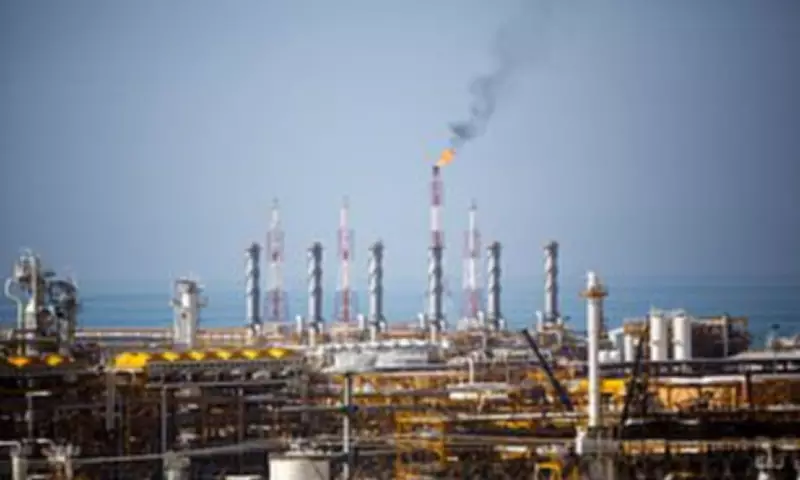
Global oil markets have been thrown into turmoil as Brent crude prices surged dramatically to nearly $110 per barrel on Wednesday. This sharp increase follows Iranian state media reports confirming that facilities within the world's largest natural gas field, South Pars, were hit in an airstrike. The escalating tensions have triggered warnings from Tehran about potential retaliatory strikes on energy assets across the Gulf region, raising serious concerns about global energy security.
Market Reaction and Price Volatility
At the close of London trading on Wednesday, Brent crude was quoted at $108.21 per barrel, a significant jump from $101.95 late on Tuesday. Although this remains below the conflict's peak of $119.25, it represents a substantial increase from the $73.08 level recorded on February 27, before regional tensions began to escalate. The benchmark even briefly touched $109.91 per barrel during Wednesday afternoon trading following confirmation of the attacks.
Analyst Perspectives on Market Panic
'If you thought it would be plain sailing into the FOMC meeting later this evening, think again,' remarked Kathleen Brooks of XTB. 'Markets are back in panic mode. The Brent crude oil price is surging and is higher by another 5% today, the gold price is down 2.8% and is below $5,000 per ounce, bonds are getting sold off and yields are surging and the dollar is rallying.'

Brooks continued with a stark warning: 'Iran has warned Gulf nations that their energy assets and infrastructure are now legitimate targets... The risk is that an oil shipping crisis is morphing into an oil supply crisis.'
Details of the Attack and Iranian Response
According to Iranian state media, the attacks targeted petrochemical facilities in both South Pars and Asaluyeh on Wednesday. While the exact extent of the damage remains unclear according to Tasnim news agency, the political consequences have been immediate and severe. Iran has issued explicit threats to wage what it describes as a 'full scale economic war' by attacking energy facilities across the Middle East in response.
'These centres have become direct and legitimate targets and will be targeted in the coming hours,' the Islamic Republic warned, specifically naming energy sites in Saudi Arabia, the United Arab Emirates, and Qatar. Reports indicate that facilities in these countries have already been evacuated in anticipation of potential strikes.
Regional Energy Implications
The attack has already had tangible effects on regional energy flows. Following the strike, Iranian gas supplies to Iraq were halted as Tehran diverted gas for domestic use. This is particularly significant as Iran supplies between one-third and 40 percent of Iraq's gas and power requirements. Meanwhile, Qatar has fully shut its liquefied natural gas production due to the conflict, cutting approximately 20 percent of global LNG supplies. Any further damage to facilities could extend this production outage beyond May.
Geopolitical Context and Accusations
Qatar's foreign ministry spokesperson described the attack as a 'dangerous and irresponsible' escalation that puts global energy security at risk. While Qatar attributed the strike to Israel without mentioning any U.S. involvement, the incident occurs against a backdrop of heightened regional tensions. Earlier, Israel announced that Iranian intelligence minister Esmail Khatib had been killed in an overnight airstrike in Tehran, marking the latest assassination to hit the regime.
Israeli defence minister Israel Katz declared Khatib had been 'eliminated' and promised more 'significant surprises' as the Israeli military continues targeting high-ranking Iranian officials. This development coincides with Iranians gathering for the funeral of assassinated security chief Ali Larijani, whose death alongside military commander Gholamreza Soleimani was confirmed by Tehran on Tuesday.

Analyst Warnings and Future Risks
Energy analysts have issued grave warnings about the potential consequences of the South Pars attack. Any strike on this critical facility significantly raises the possibility of retaliatory attacks by Iran on Gulf energy infrastructure, including those belonging to major oil companies operating in Qatar. The situation represents a dangerous escalation that could transform regional shipping disruptions into a full-blown supply crisis with global implications for energy markets and economic stability.