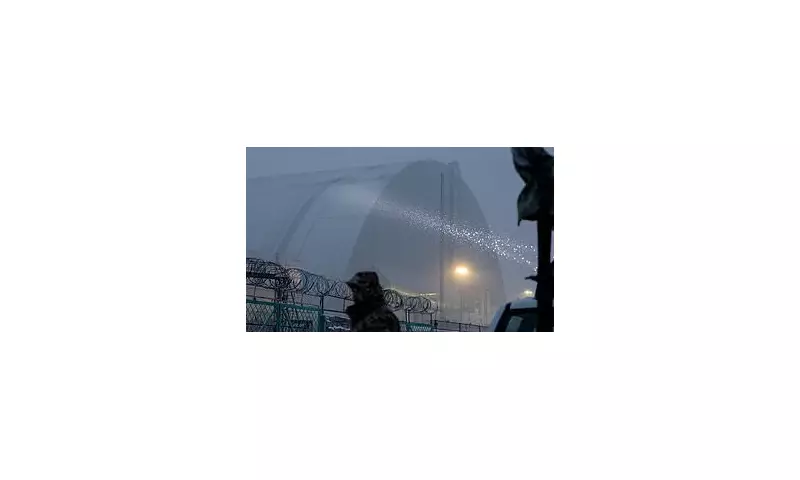
The director of the defunct Chernobyl nuclear power plant has issued a stark warning that a Russian missile or drone strike could cause the collapse of the facility's crucial internal radiation shelter. This alarming assessment highlights the ongoing nuclear risks stemming from the war in Ukraine.
A Direct Hit Risks 'Mini-Earthquake' and Collapse
In an interview with AFP, plant director Sergiy Tarakanov stated that a direct impact from a weapon like Russia's Iskander short-range ballistic missile could trigger seismic activity severe enough to compromise the structure. "If a missile or drone hits it directly, or even falls somewhere nearby... it will cause a mini-earthquake in the area," Tarakanov explained. He added gravely, "No one can guarantee that the shelter facility will remain standing after that. That is the main threat."
The warning comes after the plant's newer outer shell, the New Safe Confinement (NSC) structure, was severely damaged in a Russian drone strike in February 2025. That attack punched a hole in the outer radiation shell and caused a major fire, leading the International Atomic Energy Agency (IAEA) to declare it had 'lost its primary safety functions.'
Years of Repair and Ongoing Vulnerabilities
Tarakanov emphasised that fully restoring the NSC's safety functions could take three to four years. While the hole from the drone strike has been covered with a protective screen, approximately 300 smaller holes made by firefighters during the blaze still require repair.
The Chernobyl site, the location of the world's worst nuclear disaster in 1986, is protected by two layers:
- The Sarcophagus: An inner steel-and-concrete shell built hastily after the meltdown.
- The New Safe Confinement (NSC): A modern, high-tech outer shell erected to contain the radiation.
Despite the damage, Director Tarakanov confirmed that radiation levels at the site remain 'stable and within normal limits.' An IAEA inspection mission earlier in December 2025 also found no permanent damage to the shelter's load-bearing structures or monitoring systems.
Broader Context of War and Diplomacy
Russian forces captured the Chernobyl plant at the start of the full-scale invasion in February 2022, holding it for several weeks before withdrawing. The nuclear warnings coincide with reports of diplomatic manoeuvres. Ukrainian leader Volodymyr Zelensky stated that several draft documents, including on security guarantees for Ukraine, were prepared following talks between US and Ukrainian officials in Miami.
These discussions, which also involved separate US talks with Russian representatives, are seen as an effort by Washington to test the potential for a settlement after nearly four years of war. However, Kremlin spokesman Dmitry Peskov cautioned against viewing the talks as a breakthrough. The threats to Chernobyl underscore the severe and lingering dangers that persist far from the front lines of the conflict.