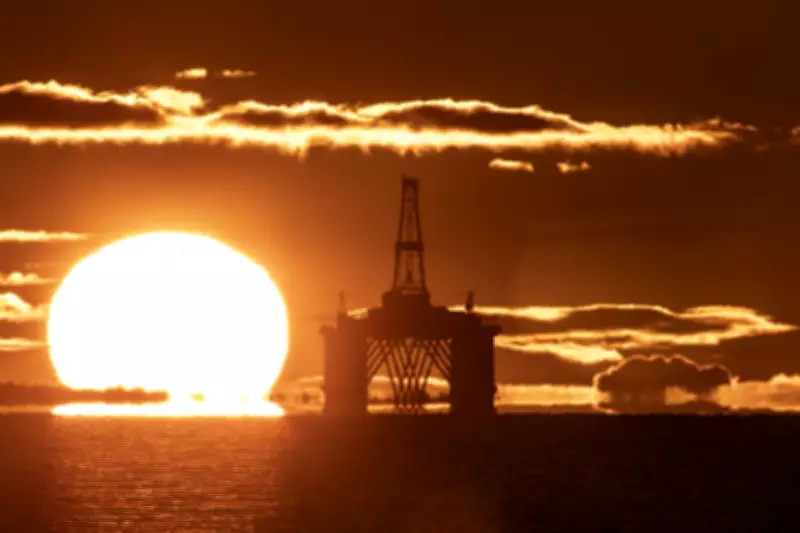
A new survey has uncovered a significant divergence in public opinion across the UK regarding the controversial ban on new oil and gas developments, with opposition markedly higher in Scotland than in England and Wales. The YouGov research, conducted among thousands of adults, highlights the complex interplay between regional economic interests, political allegiance, and environmental targets shaping the national energy debate.
Stark Regional Divide in Opposition Figures
The poll, which questioned 1,217 adults in Scotland and 1,919 in England and Wales, found that 45% of Scots oppose the UK Government's prohibition on new oil and gas fields, while only 37% support it. In contrast, opinions south of the border are far more evenly split, with 39% of people in England and Wales against the ban and 38% in favour. This seven-percentage-point gap underscores a distinct Scottish scepticism towards the policy, which was a clear Labour pledge during the 2024 election campaign to cease issuing new licences for North Sea extraction.
Political Allegiances Deepen the Chasm
The research reveals that the disparity is most pronounced among voters for Labour and the Liberal Democrats. In Scotland, 48% of supporters from these parties are against the ban on new oil and gas developments, whereas less than a third (31% to 32%) of their counterparts in England and Wales share this view. This suggests that local economic factors, such as Scotland's heavy reliance on the oil and gas industry for jobs and revenue, may be overriding traditional party lines.

Unsurprisingly, opposition is highest amongst Conservative and Reform UK voters in Scotland, with 59% of supporters from both parties rejecting the ban. Just over half of Liberal Democrat voters (52%) and 49% of Labour voters in Scotland also oppose it, indicating a broad-based concern. Notably, almost half (47%) of SNP supporters are opposed as well, a finding that comes after John Swinney's party appeared to soften its stance on the issue, moving away from the firm opposition to developments like Jackdaw and Rosebank previously voiced by leaders Nicola Sturgeon and Humza Yousaf.
Shifting Priorities Amid Global Crises
First Minister John Swinney has indicated that the ongoing crisis in the Middle East has altered the circumstances surrounding domestic energy production, citing a "much greater risk to our energy security" as a consequence. This geopolitical shift appears to be influencing public sentiment, with the survey finding that just over half of all Scots (51%) believe it is more important to ensure oil and gas extraction in the North Sea can continue as long as possible. Only 36% feel the Scottish Government should prioritise its target of meeting net zero carbon emissions by 2045, highlighting a tension between immediate economic needs and long-term environmental goals.
On the other side of the spectrum, a majority of Green supporters (54%) back the ban on new oil and gas developments, although a significant minority of 30% who voted for the party two years ago are opposed to it. This internal division reflects the broader national struggle to balance climate action with energy security and economic stability.
Implications for UK Energy Policy
The findings pose a challenge for policymakers, particularly as the ban was strongly opposed by the Tories and Reform UK during the election. The regional and political splits revealed by the YouGov poll suggest that a one-size-fits-all approach to energy may be untenable, with Scotland's unique industrial landscape driving distinct public attitudes. As debates over net zero targets intensify, this survey underscores the need for nuanced strategies that address both environmental imperatives and the practical realities of energy dependence in different parts of the UK.