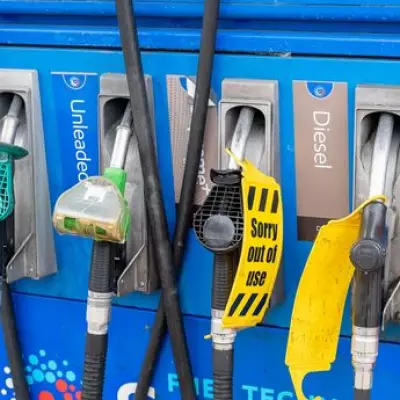
Australia's fuel supply is experiencing 'bumps' but no immediate crisis, as six oil tanker shipments have been cancelled in recent weeks due to escalating global tensions. Energy Minister Chris Bowen revealed the cancellations on Sunday, acknowledging potential supply disruptions linked to the conflict in the Middle East, though he assured the public that shortages are not imminent.
Global Disruptions Trigger Cancellations
The cancellations stem from Iran's effective closure of the Strait of Hormuz, a critical global trade route, in response to American and Israeli strikes. This action has sent global oil prices skyrocketing, with domestic petrol and diesel prices soaring in Australia as a result. Despite this, the government attributes shortages in some regional and rural areas to panic-buying rather than fundamental supply issues.
Minister Bowen noted that over 80 shipments of fuel typically arrive in Australia each month, and while six have been scrapped, some have already been replaced by importers and refiners with alternative sources. 'We're aware of six boats that have been cancelled,' he stated during an interview on the ABC's Insiders program, emphasising that supply chains are adapting to mitigate impacts.

Expert Warnings on Structural Vulnerabilities
Swinburne University expert Hussein Dia explained that six cancelled tankers do not constitute a nationwide fuel shortage, as supply chains are adjusting and alternate shipments are being sourced. However, he highlighted a deeper structural issue: Australia imports 80 to 90 per cent of its liquid fuels, making it highly susceptible to global disruptions.
'That makes us vulnerable to global disruptions, whether from geopolitical tensions, refinery outages, or shifts in international demand,' Professor Dia told AAP. He cautioned that while current events do not represent a collapse in supply, increasing volatility could pressure fuel availability, especially in regional areas where supply chains are more fragile.
Economic and Consumer Implications
Sunshine Coast University finance expert Sajid Anwar described the cancellations as a critical stress test for Australia's energy resilience, compounded by rising inflation. 'With households facing a double-whammy of record fuel prices and rising mortgage repayments, the risk of a broader economic contraction has intensified,' he said.
Anwar urged responsible consumer behaviour, such as avoiding panic buying and adopting fuel-efficient driving, to help stabilise the market. Meanwhile, some service stations in regional areas have run dry, with petrol prices exceeding $2.50 per litre and diesel surpassing $3 in certain locations.
Government and Opposition Responses
Minister Bowen assured that Australia's two refineries are operating at full capacity to produce fuel for domestic use, and total supplies have remained unchanged since the conflict began. He admitted that while it's highly unlikely international fuel supply would be cut off entirely, there might be rough patches. 'It's much more likely that there'll be bumps in supply, but that governments will work with the refiners and importers to manage those and minimise the impact,' he said.
In response, Opposition transport spokeswoman Bridget McKenzie suggested exploring biofuels to enhance energy resilience. 'Alternative home-grown Australian biofuel blended fuel can help reduce this exposure, support national energy resilience and reduce emissions,' the Nationals senator proposed, pointing to long-term solutions amid ongoing volatility.