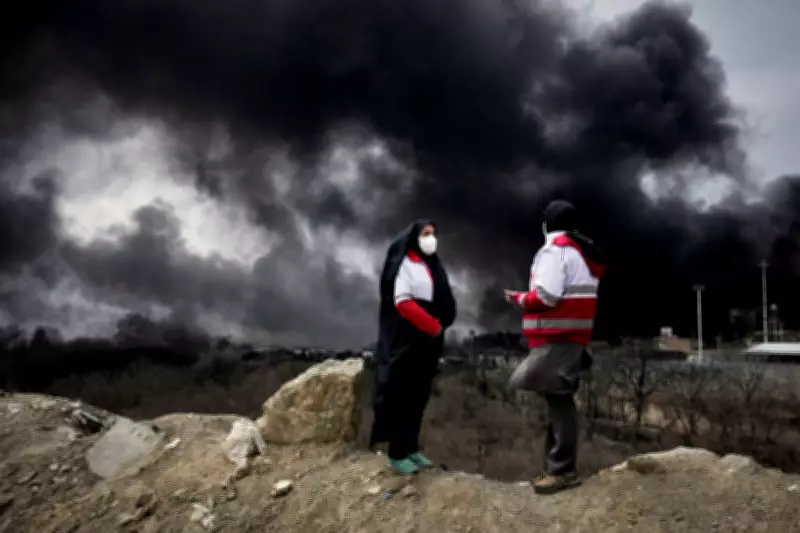
In the wake of recent airstrikes targeting Iranian oil facilities, the capital city of Tehran has been subjected to a hazardous phenomenon known as "black rain," raising urgent public health concerns. This toxic precipitation, resulting from dark clouds of smoke released during the attacks, has prompted international health officials to issue warnings about serious risks to the population.
Immediate Health Impacts in Tehran
Residents in Tehran reported experiencing burning eyes and breathing difficulties last week as the dark, oily rain fell near the capital. The attacks, which struck several fuel oil depots and a refinery, have led to plumes of toxic smoke spreading across the region over two weeks of conflict. Iran has retaliated against the U.S.-Israeli airstrikes by launching drones and missiles at oil and natural gas facilities in neighboring Persian Gulf countries.
What Constitutes Black Rain?
Black rain occurs when soot, ash, and toxic chemicals combine with water droplets in the atmosphere, subsequently falling to Earth during rainfall. This phenomenon is commonly observed after oil refineries or oil fields catch fire, and can also be triggered by wildfires, volcanic eruptions, and industrial pollution. In Iran, experts note that microscopic soot formed due to the incomplete burning of hydrocarbons in fuel oil.

According to Peter Adams, a civil and environmental engineering professor at Carnegie Mellon University, burning oil produces compounds such as polycyclic aromatic hydrocarbons (PAHs), along with toxic gases like sulfur dioxide and nitrogen oxides, which contribute to acid rain formation.
Severe Health Risks from Exposure
The health dangers associated with black rain are significant. Microscopic soot particles, which are approximately 40 times smaller than the width of a human hair, can penetrate deep into the lungs and enter the bloodstream, leading to respiratory and cardiovascular problems that may result in premature death. Exposure to PAHs is known to increase cancer risk.
In response, the World Health Organization and Iranian health and environmental authorities have advised citizens to remain indoors and wear masks. They caution that the rainfall is highly acidic, capable of causing skin burns and lung damage. V. Faye McNeill, a chemical engineering professor at Columbia University specializing in atmospheric chemistry, emphasized, "We can definitely expect acute health effects from an event like this."
McNeill further explained that even typical air pollution events can exacerbate health issues and lead to increased hospitalizations, particularly among vulnerable groups such as the elderly, children, and individuals with pre-existing conditions. "But this is a higher level, so there likely are health problems going on right now because of it," she added.
Some Iranians express fears that the polluted rain, which contains heavy metals, could contaminate drinking-water reservoirs and waterways, posing long-term environmental threats.
Duration of Atmospheric Chemicals
While fuel tanks typically burn out within hours, oil fields can continue burning for months, as seen during the Gulf War in Kuwait 25 years ago, Adams noted. For fires that extinguish more quickly, most soot and chemicals disperse via wind and are washed out of the atmosphere within three to seven days.
"So if we don’t create more problems, at least what’s in the atmosphere is going to go away," Adams stated, though he acknowledged that long-term health risks may persist. He added, "But we don’t know what’s going to happen with future strikes and whether other tanks will be struck or whether oil fields will be struck. I'm less concerned about longer-term or regional stuff, but it's a real mess for the people in the immediate vicinity."
Experts highlight that rain can wash hazardous chemicals from the atmosphere relatively quickly, but individuals exposed to black rain should take precautions to mitigate both short- and long-term health risks.