Trump Issues Stark Warning Over Iran's Aggression in Persian Gulf
U.S. President Donald Trump has issued a severe threat against Iran, vowing that the United States would "massively blow up the entirety" of the world's largest natural gas field if Tehran launches another attack on Qatar. This declaration came via social media on Wednesday night, following Iranian missile strikes on Qatari energy infrastructure earlier in the day.
Escalating Conflict and Energy Market Turmoil
The ongoing U.S.-Israeli war with Iran, which began on February 28, has significantly disrupted global energy markets. International oil prices have surged due to fears of further Iranian retaliation against Gulf energy facilities, increasing costs for gasoline and other goods while putting pressure on the global economy. Iran has targeted energy sites across the Persian Gulf, including in Qatar, Saudi Arabia, and the United Arab Emirates, and has made the Strait of Hormuz—a vital shipping channel for one-fifth of the world's oil—nearly impassable.
Trump claimed in his post that the U.S. "knew nothing" about Israel's initial attack on the South Pars field, which prompted Iran's retaliation. However, a source familiar with the matter indicated that Washington was informed of Israel's plans but did not participate. The president asserted that Qatar was not involved in Israel's actions and condemned Iran's "unjustifiable and unfair" assault on the Gulf state.

Immediate Aftermath and Regional Fallout
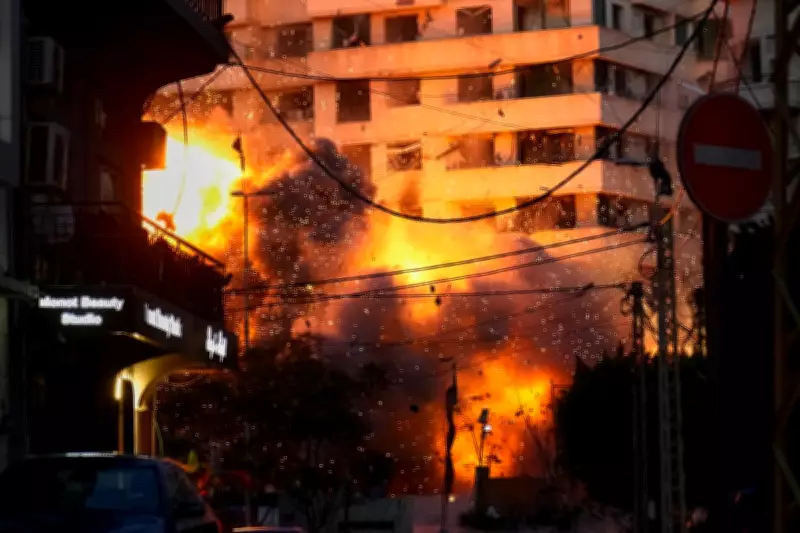
Hours after the attack on the South Pars field, Qatari authorities reported that a ballistic missile struck a key natural gas site, causing extensive damage and sparking a fire. Qatar subsequently ordered some Iranian Embassy officials to leave the country within 24 hours. Additional incidents include:
- A projectile hitting a ship off the coast of Qatar on Thursday morning, with the crew reported safe.
- An attack setting a vessel ablaze off the United Arab Emirates, near the Strait of Hormuz.
- Mobile phone alerts in Dubai warning of incoming Iranian missile fire, and Kuwait shooting down Iranian drones.
- Israel warning of another Iranian missile salvo, and Bahrain sounding missile sirens.
Critical Importance of South Pars Gas Field
The South Pars natural gas field, shared by Iran and Qatar in the Persian Gulf, is crucial for Iran's domestic energy needs. According to the International Energy Agency, approximately 80% of Iran's electricity generation relies on natural gas, which also supplies household heating and cooking. Attacking this field threatens the Islamic Republic's energy security, explaining Iran's aggressive response against neighboring gas facilities.
Qatar, a major global supplier of liquefied natural gas (LNG), warned that further Iranian missile attacks damaged additional LNG sites, causing sizable fires and extensive damage. While no injuries were reported, extensive repairs could delay Qatar's ability to restore supplies post-conflict.
International Condemnation and Diplomatic Moves
Australian Prime Minister Anthony Albanese condemned Iran's "reckless" reprisals, expressing deep concern over attacks on civilian and energy infrastructure. Meanwhile, a summit of Gulf Arab countries and other nations, including Azerbaijan, Egypt, and Turkey, issued a unified statement denouncing Iranian attacks on residential areas and civilian infrastructure, emphasizing that such actions cannot be justified.
Analysts from the Soufan Center, a New York-based think tank, described Israel's attack on the Iranian gas field as a "clear expansion of the conflict," noting that LNG facilities are harder to repair than oil depots, potentially worsening living conditions for Iranian civilians.
Political and Military Developments
In the U.S., Senate Democrats failed to pass legislation that would halt President Trump from continuing the war with Iran without congressional approval, with the vote breaking along familiar partisan lines. Former National Counterterrorism Center Director Joe Kent claimed that senior officials were prevented from sharing doubts about the war with Trump, stating there was no "robust debate" before the decision to strike Iran.

On the ground, the Palestinian Red Crescent reported at least four killed and multiple injured in the West Bank from an Iranian missile attack, marking the first fatalities in the region during the conflict. Additionally, the USS Gerald R. Ford aircraft carrier is heading to the Mediterranean for repairs after a fire, reducing U.S. naval presence in the region.
As tensions mount, Gulf states have taken precautions, such as Kuwait closing its Grand Mosque for Eid al-Fitr prayers to avoid large gatherings. The situation remains volatile, with ongoing attacks and diplomatic efforts to de-escalate the conflict.