Former US President Donald Trump has declared that American military forces have "obliterated" designated targets during a raid on Iran's Kharg Island, issuing a stark warning that crucial oil export facilities on the strategic island could face subsequent attacks. This statement marks a significant escalation in the ongoing war of words between Washington and Tehran, with the vital flow of hydrocarbons from the Gulf region now positioned at the centre of the intensifying conflict.
Trump's Social Media Ultimatum on Hormuz Passage
In a post on his Truth Social platform, Trump asserted, "For reasons of decency, I have chosen NOT to wipe out the Oil Infrastructure on the Island." However, he delivered a clear ultimatum, adding, "should Iran, or anyone else, do anything to interfere with the Free and Safe Passage of Ships through the strait of Hormuz, I will immediately reconsider this decision." The strait is a critical maritime chokepoint, through which approximately one-fifth of globally traded oil passes.
Kharg Island's Pivotal Role in Global Energy Markets
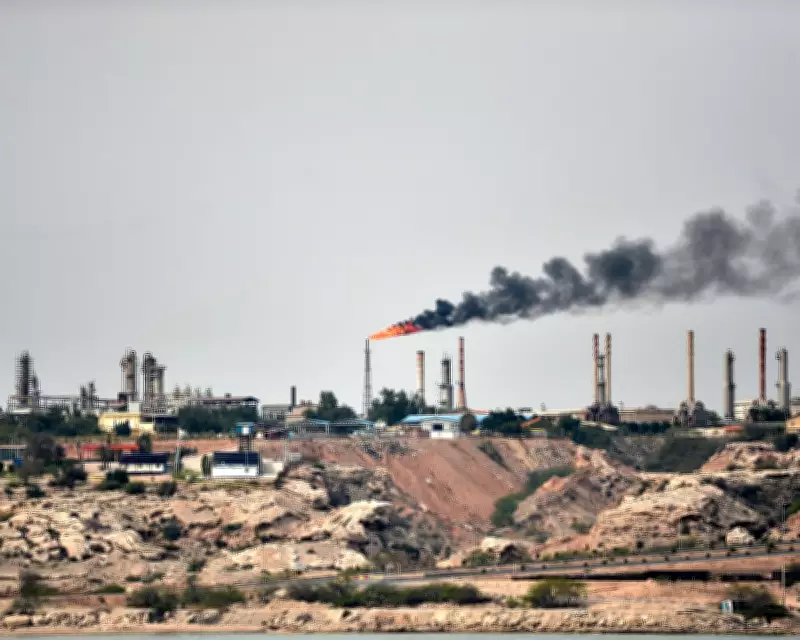
Kharg Island, situated roughly 15 miles off the Iranian coast, serves as the country's primary oil export terminal. Iran has effectively closed the Strait of Hormuz in recent actions, a move that has already sent oil prices surging and raised profound concerns about potential damage to economies worldwide. Analysts warn that any military action directed at Kharg's infrastructure could trigger a dramatic further spike in oil prices.

"We may see the $120 a barrel price we saw on Monday heading to $150 if Kharg were attacked," said Neil Quilliam of the Chatham House thinktank. "It's too vital for global energy markets."
Defiant Iranian Response and Regional Threats
Trump's comments prompted a defiant response from Iranian military officials. Ebrahim Zolfaghari, spokesperson for Iran's joint military command, warned of retaliatory attacks on "all oil, economic and energy infrastructures belonging to oil companies across the region that have American shares or cooperate with America." This threat underscores the risk of the conflict spreading across the Middle East.
In his first public remarks, Iran's new supreme leader, Mojtaba Khamenei, vowed to keep the Strait of Hormuz shut and urged neighbouring countries to close US bases on their territory or face potential attacks. Reports indicate Khamenei was wounded in an earlier strike, though officials claim he is not "impaired."
Escalating Violence and Humanitarian Crisis
The joint US-Israeli offensive, now entering its third week, has been met with daily Iranian attacks on oil and other infrastructure around the Gulf region, as well as against Israel. The human cost is mounting, with over 1,400 reported killed in Iran, 13 in Israel, and about 20 in the Gulf. In Lebanon, the humanitarian situation is deepening, with nearly 800 people killed and 850,000 displaced due to Israeli strikes against Hezbollah.
On Saturday, multiple alarms sounded in Israel warning of incoming missiles and drones launched by Iran and Hezbollah. Gulf states also reported continuing Iranian drone and missile attacks targeting both US bases and civilian infrastructure.
US Military Movements and Strategic Ambiguity
Concerns about a potential US seizure of Kharg Island were amplified when Washington officials confirmed the deployment of 2,500 additional marines and the amphibious assault ship USS Tripoli to the Middle East. While marine expeditionary units are capable of amphibious landings, they also specialise in embassy security, civilian evacuations, and disaster relief. The Pentagon emphasised this deployment does not necessarily indicate an imminent ground operation.
Trump declined to set a public end date for the conflict, telling reporters, "It'll be as long as it's necessary." However, analysts suggest he may seek to conclude hostilities soon to avert a severe global economic crisis. The situation remains volatile, with the spectre of attacks on the world's key oil infrastructure casting a long shadow over international stability and energy security.