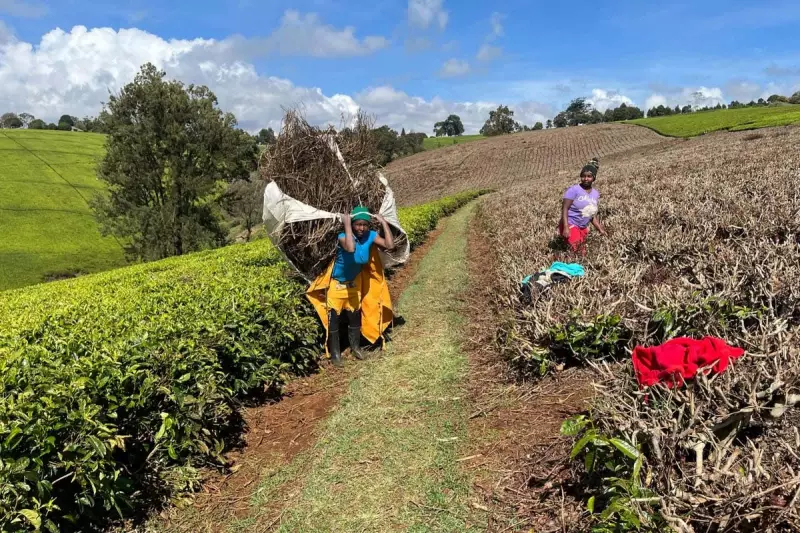
A pioneering initiative supported by the United Kingdom is helping farmers in Kenya transform agricultural waste from tea production into valuable clean energy and organic fertiliser. The project, known as 'Green Tea', aims to bolster producers in the east African nation, which supplies approximately half of all tea consumed in Britain.
Climate Challenges Threaten Livelihoods and Supply
More than 600,000 smallholder farmers are responsible for most of this tea. Their yields and livelihoods are under severe threat from increasingly volatile climate conditions, a situation that has also contributed to rising prices for consumers in the UK. Farmer Grace Njeri Koinange, who has grown tea near Limuru, north of Nairobi, for over four decades, has witnessed this shift firsthand. "The weather in the locality has changed a lot… particularly this year," she told the Press Association. "We haven't had much rain – it was very scant. This has changed the growing of the tea, so the production has really reduced in the last three years."
Ms Njeri Koinange, facing ever-tightening margins due to climate impacts and low tea prices, was among the first to participate in the UK-funded scheme. The initial phase involved applying artisanal biochar—a carbon-rich material made from heated organic matter like tea prunings and leaves—to her land as a soil enhancer. "We found it was very good," she reported, noting that the treated section yielded far more tea. However, she highlighted a significant barrier: beyond the pilot, biochar remains too expensive for individual farmers to use regularly.
From Pilot to Power: Scaling Up the Solution
The hope now is for local tea factories to begin producing industrial-scale biochar. This vision is moving closer to reality with an ongoing pilot at Browns Plantation in Kericho. The site is testing technology developed by North Wales-based firm Compact Syngas Solutions. Their machinery converts leftover leaves and trimmings into synthesis gas (syngas), a greener energy source with lower carbon emissions, while simultaneously producing biochar as a by-product.
This innovation addresses a key sustainability issue. Traditionally, tea factories burn wood from nearby farms to generate the heat needed for drying leaves—a process that is both labour-intensive and high in carbon output. Paul Willacy, CEO of Compact Syngas Solutions, stated the pilot has already extended seasonal employment by four months for workers gathering prunings and is helping factories cut their environmental impact. "There's a lot that goes into (tea production) behind the scenes that makes it very unsustainable," he said.
A Sustainable Future for Tea and Beyond
Buoyed by the pilot's success, Mr Willacy sees vast potential. "The rollout just in Kenya on the tea sector could be enough to keep us busy for several years," he noted, pointing out there are over 100 tea factories in the country. The technology also has global applications for other industries with similar waste challenges. The project initially received funding from Innovate UK's Energy Catalyst programme, with the Kenya pilot later supported by the UN Industrial Development Organisation.
Mr Willacy emphasised the dual benefit: supporting livelihoods in Kenya and helping major British tea brands achieve greater sustainability across their entire supply chain. "All the brands that we know and love... have got a duty of care to become more sustainable," he said. "And this goes right away from the people who are selling it in the supermarkets right the way through to the people picking the tea leaves."
The initiative aligns with broader UK climate finance efforts, which official figures indicate have helped protect 137 million people globally from climate impacts since 2011. Development Minister Baroness Jenny Chapman underscored the strategic importance, stating such investment in climate resilience is in everyone's interests, with British businesses playing a central role.