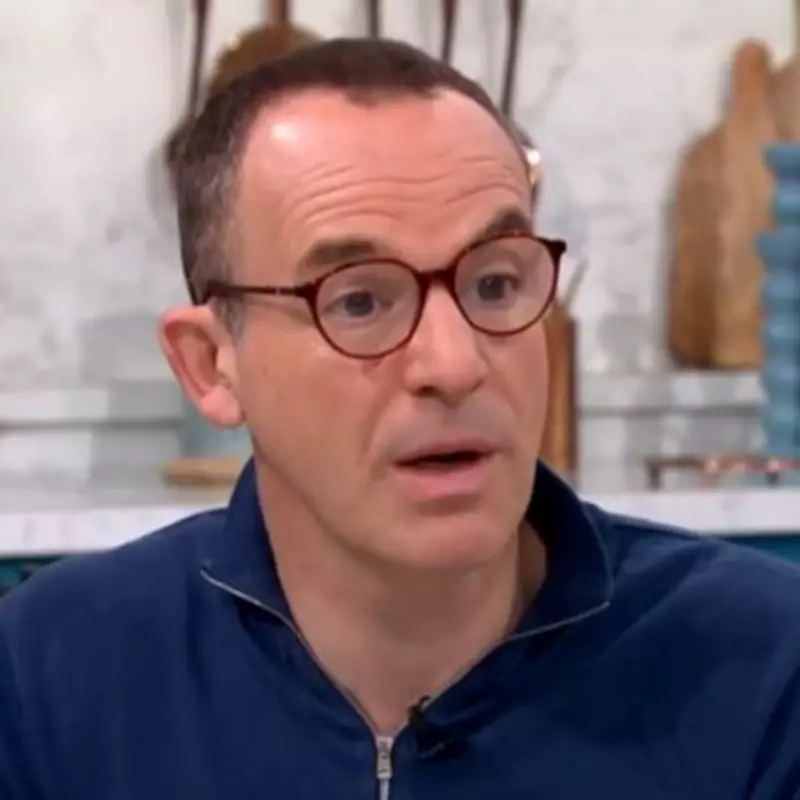
Financial guru Martin Lewis has provided crucial guidance on organising savings during the current economic uncertainty stemming from the Iran conflict. The escalating war has already precipitated a sharp increase in oil prices, raising concerns about long-term repercussions for food production and global economic growth.
Navigating Market Volatility with Strategic ISA Planning
During a recent episode of his BBC podcast, Mr Lewis addressed a listener's query about whether the present moment represents an opportune time to open a stocks and shares ISA, given that financial markets are experiencing significant turbulence. He explained that while falling share prices can create attractive investment entry points, they also carry the risk of further declines, potentially diminishing the value of holdings.
The Core Principle for Long-Term Investors
Mr Lewis outlined a fundamental principle for those considering investment. He stated: "If you're talking about investing for a long term money that you don't need for five years and you're going to do that in a nice spread of investments, like a global tracker fund or an S&P tracker or FTSE tracker, then you just have to accept that you will never know when the perfect time to put money in is."

The £1,000 Monthly Savings Tactic Explained
Nevertheless, the money saving expert revealed a specific strategy to mitigate the risks associated with market volatility. He described a practical approach: "Let's just imagine you're putting £10,000 in a stocks and shares ISA, and you're putting it away for a long time. You could put £10,000 in now but you could arrange with the provider that it sits in its cash part. You can hold it in cash, within a stocks and shares ISA, for the moment."
He elaborated further: "You could say I've got £10,000, over the next 10 months, I'd like you to buy £1,000 a month of that tracker fund that I'm putting my investment into. It's called pound-cost averaging. Because you're drip feeding the money in, that helps smooth out the short-term volatility of buying at the right moment. So if you're worried about that volatility, you might want to adopt that tactic."
Accepting Market Unpredictability
Mr Lewis continued by emphasising that predicting optimal investment timing remains fundamentally impossible. He noted: "They are unknowable in the short term, but in a broad spread of investment over the long term, on the balance of probabilities, investing will outperform saving. So don't let the volatility put you off, but you might want to spread the time that you're putting the money in."
Upcoming Major Changes to ISA Allowances
Savers should also be aware of significant alterations to ISA allowances scheduled for implementation. Currently, individuals can deposit up to £20,000 each tax year, which can be allocated freely between cash ISAs and stocks and shares ISAs according to personal preference.
However, from April 2027, regulations will change substantially. Savers will only be permitted to allocate up to £12,000 as they choose between account types. The remaining £8,000 of the allowance will be exclusively reserved for deposits into investment-based accounts.
An important exemption exists for savers aged 65 and over, who will retain the existing £20,000 allowance under the current rules. It is crucial to remember that ISAs remain entirely tax-free vehicles, with no tax liability on any interest earnings or investment gains accumulated within these accounts, providing a significant advantage for long-term financial planning.