

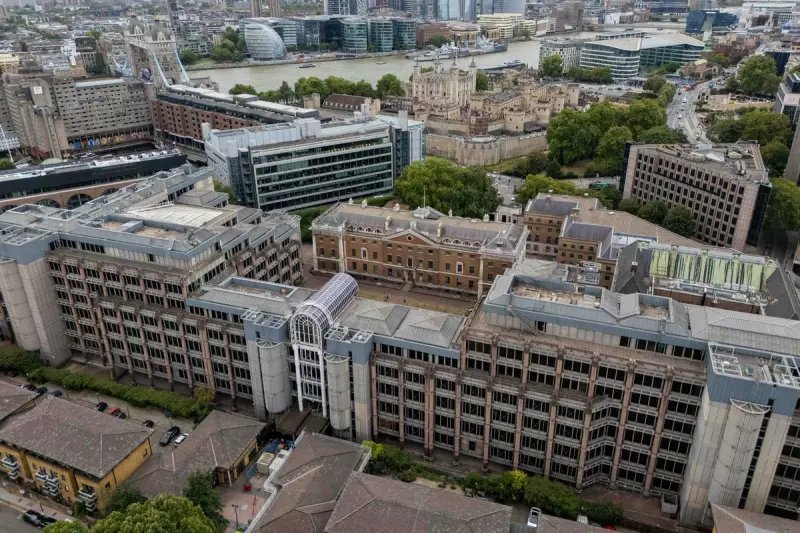
A dramatic planning battle, pitting local residents against one of the world's superpowers, is reaching its climax in East London. A final government decision on China's application to build a sprawling new embassy complex is expected within days, but those living next to the proposed site have vowed to challenge it through the courts if it gets the green light.
A David vs Goliath Planning Battle
Mark Nygate, 65, treasurer of the Royal Mint Residents' Association, describes the eight-year fight as "definitely a David vs Goliath situation." He is one of roughly 50 residents opposing China's plans to construct what would be its largest diplomatic mission in Europe on land adjacent to their flats in Royal Mint Court. While MPs have voiced national security objections, the residents' concerns are profoundly personal. Their homes, built in the 1980s after the Royal Mint relocated, would directly border the new embassy, threatening their privacy and sense of safety.
Mr Nygate, a 27-year resident, outlined fears ranging from potential protests and targeted violence at the embassy to intrusive surveillance. "My side window is 8.5 metres from the wooden fence that would be the border with the embassy slip road," he explained. The residents feel ignored by their landlord, the Chinese government, which purchased the entire former mint site for £255 million in 2018. "Everything we asked them for, they just ignored," Mr Nygate stated, recalling early attempts at dialogue where concerns about security measures like blast-proof windows were dismissed.

National Security and Heritage at Stake
The controversy extends far beyond the housing estate. This week, nine MPs warned in a letter that the embassy could be used to "step up intimidation" against dissidents, citing China's "recent track record of espionage cases and interference activities." Shadow Home Office minister Alicia Kearns highlighted reports of 208 secret rooms and a hidden chamber in the plans, while the Conservative Party labelled the project a potential "launch pad for economic warfare." The site's proximity to the City's financial district and crucial data cables amplifies these fears.
Local Conservative Councillor Peter Golds, a long-term opponent, also stresses the threat to London's heritage. The site contains the foundations of the 14th-century Eastminster Abbey. "Anywhere else they would have been exposed and been a wonderful tourist attraction," he said, arguing the development would bury a significant historical asset.
The Long Road to a Decision
The planning saga has been protracted. China's initial application was rejected by Tower Hamlets Council in 2022. It was resubmitted in July 2024, shortly after the Labour general election victory. Then-housing secretary Angela Rayner "called in" the plans in August 2024, moving the final decision to central government, and delayed the outcome a year later. The Chinese embassy has criticised the UK for "constantly complicating and politicizing the matter," asserting its design is high-quality and complies with all regulations.
With a decision expected by 20 January, the residents are prepared. They have organised crowdfunding campaigns under the "David v Goliath" banner to finance a potential judicial review. They also stand in solidarity with diaspora groups from Tibet, Xinjiang, and Hong Kong who have protested the plans. Mr Nygate voiced a deeper anxiety: that their homes could eventually be seen as a security inconvenience and targeted for acquisition. "They're not going to want us here," he concluded. The community's fight, blending local grievance with geopolitical tension, is set to continue whatever the government's verdict.






