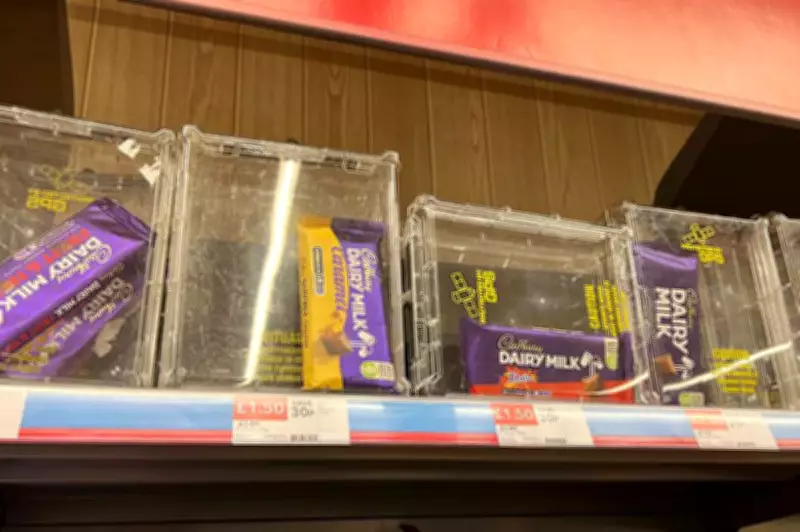
Chocolate Bars Secured in Anti-Theft Boxes as UK Supermarkets Combat Rising Shoplifting
In a striking response to escalating shoplifting rates, UK supermarkets have begun locking popular chocolate bars, including well-known brands such as Dairy Milk and Lindt, in plastic anti-theft boxes. This security measure comes as retailers grapple with a significant surge in theft incidents, which are increasingly linked to organised criminal activities.
Record High Shoplifting Figures Prompt Drastic Measures
Official statistics reveal that shoplifting offences in England and Wales soared to a record high of 530,643 during the 2024-2025 period, marking a sharp 20 per cent increase from the previous year. Retailers reported a staggering 5.5 million shoplifting incidents last year alone, resulting in financial losses exceeding £400 million. This alarming trend has forced supermarkets to adopt more robust security protocols to protect high-value items.
Organised Crime Drives Theft of Chocolate 'to Order'
A source close to the situation informed the Independent that chocolate has now become a 'high-value target' for thieves, with many thefts being orchestrated by organised crime groups. These gangs often steal goods 'to order,' meaning specific items are targeted based on demand, further complicating efforts to curb the problem. The prevalence of such criminal networks highlights the sophisticated nature of modern shoplifting operations.

Supermarkets Implement Comprehensive Security Strategies
Major supermarket chains, including Sainsbury's, are rolling out a range of security measures beyond anti-theft boxes. These initiatives include installing shelf barriers, enhancing surveillance systems, and increasing staff training to detect and prevent theft. Retailers acknowledge that the financial impact of shoplifting ultimately trickles down to consumers, leading to higher prices for everyday goods.
Broader Implications for Retail and Consumer Costs
The rise in shoplifting not only affects supermarket profits but also has wider economic repercussions. As theft rates climb, retailers are compelled to invest more in security infrastructure, which can drive up operational costs. This, in turn, contributes to inflationary pressures on consumer prices, making essential items less affordable for the general public. The situation underscores the need for collaborative efforts between law enforcement, retailers, and communities to address the root causes of shoplifting.
In summary, the locking of chocolate bars in anti-theft boxes symbolises a broader crisis in UK retail security, driven by record shoplifting figures and organised crime. Supermarkets are taking proactive steps to mitigate losses, but the challenge remains significant, with implications for both business sustainability and consumer welfare.