High Street Decline Fuels Far-Right Support as UK Shops Close at Alarming Rate
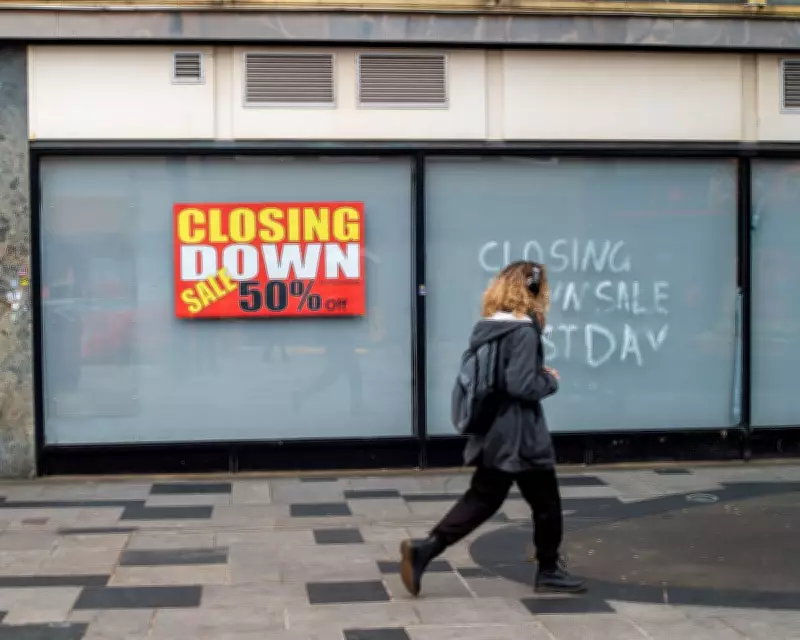
Across the United Kingdom, a visible crisis is unfolding on high streets, with boarded-up shops becoming an increasingly common sight. This decline is not merely an economic issue but is now having significant political ramifications, particularly fuelling support for far-right parties such as Nigel Farage's Reform UK.
The Political Impact of Retail Decline
Research indicates that support for Reform UK is notably higher in areas experiencing the most severe increases in persistent high street vacancy rates. In 2024 alone, nearly 13,000 shops across the UK shut their doors permanently, equating to about 37 closures each day. These shutdowns have been most pronounced in regions including the north of England, the Midlands, and deprived coastal towns, where Reform UK performed strongly against Labour in the recent general election.
In-depth polling conducted by YouGov and researchers at Faster Horses reveals that 62% of voters considering backing Reform UK believe their local area is in decline. One focus group participant expressed the sentiment starkly, stating, "It's just soul destroying to watch your local area turn to shit." For many, this decay symbolises a broader national decline, with Britain perceived as having "gone to the dogs" and its best days behind it, despite promises from successive Conservative and Labour governments to revitalise communities.

Economic and Social Drivers of the Crisis
Analysis by Professor Thiemo Fetzer of the University of Warwick, whose previous work has linked austerity and Brexit to economic shifts, shows that locations with the highest rates of shop closures in England and Wales are more likely to support right-wing populist parties. While retail accounts for only 5% of the UK economy and less than a tenth of employment, its prominent presence on high streets gives it an outsized influence on public perception.
Professor Fetzer explains: "It has channelled people's anger at the structural change around them. They don't always personally perceive things to be negative for them. They say: 'I'm doing fine.' But they see and feel their community around them eroding. That for me is one of the main drivers of populism." He warns of a "non-linear tipping point where you cascade into oblivion," a phenomenon observed not only in the UK but across Europe, particularly in midsize towns.
Self-Inflicted and Structural Factors
Some aspects of the decline are self-inflicted, with almost half of Britons not visiting their high street or shopping area at least once a week. The primary barriers cited include a lack of interesting shops and an abundance of empty units, creating a vicious cycle that deters footfall.
However, deeper structural reasons underpin this trend, reflecting the UK's geography, evolving consumer preferences, economic pressures, and policy decisions. Over the past two decades, the internet has revolutionised retail, with online spending soaring from less than 3% of total retail sales in Great Britain in 2006 to over 25%, a shift accelerated by the Covid-19 pandemic. Britons are now more likely to shop online than Americans, despite the dominance of US e-commerce giants like Amazon and eBay.
Retailers have also faced weaker consumer demand amid the cost of living crisis, with real wages stagnating in the 2010s, inflation reaching a 40-year high, and growth in living standards slowing. Many consumers are prioritising spending on experiences over physical goods, leading some experts to suggest Britain reached "peak stuff" years ago.
Policy and Economic Challenges
Businesses cite elevated inflation, interest rates, tax increases, government regulations, and a rising minimum wage as factors making it harder to turn a profit. Additionally, rents and utility costs have risen sharply. Bricks-and-mortar shops face a disadvantage compared to online retail through the business rates system—a tax based on commercial property values—which makes high street chains more expensive to operate than warehouses on town outskirts.

Labour had promised to replace the business rates system in England before coming to power but has yet to do so. In the autumn budget, Chancellor Rachel Reeves announced the "lowest tax rates since 1991" for this system, yet hospitality businesses warn that their bills are increasing, putting high street pubs, cafes, and restaurants at further risk.
Broader Social Consequences
Underinvestment in transport, policing, healthcare, and social services has exacerbated the situation, with homelessness rising and shoplifting offences jumping by 13% to over half a million in the year to June 2025. Professor Fetzer believes these factors, combined with the rise of online shopping, have fuelled social isolation and fear of others, further discouraging high street visits in a "doom loop" exploited by the far right. He notes, "People have lost their ability to speak to one another."
Glimmers of Hope and Government Response
Some areas buck the trend, typically where there is a higher concentration of independent retail, hospitality, and tourism to attract visitors. However, big cities and affluent regions find this easier to sustain, adding to perceptions of Britain as an increasingly divided nation.
Ministers have highlighted efforts to address the crisis. Labour has announced £5 billion of "Pride in Place" funding for communities to invest in local priorities, such as buying community spaces and revamping high streets. The government has also established a taskforce to tackle dodgy high street stores and a licensing scheme to ensure only legitimate shops can legally sell tobacco and vapes.
Nevertheless, the depth and complexity of the economic challenges facing high streets pose a significant risk for Prime Minister Keir Starmer. Achieving a turnaround before the crucial set of May local elections appears daunting, as the intertwined issues of retail decline and political discontent continue to shape the UK's social and economic landscape.