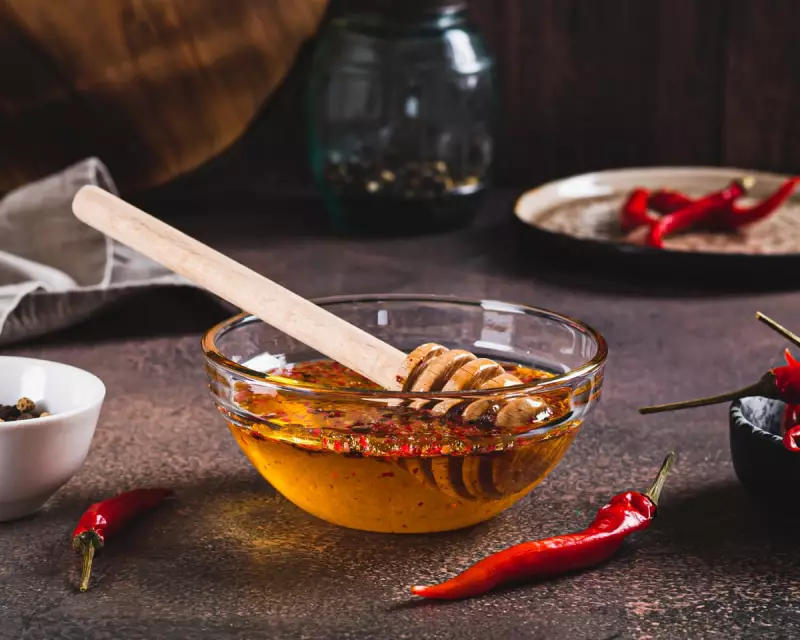
What began as an exciting Gen Z food trend has now become a ubiquitous presence on menus and supermarket shelves across the UK. The 'swicy' – a blend of sweet and spicy – appeal of hot honey has captured the nation's taste buds, but questions are arising about whether the bubble is about to burst under the weight of mass-produced knock-offs and concerns over 'fake' honey.
The Rise of a 'Swicy' Sensation
When hot honey first started appearing on restaurant menus around five years ago, it was seen as a novel and exciting addition. Drizzled over pizzas or used as a glaze for meats and halloumi, it offered something unusual for adventurous diners. According to Laurence Edwards, owner of Black Mountain Honey, the product has "gone a bit crazy over the last couple of years," with sales skyrocketing as word spread, particularly among younger consumers.
From Artisanal to Mainstream
Much like its predecessor, salted caramel, hot honey – typically made by infusing chilli into honey – has rapidly transitioned from a niche item to a mainstream staple. Supermarkets now stock their own-brand versions, and major food companies have launched products such as hot honey Jaffa Cakes, Kellogg's Crunchy Nut cereal with a hot honey twist, and most recently, Walkers crisps in a hot honey flavour.

Edwards views this widespread adoption as "a bit of an accolade," hoping that the attention will benefit beekeepers by raising interest in their industry and authentic products. However, not everyone shares his optimism.
Concerns Over Quality and Authenticity
Ben Lippett, chef and co-founder of Dr Sting's hot honey, expresses nervousness about the trend's peak. "Are we reaching peak hot honey? Maybe we are," he says, warning that larger corporations entering the market could lead to an influx of lower-quality versions. He notes that cutting corners to improve margins is common when products gain popularity, and with honey being a high-cost raw ingredient – evidenced by Dr Sting's 280g bottle retailing at £8.99 – this poses a risk to quality.
The 'Fake' Honey Dilemma
This issue is compounded by broader concerns in the honey industry. In 2023, the European Commission exposed the prevalence of 'fake honey' bulked out with sugar syrup. While pure honey is regulated to be free from foreign substances, flavoured honey like hot honey falls outside these strict rules. Diane Drinkwater, president of the British Beekeepers Association, cautions that consumers can be "less certain of what's in hot honey," adding her personal view that adding chilli might ruin honey's natural deliciousness.
Edwards advises shoppers to read ingredients lists carefully to ensure they are purchasing hot honey made with proper honey, as he worries the trend could encourage more 'fake' honey products.
The Future of Hot Honey
Despite these challenges, Lisa Harris, co-founder of Harris and Hayes food and drink consultancy, believes hot honey is here to stay. She predicts it will become ubiquitous and plateau, much like salted caramel, which no longer excites when seen on menus. Hot honey is evolving into a tried-and-tested staple on gastropub and pizzeria menus, losing its initial novelty but maintaining its place in the culinary landscape.
As innovative chefs and food companies likely scout for the next viral flavour combination, for now, the reign of 'swiciness' continues to dominate UK food trends, blending sweet and spicy in a way that has captivated a generation.