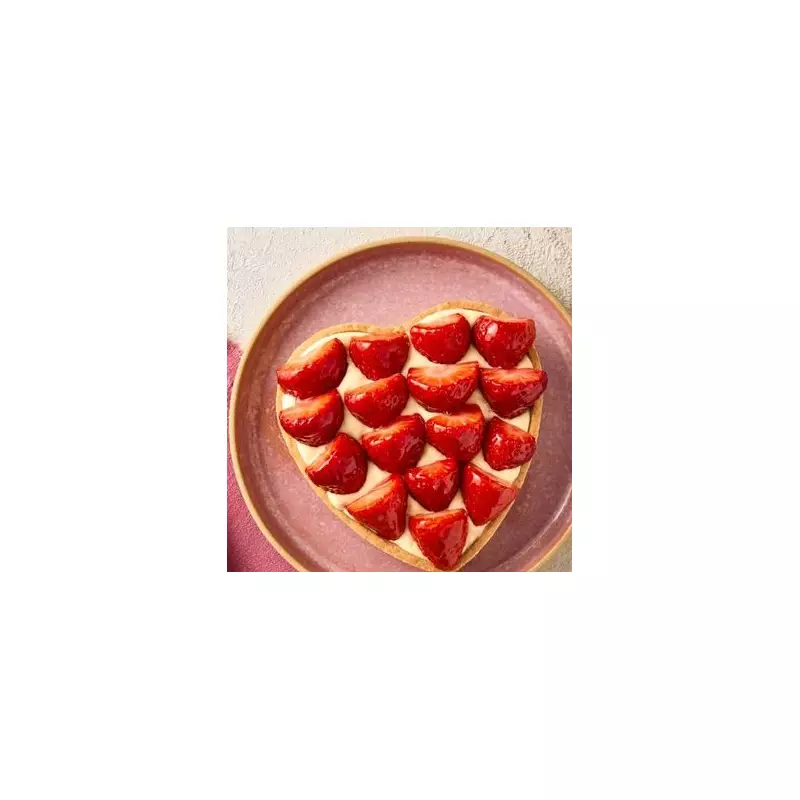
With Valentine's Day rapidly approaching, supermarkets across the UK are stocking their shelves with romantic treats and gifts designed to capture the hearts of consumers. Morrisons has joined the seasonal fray with a special limited edition offering, but their heart-shaped tart has unexpectedly become the subject of widespread amusement and critique online.
A Sweet Gesture That Missed the Mark?
Morrisons' freshly made heart tart is promoted as a creation intended to "send customers' hearts aflutter this Valentine's Day." The supermarket describes the dessert as featuring a butter pastry case filled with hand-made smooth crème pâtissière, delicately topped with hand-cut fresh British strawberries and finished with a sweet raspberry glaze.
Despite these appealing descriptions, the visual presentation has sparked considerable debate. When an image of the tart was shared on social media by Newfoodsuk, shoppers quickly converged with a series of nearly identical humorous observations about its unconventional heart shape.

Shoppers' Unimpressed Reactions
The consensus among commenters was that the tart's form was somewhat lacking, undermining any romantic sentiment the design aimed to evoke.
- One social media user quipped: "That's a heart shape? I'd be surprised if Aldi UK doesn't roast this."
- Another offered a backhanded compliment: "Aww, it's sweet they're giving children the opportunity to show off their baking skills."
- A third provided a more cynical take: "That heart looks as though it's been cheated on several times."
- Others simply noted the pastry appeared "squashed" or misshapen.
Pricing Also Under Scrutiny
Beyond the aesthetic concerns, some customers expressed frustration over the pricing strategy for seasonal items. There were complaints that supermarkets often "make something heart-shaped and then charge double" for the privilege.
One shopper questioned the value directly, asking: "Bro, why is a bit of pastry and cream £6?" In reality, the Market Street Large Strawberry Flan typically costs £5, making the heart-shaped variant only £1 more expensive. Nevertheless, the perception of inflated pricing for Valentine's-themed goods remains a point of contention for many consumers.
It is worth noting that, compared to the expense of a romantic restaurant meal on February 14th, the tart still represents a relatively affordable indulgence for couples seeking a sweet treat.
The Historical Roots of Valentine's Day
While modern celebrations focus on chocolates, cards, and pastries, Valentine's Day has deep historical origins that blend ancient Roman customs, Christian traditions, and later romantic practices.
The festival is frequently linked to the Roman celebration of Lupercalia, held in mid-February. This was a fertility festival dedicated to Faunus, the Roman god of agriculture, and to Romulus and Remus, the legendary founders of Rome. The rituals involved ceremonies intended to promote fertility and purify the city.
The contemporary name derives from Saint Valentine, a Christian martyr. The most popular legend tells of a priest in Rome who performed secret weddings for young couples against the orders of Emperor Claudius II, who had forbidden marriage for young men. Valentine was executed on February 14th, and the date later became associated with his sacrifice.
By the medieval period, Valentine's Day had become connected with romantic love, particularly in England and France. This association was partly influenced by the belief that February 14th marked the beginning of birds' mating season. The tradition of exchanging love letters and tokens flourished, and by the 18th century, sending handmade cards and gifts had become commonplace.
While expressing affection for loved ones should ideally be a daily practice, having a dedicated day to celebrate romance provides a delightful extra opportunity for gestures both grand and simple—even if those gestures sometimes come in slightly misshapen pastry form.