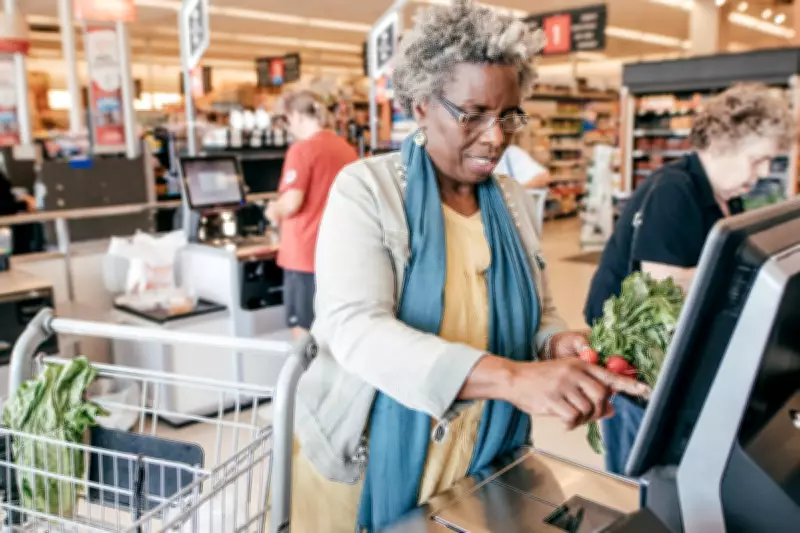
New York City Council Debates Groundbreaking Self-Checkout Legislation
The New York City Council is currently considering a bill that could fundamentally alter the shopping experience in grocery stores across the city. The proposed legislation would impose strict new regulations on self-checkout systems, which have become ubiquitous in retail environments.
Key Provisions of the Proposed Bill
According to reports from PIX 11, the bill would require stores with self-checkout lanes to implement two major changes. First, these lanes would be limited to customers with 15 items or fewer. Second, stores would be mandated to have one monitoring employee for every three self-checkout kiosks to assist customers experiencing difficulties with the machines.
City Council member Amanda Farias, who introduced the resolution, explained the rationale behind the measure. "This is just to help address some of the real problems we're seeing in our communities," Farias told the outlet. She emphasized that the legislation aims to improve customer shopping experiences while simultaneously preserving retail jobs and curbing shoplifting.

The Theft Prevention Argument
Farias addressed concerns about potential increases in labor costs for grocery stores, suggesting that any additional expenses would likely be offset by savings from reduced theft. "Less workers means more retail theft, which increases the price of commodities people are buying," she stated. "We're seeing this with Target rolling back self-checkout kiosks, and we're seeing this in other states where this is being implemented."
The council member pointed to broader safety concerns, noting that "We've seen the consequences of removing workers from these spaces: increased retail theft, less oversight, fewer protections for both workers and customers, and generally decreased safety."
Industry Precedents and Responses
Target implemented a similar policy in 2025, limiting self-checkout lanes to 10 items per customer. A company spokesperson at the time told Fox Business that this change resulted from "internal testing that showed it increased customer satisfaction." Target had reported significant losses from shoplifting, with nearly $500 million in "shrink" (financial loss due to theft and inventory errors) in 2023 according to Business Insider.
Other major retailers have taken more drastic measures:
- Walmart has removed self-checkout lanes in some locations to improve customer experience
- Dollar General eliminated self-checkout from 300 stores experiencing the worst shoplifting
- Five Below's former CEO announced plans to remove virtually all self-checkout kiosks from stores with high theft rates
Opposition and Criticism
Not all council members support the proposed legislation. City Council member Joann Ariola, a Republican, strongly opposes the measure, accusing proponents of misguided priorities. "This is typical backwards leftist logic," Ariola told the New York Post. "Instead of actually trying to punish criminals, my colleagues are pushing to make life even harder for businesses and consumers."
Industry representatives have also voiced concerns. Jason Ferraira, a board member for the National Supermarket Association, called the city council's idea "horrible" and insisted it wouldn't effectively address shoplifting. "You don't prevent shoplifting by making me have a certain ratio of employees," he argued. "People shoplift in a lot of different ways. Some shoplift through self-checkout. Some through the regular cashier checkout. Some people bypass the checkout altogether, and go straight to the floor."
Ferraira expressed preference for stricter consequences for shoplifters rather than regulations on grocery store operations.
Broader Implications and Future Considerations
The debate over self-checkout regulation reflects larger tensions between retail efficiency, customer experience, and loss prevention. While proponents argue that increased staffing will enhance safety and reduce theft, opponents contend that the legislation places undue burdens on businesses without effectively addressing criminal behavior.

As the City Council continues to deliberate, the outcome could set a precedent for other municipalities considering similar regulations. The discussion highlights the complex balance between technological convenience, economic considerations, and community safety in modern retail environments.