Australia's Strategic Fuel Reserve: The Truth Behind the US Storage Myth
The Australian government has announced it will release some of the nation's strategic fuel reserve to address market disruptions caused by the ongoing Middle East war. This move aims to stabilise supply, but it has sparked confusion and debate over the true nature of Australia's fuel reserves.
The Misconception of US Storage
If you search online for the location of Australia's emergency fuel reserves, many AI tools, including Google's AI overview, Claude, Gemini, and ChatGPT, incorrectly state that a significant portion is stored overseas in the United States. This claim has been echoed by public figures, such as Brett Hosking, president of the Victorian Farmers Federation, who recently asserted that Australia's strategic fuel reserve is held in the US.
However, experts clarify that this is not accurate. Australia does not maintain a government-backed strategic fuel reserve in the traditional sense. Instead, the country relies on a system where fuel importers and refiners are required to hold minimum stock levels under the Minimum Stockholding Obligation (MSO).

Historical Context: The US Storage Arrangement
For a brief period, Australia did store a small amount of oil in the US Strategic Petroleum Reserve, the world's largest emergency crude oil stockpile located in Louisiana and Texas. This arrangement was initiated by the former Coalition government in March 2020 under then Energy Minister Angus Taylor.
During the pandemic, the Morrison government purchased oil when prices were low, leasing space in the US reserve to store Australian-owned oil for global emergencies. Taylor disclosed that about 1.7 million barrels were stored, equivalent to less than two days of Australia's supply. In 2022, this oil was sold as part of a coordinated response to Russia's invasion of Ukraine.
Dr Lurion De Mello, an energy market expert at Macquarie University, notes that even if this oil were still in the US, it would have been time-consuming to access, taking a month or more to transport and refine into usable fuel. Moreover, it was crude oil, not a ready-to-use strategic fuel reserve.
What Is Australia's Strategic Fuel Reserve?
According to De Mello, Australia lacks a true strategic fuel reserve, which typically refers to a government-funded stockpile. When Energy Minister Chris Bowen mentions a domestic or strategic reserve, he is referring to the MSO system implemented in 2023.
This system mandates that importers and refiners maintain baseline fuel stocks: 24 days of petrol and jet fuel for refiners, 27 days for importers, 20 days of diesel for refiners, and 32 days for importers. These stocks are held by private companies, not the government, with major players like Mobil, BP, Ampol, and Shell supplying about 85% of Australia's liquid fuels.
How Fuel Is Released from the Stockpile
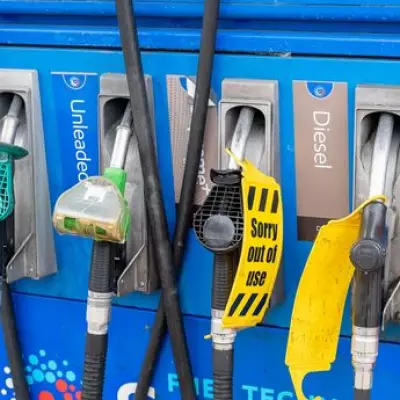
In response to the Middle East conflict, which has disrupted shipping routes like the Strait of Hormuz, the government has reduced the MSO requirements. Under the Fuel Security (Temporary Reduction – Securing Regional Supply) Instrument 2026, up to 213 million litres of petrol and 548 million litres of diesel can be released, equating to about five days of petrol and six days of diesel supply.
The government can also declare a national emergency in extreme shortages, granting the energy minister powers to control industry-held stocks, though this has never been invoked.
Regional Focus and Supply Distribution
Minister Bowen has prioritised additional fuel for regional Australia, where shortages are more acute due to high demand from farms and reliance on independent distributors. Fuel companies must submit written plans to the government detailing how they will supply regional areas before their MSO obligations are reduced.
With weekly reporting requirements, companies providing plans on Monday could begin releasing fuel as early as Tuesday. The additional supply is expected to flow primarily from refineries in Brisbane (Ampol) and Geelong (Viva Energy, Shell's operator), Australia's only remaining refineries.

Challenges and Future Prospects
Australia has never met its International Energy Agency obligation to hold 90 days of fuel import equivalents. Dave Simmons of Simmons Global highlights that fuel companies avoid excess inventory due to costs, and his 2021 proposal for a commercially funded regional storage network was rejected, which he believes could have prevented current shortages.
The Albanese government has increased diesel storage capacity to over 3.7 billion litres across more than 90 terminals since taking office. However, Dr Michelle Zeibots of the University of Technology Sydney cautions that greater storage offers limited benefits for prolonged disruptions and emphasises the need to electrify transport networks as oil reserves dwindle globally.
In summary, while the government's release of fuel aims to mitigate Middle East-related disruptions, Australia's fuel security relies on private sector obligations rather than a traditional strategic reserve, debunking myths about US storage and highlighting ongoing challenges in fuel management.