Danish Boycott Applications Experience Dramatic Surge Following Greenland Diplomatic Crisis
The creators of mobile applications specifically designed to assist shoppers in identifying and boycotting American goods have reported a significant surge in interest across Denmark and other nations. This spike follows the recent escalation in diplomatic tensions concerning U.S. designs on Greenland, a semi-autonomous Danish territory.
App Downloads Skyrocket During Diplomatic Flare-Up
Ian Rosenfeldt, the developer behind the "Made O'Meter" application, revealed that his free app witnessed approximately 30,000 downloads in just three days during the peak of the trans-Atlantic crisis in late January. This contributed to a total of over 100,000 downloads since the app's initial launch in March. Rosenfeldt, a 53-year-old digital marketing professional residing in Copenhagen, conceived the idea after joining a Facebook group of Danes eager to boycott U.S. products.
"Many individuals expressed frustration, questioning how to implement such a boycott practically," Rosenfeldt recalled. "Standard barcode scanners often fail to clearly indicate a product's origin, making informed consumer choices challenging."

Advanced Technology Powers Consumer Choice
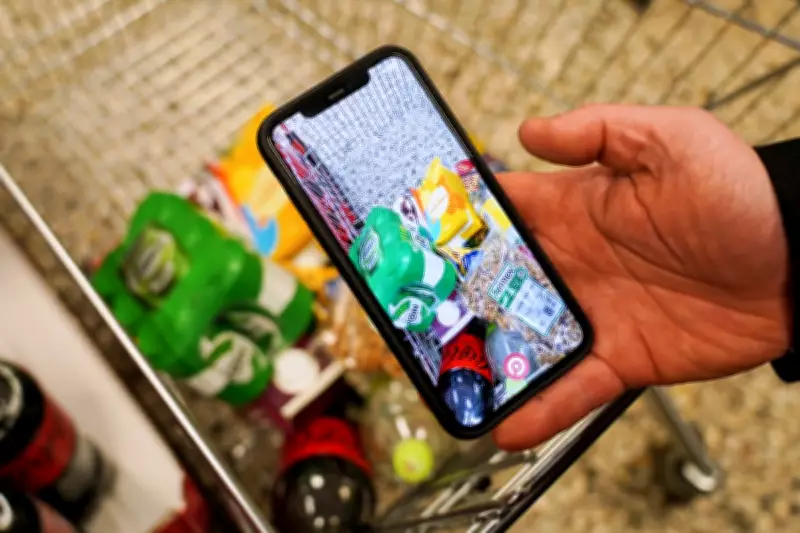
The latest iteration of "Made O'Meter" employs artificial intelligence to simultaneously identify and analyze multiple products, subsequently recommending comparable alternatives manufactured in Europe. Users can customize preferences, such as excluding USA-owned brands or selecting only EU-based brands, with the app boasting an accuracy rate exceeding ninety-five percent.
"By utilizing artificial intelligence, users can capture an image of a product, enabling the system to conduct a comprehensive analysis and retrieve detailed, multi-layered information," Rosenfeldt explained during a demonstration at a Copenhagen grocery store. "This empowers consumers with the data necessary to make decisions aligned with their principles."
Personal Sentiment Fuels User Engagement
Following an initial download surge at launch, app usage declined until last month. The resurgence coincided with heightened rhetoric from former U.S. President Donald Trump regarding the potential acquisition of Greenland, a mineral-rich Arctic island of strategic importance. Usage peaked on January 23rd, with nearly 40,000 product scans in a single day—a stark contrast to the roughly 500 daily scans recorded last summer. Although activity has since moderated, Rosenfeldt reported approximately 5,000 scans daily this week.
The app's user base extends beyond Denmark, with significant engagement in Germany, Spain, Italy, and even Venezuela. Rosenfeldt described the sentiment as "much more personal," akin to "losing an ally and a friend."
Economic Impact and Symbolic Protest
Rosenfeldt acknowledges that such boycotts are unlikely to significantly harm the vast U.S. economy. However, he hopes the movement will send a clear message to supermarket chains and encourage greater reliance on European producers. "Perhaps we can transmit a signal that prompts listening and fosters change," he added.
Another Danish application, "NonUSA," surpassed 100,000 downloads by early February. Co-creator Jonas Pipper, aged 21, noted over 25,000 downloads on January 21st alone, with one peak moment recording 526 product scans per minute. The user demographic includes approximately 46,000 individuals in Denmark and around 10,000 in Germany.
"We observed users expressing that they felt a slight alleviation of pressure, as if they had reclaimed some power in the situation," Pipper stated.
Expert Analysis Questions Practical Efficacy
Christina Gravert, an associate professor of economics at the University of Copenhagen, cast doubt on the practical impact of these applications. She highlighted that U.S. products constitute only about one to three percent of items on Danish grocery shelves, primarily nuts, wines, and confectionery. Conversely, American technology, such as Apple iPhones and Microsoft Office tools, is pervasive in Denmark.
"For genuine impact, that is where efforts should commence," Gravert advised, noting that even the boycott apps themselves are distributed via Apple's App Store and Google's Play Store.

Specializing in behavioral economics, Gravert suggested that boycott campaigns are typically short-lived, with substantive change often requiring organized collective action rather than individual consumer efforts. "It could be significant for major supermarket brands to decide against stocking certain products due to consumer demand," she elaborated. "For large corporations, this might influence their import decisions."
Public Opinion Remains Divided
Shoppers in Copenhagen exhibited mixed reactions. Morten Nielsen, a 68-year-old retired naval officer, stated, "We do participate in the boycott, but we are not fully aware of all American goods. It primarily involves well-known brands. It is a personal sentiment; we feel we are contributing, though we recognize the impact is limited."
In contrast, 63-year-old retiree Charlotte Fuglsang expressed opposition: "I adore America and enjoy traveling there. I do not believe we should protest in this manner."
The diplomatic context includes Trump's January announcement of new tariffs on Denmark and seven other European nations opposing his Greenland ambitions, threats he later retracted citing a preliminary "framework" agreement facilitated by NATO Secretary-General Mark Rutte. Specific details of this arrangement remain scarce, with technical discussions for an Arctic security deal involving the U.S., Denmark, and Greenland commencing in late January, amidst firm assertions that sovereignty is non-negotiable.