

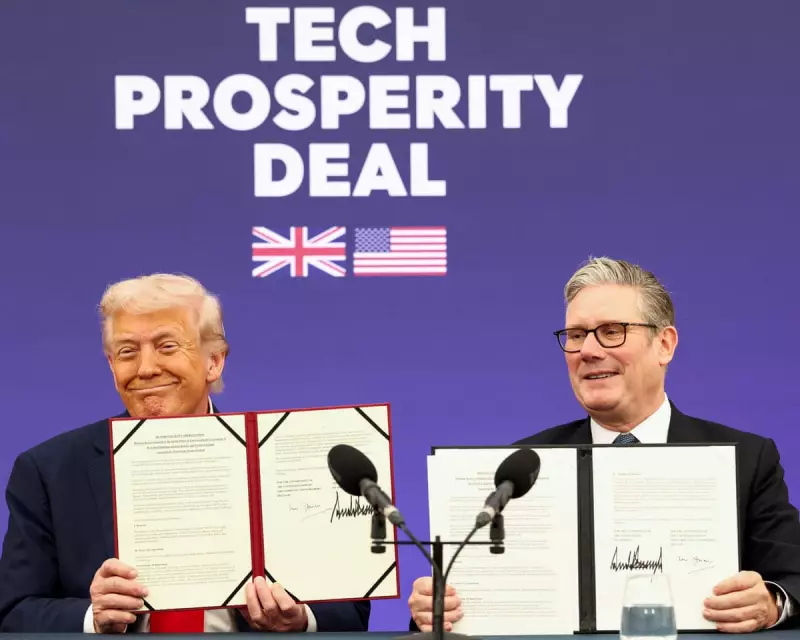
The United Kingdom and the United States have formally entered into a significant new bilateral agreement, known as the Tech Prosperity Deal, during the second term of President Donald Trump. The pact, signed on 16 December 2025, represents a strategic move to deepen cooperation on technology, trade, and regulatory standards between the two nations.
A Strategic Alignment on Digital Policy
The core of the deal focuses on aligning digital regulations and fostering trade in technology sectors. A central objective is to establish common standards for artificial intelligence (AI), cyber security, and data flows. This alignment is explicitly positioned as an alternative to the regulatory framework championed by the European Union, which both signatories have at times viewed as overly restrictive.
Key figures involved in the negotiations included senior officials from the Trump White House and the UK's Department for Science, Innovation and Technology. The agreement is seen as a tangible outcome of the UK's post-Brexit foreign policy, which prioritises building strong bilateral ties outside of EU structures.

Implications for Europe and Global Tech Leadership
The new accord has immediate geopolitical ramifications. By creating a unified Anglo-American front on tech governance, the deal directly challenges the regulatory influence of Brussels. It signals a potential shift in the global centre of gravity for setting digital rules, moving away from the EU's precautionary approach towards a model emphasising innovation and economic growth.
Analysts suggest the pact could lead to increased investment and smoother data transfers between the UK and US markets, giving companies operating in both jurisdictions a competitive edge. However, it also raises questions about the UK's ability to maintain close data-sharing arrangements with the EU under its adequacy agreement, potentially forcing businesses to navigate two distinct regulatory paradigms.
Industry Reaction and Future Challenges
Initial reactions from the tech industry have been mixed but attentive. Proponents argue that reducing regulatory friction will accelerate the development and deployment of emerging technologies. Critics, however, express concerns that the pursuit of a "prosperity" agenda might come at the expense of robust consumer protections, privacy rights, and ethical safeguards in areas like AI.
The success of the deal will hinge on its implementation. Observers will be watching closely to see how the agreed principles translate into concrete policy changes and whether the partnership can withstand potential political shifts in either country in the years ahead. For the UK government, the agreement is a bold gamble to cement the country's status as a global tech hub, independent of the European Union's rulebook.






