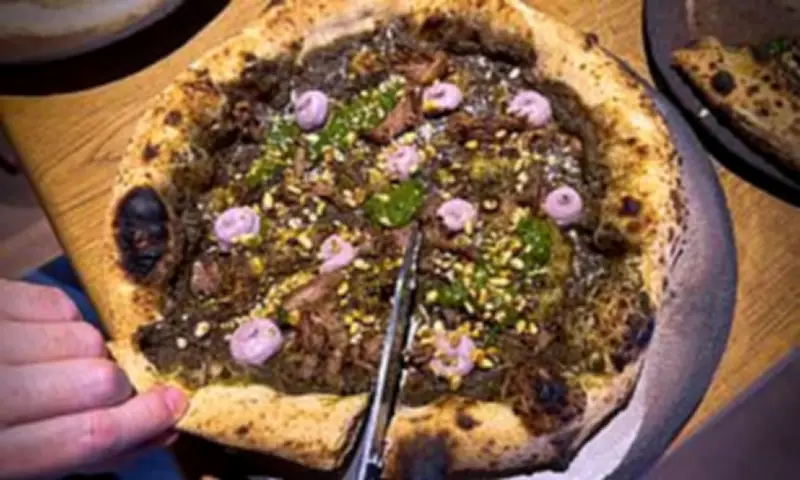
Budapest Pizzeria Unveils Ancient Roman Pizza Without Tomatoes or Mozzarella
Pizza lovers might need to brace themselves for a culinary surprise, as a unique dish inspired by the ancient Romans has hit the market, notably lacking the familiar mozzarella and tomato toppings. Chefs at Neverland Pizzeria in Budapest have crafted a limited-edition pizza that strictly uses ingredients that would have been accessible two millennia ago in the Roman Empire.
A Time-Travel Creation with Historical Ingredients
This innovative pizza features a blend of fermented spinach juice, olive paste, fish sauce, and confit duck leg. Conspicuously absent are tomatoes, which only arrived in Europe centuries later, and mozzarella cheese, which had not yet been invented during Roman times.
'Curiosity drove us to ask what pizza might have been like long ago,' explained Josep Zara, founder of Neverland Pizzeria. 'We went all the way back to the Roman Empire and wondered whether they even ate pizza at the time.'

While the modern concept of pizza—a flat round dough base topped with tomatoes and cheese—did not exist two thousand years ago, Romans did consume oven-baked flatbreads adorned with herbs, cheeses, and sauces. These ancient snacks, often sold in Roman snack bars, are considered the direct ancestors of today's pizza.
Inspiration from an Archaeological Discovery
In 2023, archaeologists uncovered a fresco in Pompeii depicting a focaccia-like flatbread topped with items such as pomegranate seeds, dates, spices, and a pesto-like spread. This discovery sparked Mr. Zara's imagination, leading him to develop a pizza-esque dish that could have been enjoyed in ancient Rome.
He embarked on extensive research into Roman culinary history, consulting with a historian in Germany and referencing the ancient cookbook 'De re coquinaria,' believed to have been authored around the 5th century. Based on his findings, Mr. Zara compiled a list of historically documented ingredients to present to the pizzeria's head chef.
'We sat down to imagine what we might be able to make using these ingredients, and without using things like tomatoes and mozzarella,' Mr. Zara said. 'We had to exclude all ingredients that originated from America.'
Challenges and Innovations in Dough Preparation
Head chef Gergely Bárdossy revealed that the project's constraints led to months of experimentation and several false starts. 'The fact that there wasn't infrastructure like a water system at the time of the Romans made things difficult for us, since more than 80 per cent of pizza dough is water,' he explained. 'We had to come up with something that would have worked before running water.'
Ultimately, the team settled on fermented spinach juice to help the dough rise. The base was made from ancient grains like einkorn and spelt, which were widely cultivated in Roman times, resulting in a slightly denser texture compared to most contemporary pizzas.
Toppings Fit for Roman Aristocracy
The finished pizza is adorned with ingredients associated with Roman aristocratic cuisine. These include an olive paste known as epityrum, a fermented fish sauce called garum, confit duck leg, toasted pine nuts, ricotta cheese, and a grape reduction.
'Although we wouldn't use all its ingredients for everyday dishes, there is a narrow niche that thinks this is delicious and is curious about it,' Mr. Bárdossy noted. 'Most people want more conventional pizza, so it's not for everyday eating. It's something special.'
Historical Context and Culinary Legacy
The painting that inspired this pizza was discovered on the wall of a house in Pompeii, the ancient Roman city destroyed by the eruption of Mount Vesuvius nearly 2,000 years ago. Experts at the archaeological park suggested that the depiction could be a distant ancestor of the modern dish. Interestingly, Pompeii is located just 14 miles from Naples, which is widely regarded as the modern-day home of pizza.

Ancient Roman cuisine centered on a Mediterranean diet of grains, olive oil, and wine, with meals heavily influenced by social class. While the poor relied on grain doles for porridge and bread, the wealthy indulged in elaborate feasts featuring exotic meats, fish, fruits, and honey-sweetened desserts. Key components of the Roman diet included staples like wheat-based bread and porridge, vegetables and legumes such as lentils and cabbage, flavourings like olive oil and herbs, the ubiquitous fermented fish sauce garum, and honey as the primary sweetener.