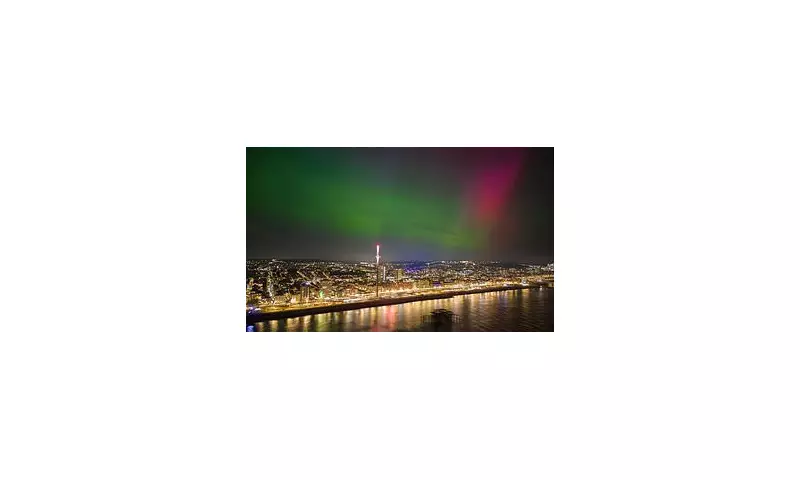
As the deep winter nights of February envelop the United Kingdom, astronomers and stargazers are preparing for what could be some of the most spectacular aurora-spotting opportunities of the year, all without needing to venture abroad. The Aurora Borealis, famously known as the Northern Lights, typically illuminates skies near the Arctic Circle, but during the period from September through March, its vibrant displays can extend much further south across the British Isles.
Prime Conditions for UK Aurora Viewing
A combination of heightened solar activity, clearer winter atmospheres, and extended hours of darkness has already led to numerous reported sightings throughout January. These have been documented from the rugged highlands of Scotland to the coasts of Northern Ireland, Wales, and various regions of England. In response to this growing phenomenon, the travel experts at Japan-101 have conducted an extensive analysis of one hundred UK towns and cities to pinpoint the optimal locations for witnessing this natural spectacle.
Methodology Behind the Rankings
Each location was meticulously evaluated and assigned a score out of one hundred, based on three critical environmental factors: levels of artificial light pollution, air quality and pollution metrics, and average cloud cover. These individual scores were then combined to produce a comprehensive index rating, also out of one hundred, providing a clear comparison of aurora-viewing potential across the nation.

Top Ten UK Locations for the Northern Lights
Securing the premier position with an impressive index score of 73.1 out of 100 is the Scottish city of Dundee. Researchers highlighted that Dundee benefits from exceptionally low air pollution and comparatively dark night skies, performing twenty-eight per cent above the national average in the study.
Eastbourne claimed a strong second place, achieving a score of 72.1 out of 100, which is twenty-six per cent higher than the UK average. Its coastal exposure and reduced light pollution contribute to notably clearer night skies, enhancing visibility for aurora chasers.
Chelmsford followed closely in third position, with limited cloud coverage and lower artificial brightness allowing it to outperform many larger urban centres. The top five was completed by Worthing in fourth place, praised for its expansive seaside vistas, and Colchester in fifth, with a score of 71.3 out of 100—twenty-four per cent better than the national average score of 57.3.
Further Notable Rankings
The analysis continued with Hastings ranking sixth, thanks to favourable conditions including low cloud cover and diminished light pollution. Brighton performed admirably to take seventh place, achieving a score of 70.2 despite its considerable size, while its neighbour Hove secured eighth position.
Cambridge earned ninth place with a score of 68 out of 100, benefiting from the relatively dark surrounding countryside, and Harlow rounded out the top ten, with an especially low artificial brightness level boosting its final score to 67.4.
Expert Advice for Aurora Enthusiasts
According to the study's researchers, individuals hoping to catch a glimpse of the Northern Lights should consider heading to elevated areas or coastal regions, steering clear of street lighting and urban glow. These strategies can significantly improve viewing chances, particularly if solar activity remains elevated in the coming weeks.
Nozomi Kato, a writer at Japan-101, commented on the findings, stating: 'Many British residents spend thousands of pounds travelling to destinations like Iceland or Norway to witness the Aurora Borealis, yet it is entirely possible to experience this dazzling natural display from the comfort of your own country.'
'Our research clearly identifies the best locations within the UK to see the Northern Lights, with Dundee emerging as the top contender. However, regardless of your location, we encourage everyone to seize the opportunity to try and observe this magical phenomenon during this period.'

Broader Context and Future Predictions
This study arrives following insights from leading meteorologists who indicate that auroral activity is currently at a peak phase. British meteorologist John Griffiths, who has personally witnessed the spectacle, explained to the Daily Mail that the Northern Lights are generated by solar storms emanating from the sun and travelling through space.
He elaborated: 'When these solar particles collide with Earth's magnetic field, we experience vivid auroras. The intensity of these solar flares directly influences the strength and southern reach of the auroral displays. We are presently in a period of heightened solar activity, which correlates with more frequent and potent Aurora Borealis sightings.'
Furthermore, experts predict that by 2026, the Northern Lights could be stronger than they have been for over a decade, offering even more spectacular viewing opportunities in the years ahead. This makes the current winter season an ideal time for both seasoned astronomers and casual observers to explore the UK's top-rated locations for this breathtaking natural wonder.