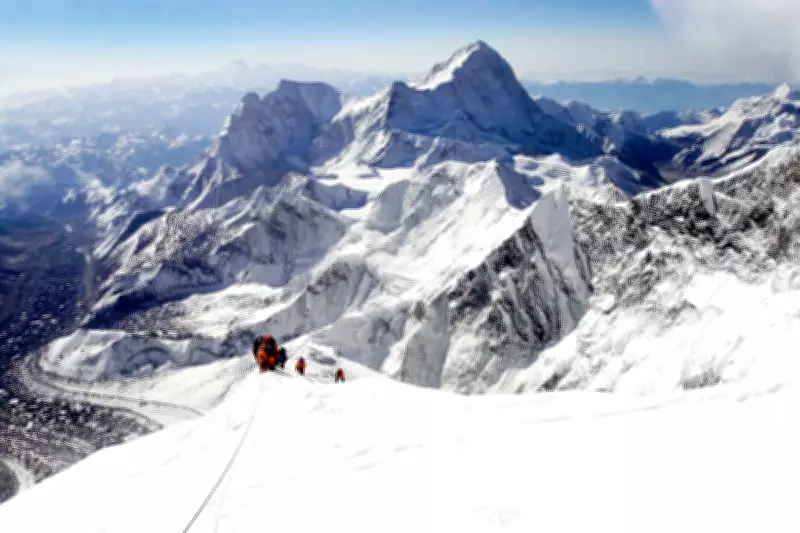
Hundreds of climbers are set to attempt Mount Everest this season, undeterred by a massive unstable ice block, known as a serac, and significantly increased permit fees. The dangerous conditions have delayed the opening of the Icefall route, typically accessible by mid-April, until 29 April.
Icefall Risks and Warnings
The Khumbu Icefall, a constantly shifting glacier, is considered one of the most dangerous sections of the Everest climb. This year, 'Icefall doctors' have issued severe warnings about a particularly unstable serac that could collapse at any moment. Mountain guide Lukas Furtenbach expressed serious concerns, noting that the serac poses a significant threat to climbers and Sherpas alike.
Expedition operators are implementing strict safety protocols to mitigate the risks. These include reducing loads carried by climbers and Sherpas, as well as carefully timing movements through the icefall to avoid the most hazardous periods. Despite these measures, the situation remains precarious.

Historical Context and Climate Concerns
The threat of falling seracs is not new. In 2014, a serac collapse triggered an avalanche that killed 16 Nepali guides, highlighting the deadly potential of the Khumbu Icefall. Additionally, climate change is accelerating glacier melting, further destabilizing the ice and increasing the frequency of such events.
This season's challenges come amid broader concerns about overcrowding and safety on Everest. In 2019, a 'traffic jam' near the summit contributed to the deaths of two climbers. While permit fees have risen, they have not deterred the hundreds of climbers eager to conquer the world's highest peak.