Flight Attendants' Secret Code Words for Rude Passengers Revealed
Flight Attendants' Secret Code for Rude Passengers

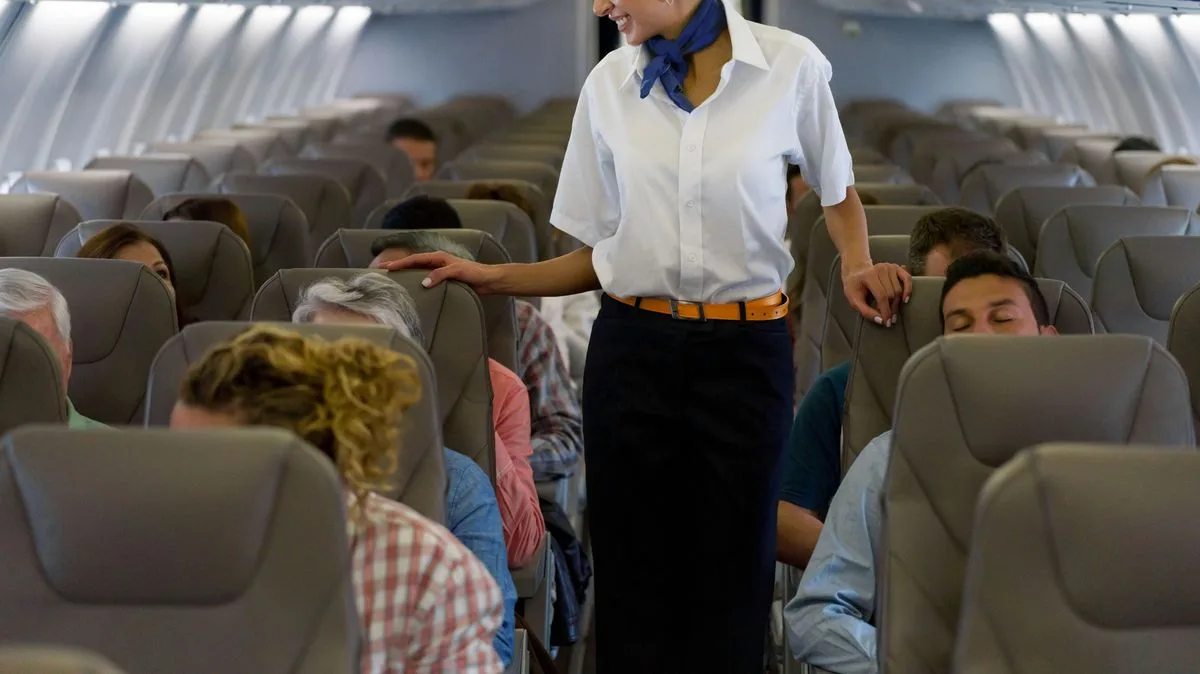
A flight attendant has shared the tell-tale signs that a passenger is a nightmare aboard an aircraft, revealing secret code words used by cabin crew to identify disruptive travellers. While the role may appear glamorous, involving travel to exotic destinations, flight attendants frequently contend with entitled and discourteous passengers who can significantly disrupt operations.

Secret Code Words for Disruptive Passengers

In an exclusive interview, an anonymous British flight attendant explained how certain passengers' behaviour causes problems for staff, leading to their identification through simple code words. The cabin crew member detailed: "There are a lot of things and icks from passengers that we can overlook, but if we say the word 'precious' it generally means that they're acting like a ****."

Once labelled as "precious", this passenger will be identified among the entire crew, which may subsequently affect the level of service they receive throughout the flight. The anonymous employee noted that alternative codes might exist across different airlines that she hasn't personally used with her colleagues.

The Infamous 'Philip' Designation

Another revealing code word comes from a flight attendant speaking to The Sun, who disclosed: "If you're labelled a 'Philip' then you've done something wrong and should probably expect to get bad service for the rest of the flight."

This particular designation originated from the term PILP - Passenger I'd Like to Punch - but has evolved over time to become slightly more subtle while retaining its negative connotation. Passengers branded with this label should be aware that their behaviour has been noted by the entire cabin crew team.

Operational Efficiency Through Coding Systems

The cabin crew member explains that countless codes exist primarily for operational efficiency. While there are different ways to identify passengers for various reasons, staff will never refer to travellers by their real names during internal communications.

She clarified this operational protocol: "If we are referring to passengers, we do not use your name; we use your seat number. So if someone wanted something, we wouldn't say 'Mary, sat in row 50, wants a coffee'. We would say, '50 Delta, 50 Kilo or 50 Charlie'. We use seat numbers and the phonetic alphabet; it's just easier."

Beyond Negative Codes: The 'Cheerio' Signal

Not all secret communications between cabin crew involve negative passenger behaviour. The flight attendant, who boasts two years' experience, disclosed an alternative discreet signal concerning attractive passengers: "This is an old one I've heard, but if we find you attractive, we would say 'cheerio' when you're leaving instead of goodbye."

She explained the reasoning behind this subtle approach: "Obviously, we have to be discreet and can not outwardly be like 'hey, you're hot', but that's a fun way to secretly flirt." This demonstrates that cabin crew communications encompass a range of passenger observations beyond just problematic behaviour.

Professional Protocol and Passenger Awareness

These coding systems shouldn't spark undue concern or intrigue among passengers, as cabin crew are simply working out how best to assist travellers without causing commotion or gossip. The use of seat numbers and phonetic alphabet represents standard operational procedure designed for efficiency and clarity during flights.

However, passengers should pay attention if they suspect they're being branded a "precious Philip" - this dual designation might indicate particularly problematic behaviour warranting an apology. Understanding these subtle communications can provide insight into how cabin crew manage challenging situations while maintaining professional decorum throughout flights.