

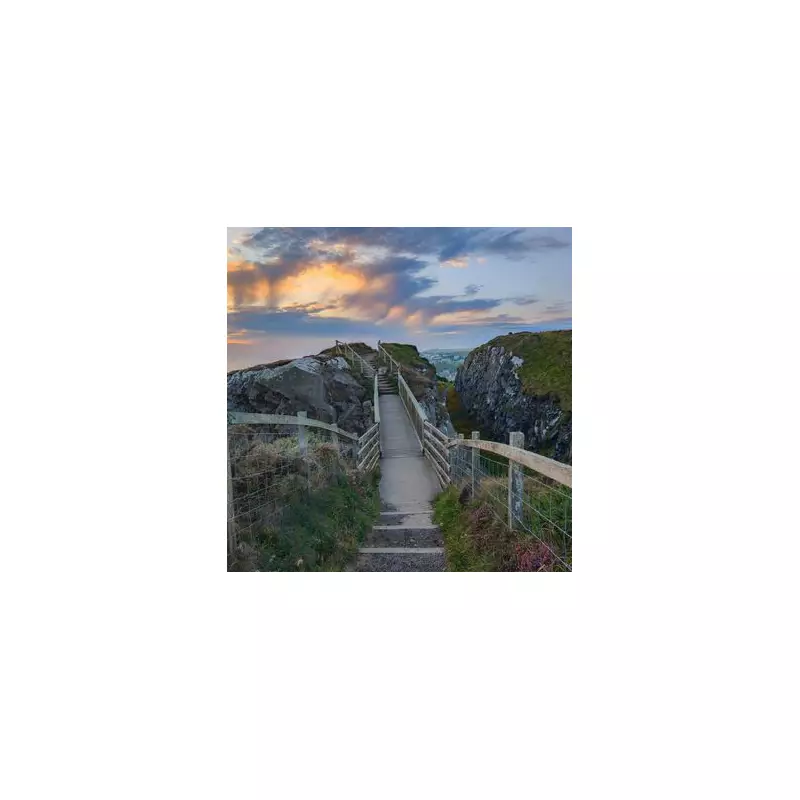
A dramatic coastal path in Northern Ireland, renowned for its vertigo-inducing drops and raw natural beauty, has been officially recognised as the cleanest walking trail in the United Kingdom.
A Pristine Path on the Edge
The Gobbins, a three-mile route along the County Antrim cliffs, claimed the top spot in a study by Independent Cottages. The ranking was based on an analysis of over 1,300 visitor reviews, in which there were no mentions of uncleanliness whatsoever. This accolade highlights not only the path's stunning scenery but also its impeccable maintenance and condition.
However, prospective visitors should note that the trail is currently closed due to rockfall. Anyone planning a trip is strongly advised to check the official website for the latest information on reopening.

200 Million Years in the Making
The extraordinary landscape of The Gobbins is the product of immense geological forces spanning eons. Around 200 million years ago, during the age of the supercontinent Pangaea, this part of northeast Ireland lay under a warm, shallow sea. The accumulated shells of tiny marine organisms formed a thick bed of limestone, which now forms the foundation of the coast.
This base was later capped by basalt from ancient volcanic eruptions. The relentless movement of tectonic plates and the grinding force of vast ice sheets during multiple ice ages then fractured and sculpted these rocks, creating the spectacular caves, stacks, and formations seen today.
A Thriving Habitat for Wildlife
The result is a coastline teeming with life, offering crucial habitats for a diverse array of birds and marine creatures. The Gobbins is home to Northern Ireland's only mainland colony of puffins, which nest in earth deposits left by glaciers. The cliffs and sea stacks are alive with guillemots, razorbills, cormorants, and kittiwakes.
Below the path, the plankton-rich waters of the North Channel attract fish, seals, and porpoises. Lion's Mane jellyfish, one of the largest species, migrate through the area. At low tide, rockpools reveal molluscs, sponges, and red seaweed, while hardy plants like spleenwort ferns and sea campion cling to the volcanic soil in the cliff cracks.
Victorian Engineering Brilliance
The transformation of this wild coast into a walkable attraction is largely thanks to the vision of Berkeley Deane Wise, a pioneering civil engineer. As Chief Engineer of the Belfast and County Down Railway, Wise was dedicated to safety and innovative design. His most significant achievement is widely considered to be The Gobbins Cliff Path, which opened up this remarkable landscape to the public.
Construction began in 1901 and was a formidable challenge. Steel girder bridges fabricated in Belfast were transported by barge and raft before being hoisted into position using lines lowered from the clifftop. The path swiftly became a major tourist draw, captivating visitors from across the British Isles with its unique beauty.
A correspondent in 1902 declared, "There is, in short, nothing like The Gobbins anywhere else in the world." The path stands as a lasting testament to Wise's engineering genius, created to allow ordinary people to experience one of nature's most awe-inspiring spectacles.






