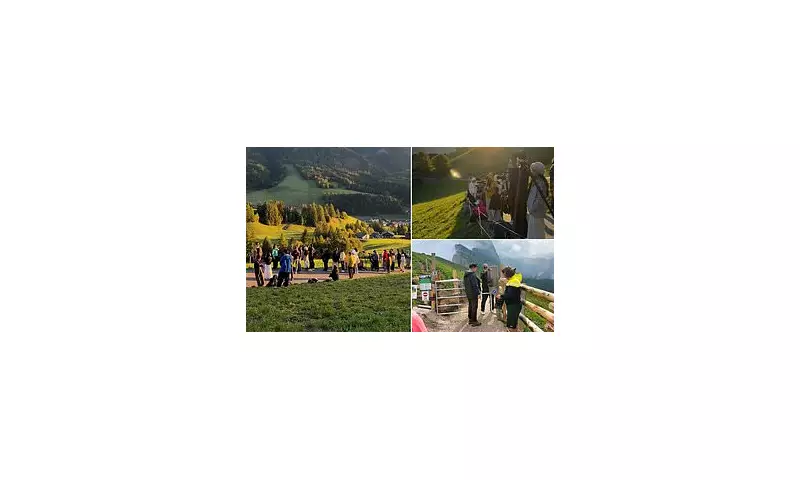
Italian Mountain Hamlet Takes Drastic Action Against Selfie-Seeking Tourist Influx
The serene mountain village of Funes in South Tyrol, Italy, has been compelled to implement stringent new measures to combat an overwhelming influx of tourists, primarily driven by social media fame and the pursuit of the perfect photograph. Once a quiet and idyllic retreat, the hamlet has become a hotspot for visitors, leading to significant disruption and rising tensions with local residents.
Barriers and Restrictions to Restore Peace
From mid-May through to November, the village council will install physical barriers on the main access road. These barriers will restrict entry to all holidaymakers except those with confirmed hotel reservations within Funes itself. Tourists arriving for day visits will now face a fifteen-minute walk up a designated footpath to reach the celebrated mountain viewpoints that have drawn such crowds.
This decisive action follows a previous, less effective attempt three years ago, where visitors simply circumvented the structures or followed residents through. The new barriers will be positioned further up the roadway, with staff present to monitor and control access rigorously. Additionally, parking fees in the area are set to increase as part of the broader strategy to manage visitor numbers.

Local Anger and Clashes with Visitors
The council's move comes in response to escalating frustration among Funes's 2,500 inhabitants. The surge in tourism has brought a host of problems, including rampant littering, trespassing on private property, and severe traffic congestion. Reports indicate that these issues have sparked direct confrontations, with some residents resorting to verbal abuse and even physical altercations with tourists.
Roswitha Moret Niederwolfsgruber, the council chief for social welfare, expressed the community's distress, criticising visitors for showing "no respect." She highlighted incidents of tourists wandering into private gardens and parking indiscriminately. "They want that photo at all costs. We are not living anymore," she told The Times.
Niederwolfsgruber clarified that the objective is not to eliminate tourism entirely but to deter disruptive "hit and run" visitors who cause havoc without contributing positively to the village. "We're giving you the chance to come, leave your car and enjoy our village," she stated, emphasising a desire for more respectful tourism.
The Social Media Phenomenon Driving the Crowds
The root of Funes's popularity explosion lies in digital culture. The area went viral on social media, particularly attracting Asian tourists. This trend reportedly originated from an image of the local church and mountains being printed on SIM cards by a Chinese phone operator back in 2005. More recently, influencers in China have suggested the landscape inspired the widely used mobile phone mountain emoji.
This digital fame has translated into real-world pressure. Carlo Zanella, president of the Italian Alpine Club walkers' association, described a frenetic tourist schedule to The Times, with coaches arriving in the morning and visitors rushing to multiple Italian destinations within a single week.
A Wider European Trend of Overtourism
The challenges facing Funes are not isolated. Across Europe, numerous picturesque locations are grappling with the pressures of overtourism driven by social media and rapid travel.

- South Tyrol, Italy: The Seceda valley experienced a similar tourist "storm" after a photo was featured during an iPhone 15 presentation in 2023.
- Lofoten Islands, Norway: In 2025, these islands suffered intense traffic jams due to a surge in fjord tourism.
- Mont-Saint-Michel, France: This UNESCO World Heritage tidal island attracts around 3 million visitors annually to its narrow streets, resulting in long queues and environmental strain.
- Hallstatt, Austria: Another World Heritage Site, this village of just over 700 residents can receive up to 10,000 visitors per day during peak season.
- Bibury, Gloucestershire, UK: Crowned the world's most beautiful village by Forbes, it can attract up to 20,000 visitors on weekends—over thirty times its population—leading to traffic gridlock and parking disputes.
The situation in Funes underscores a growing continental dilemma: balancing the economic benefits of tourism with the preservation of community life, local environment, and cultural heritage in the age of the viral selfie.