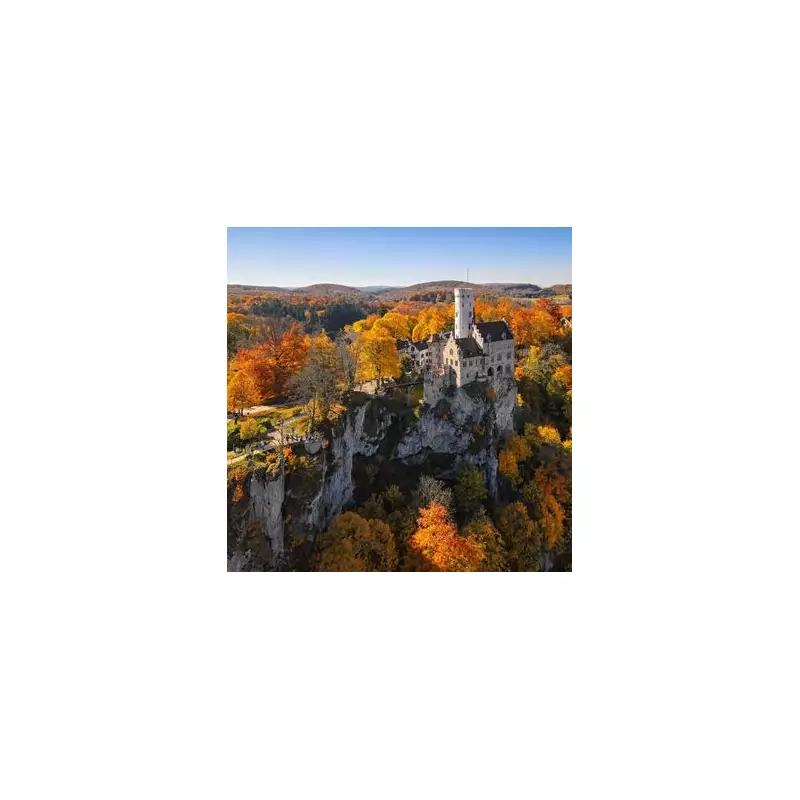
For travellers yearning for a serene holiday destination far from bustling crowds, one diminutive European nation emerges as the ultimate hidden gem. According to comprehensive research conducted by the cruise and tour operator Riviera Travel, the Principality of Liechtenstein provides breathtaking alpine vistas, refined elegance, and a wealth of attractions, all enjoyed in remarkable peace and quiet.
A Sanctuary of Seclusion
The data reveals a stark contrast in tourist footfall. Throughout the entirety of 2024, visitors to Liechtenstein recorded just over 200,000 overnight stays. When juxtaposed with Serbia, which ranks as the tenth least visited nation in Europe, where tourists accumulated a staggering 12,662,151 overnight stays, the exceptional tranquillity of Liechtenstein becomes profoundly apparent.
Geography of a Microstate
Nestled snugly between Switzerland and Austria, this serene haven ranks among the continent's—and indeed the world's—most compact sovereign territories. It holds the unique geographical distinction of being doubly landlocked, meaning it is entirely surrounded by other landlocked countries. Consequently, reaching any coastline requires journeying through at least two neighbouring nations.

Officially classified as a microstate, Liechtenstein is defined by its exceptionally modest population and geographical footprint. As Europe's fourth-smallest state, it spans a mere 62 square miles and is home to approximately 40,023 residents, securing its position as the sixth-smallest country globally.
Wealth and Governance
Despite its miniature dimensions, Liechtenstein boasts an enviable status as one of the planet's most prosperous nations. It remains a semi-constitutional monarchy, led by the Prince of the House of Liechtenstein, currently Hans-Adam II. As of March 2025, the Bloomberg Billionaires Index estimated his fortune at around £7.9 billion, ranking him as the 277th richest individual worldwide.
Remarkably, Liechtenstein is also among the rare countries globally that maintains zero national debt. Historically perceived as a billionaire tax haven, particularly during a notable scandal in 2008, the principality has since undertaken significant efforts to reform and distance itself from this reputation.
The Millionaire Concentration
In 2020, Liechtenstein achieved the world's highest density of millionaires, with an impressive 19% of households holding millionaire status. This placed it ahead of Switzerland in second place at 15%, followed by Bahrain at 13%, and Qatar at 12.7%.
Challenges of Alpine Terrain
As a quintessential Alpine country, Liechtenstein's rugged, mountainous landscape makes it a premier destination for winter sports enthusiasts, with resorts like Malbun drawing regular visitors. However, this very topography presents a significant logistical hurdle: it leaves virtually no feasible space for constructing a commercial aviation facility. This renders Liechtenstein one of the very few nations worldwide entirely without an airport.
Navigating Access
For inhabitants and visitors alike, the nearest airport is Altenrhein Airport in Switzerland's St. Gallen canton, roughly a 30-minute drive away. The larger Zurich Airport is also an option, requiring a journey of just under 90 minutes by road from the capital, Vaduz.
The principality further lacks its own railway stations and, unsurprisingly, any seaports. The most convenient rail connections are accessed via Swiss border stations at Buchs or Sargans, or through the Austrian station at Feldkirch. Each of these hubs offers excellent express train connections and coordinated coach services directly to Vaduz.
It is worth noting that Liechtenstein is not entirely devoid of aviation links; a privately operated helicopter landing site functions in the town of Balzers.
Political and Economic Alliances
While Liechtenstein is a proud member of the United Nations, it remains outside the European Union. Nevertheless, it actively participates in both the Schengen Area and the European Economic Area. The nation shares a comprehensive customs union and monetary union with Switzerland, formally adopting the Swiss franc as its official currency.