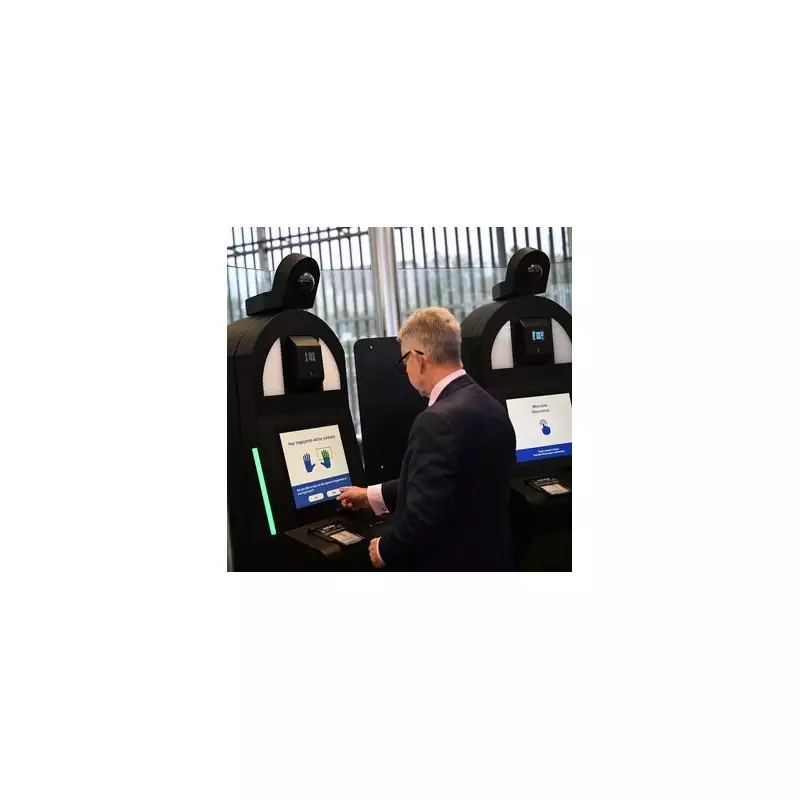
British holidaymakers and business travellers heading to Europe are being urged to brace for potentially longer queues at border controls from today. The expansion of the European Union's new automated Entry/Exit System (EES), while designed to eventually speed up entry, presents an immediate risk of increased delays, according to the travel association ABTA.
What is the new EU Entry/Exit System?
The automated Entry/Exit System represents a significant shift in how non-EU citizens, including British passport holders, enter the Schengen area. On a traveller's first arrival under the new regime, they must provide four fingerprints and a facial biometric scan at a dedicated machine. For subsequent trips, only one scan—either fingerprints or a facial image—is required alongside passport scanning.
The EU had set a deadline of 10 January 2026 for member states to implement the EES at half of their border crossings. The system is being phased in over a six-month period, meaning requirements may vary at different ports until April 2026. Manual passport stamping will run in parallel until 9 April, potentially creating a period of double administrative checks.

Potential for disruption and government response
ABTA has issued a clear warning to travellers. "As more places introduce the system, and more passengers are processed through it, there is a greater risk that people will face queues and delays," the association stated. They are urging border authorities to utilise contingency measures, such as temporarily standing down the system, to manage passenger flows.
The UK government has allocated £10.5 million to support major juxtaposed ports—where checks occur before departure from the UK. This includes Eurostar at St Pancras International, Eurotunnel at Folkestone, and the Port of Dover. The funding is intended for border infrastructure to smooth the transition.
Minister for Border Security and Asylum, Alex Norris, commented: "We recognise that EES checks will be a significant change for British travellers... The UK and EU have a shared objective of securing our borders." Minister for Aviation, Maritime and Decarbonisation, Keir Mather, emphasised the priority was to "minimise disruption for travellers and hauliers."
Key details for travellers to know
Registration is free and happens upon first arrival at an EU border where EES is operational. It creates a digital record valid for three years or until the passport expires. While each check is estimated to take 1-2 minutes, the cumulative effect could lead to longer wait times at border control.
The EES is mandatory for entry into the Schengen Area, which includes countries like France, Spain, Italy, Germany, Iceland, Liechtenstein, Norway, and Switzerland. It is not required for travel to Ireland or Cyprus.
Special rules apply for certain groups:
- Children under the age of 12 are exempt from fingerprinting but will still be photographed.
- All travellers, including infants, will have a digital record created.
Travellers do not need to take any action before their journey. The rollout comes as the UK implements its own Electronic Travel Authorisation (ETA) scheme for visitors to Britain.
The travel industry and port operators have contingency plans to manage queues, but passengers are advised to allow extra time for border formalities, especially during peak travel periods.