The Unspoken Pub Etiquette Under Threat
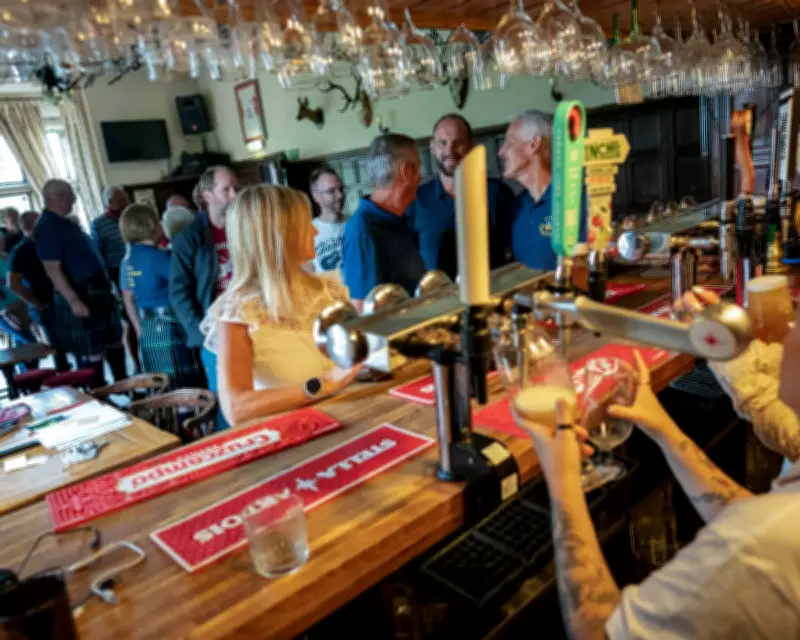
Across Britain's pubs, bars, and taprooms, a quiet revolution is unfolding that has left landlords and publicans utterly bemused. The traditional, unspoken system of lateral crowding at the bar—where patrons jostle for attention and bartenders serve at their leisure—is being systematically replaced by orderly single-file queues. This behavioural shift, described by many as "ridiculous," represents a fundamental change in how Britons interact in one of the nation's most cherished social institutions.
A Pandemic Legacy in the Pub
Paul Loebenberg, managing director of Wolfpack Brewing Company which operates a taproom in north-west London, expresses the frustration felt by many in the hospitality industry. "I'm not sure what else we can do to be honest," he said, observing the lines forming at his establishment. "Maybe there's something I've missed, but we've tried everything." His staff have taken to physically intervening, walking from behind the taps to free customers from queues and direct them toward the bar.
Jess Riley, a manager at Wylam Brewery's large bar and events space in Newcastle, identifies the pandemic as the clear catalyst. "It wasn't a thing before 2020, and then all of a sudden people really started to like a single-file line after Covid," she observed. Despite Wylam's multiple bars, including one stretching over 20 feet, customers persist in forming orderly queues that sometimes "snake around the building," refusing to utilise the available space.

The Psychology Behind the Queue
According to Professor John Drury, a psychology expert at the University of Sussex who specialises in crowd behaviour, this represents a genuine "new norm" emerging from the pandemic's social disruption. "For people who work in these industries, when we've spoken to them, a lot say that behaviour has gotten worse post-pandemic," Drury explained. "They say it has become normalised, and when you ask the general public, their response is more mixed, because not all of them realise that their behaviour has changed."
Drury, who consulted on the planning of the queue to pay respects to Queen Elizabeth II in 2022, suggests that despite the apparent illogic of queueing at spacious bars, social pressure ensures its persistence. "A norm means not only something that people generally do, it also means something that people in your group think is the right thing to do," he said. "So if you resist it, you are going to be regarded as a deviant, a troublemaker, a pain."
Business Impact and Customer Experience
The practical consequences extend beyond mere annoyance. Loebenberg reports that the queueing phenomenon is "hurting business and the experience of his customers." He describes the behaviour as spreading through social mimicry: "It's like the one person did it once and since then everyone has followed like lemmings, they all just copy each other's behaviour."
Riley recounts arguments with customers who queue, only to complain when she serves those who approach the bar directly. "I've argued with customers who queue before because I serve people who come to the bar and they've said it's unfair," she said. "And I just said: 'The whole bar is empty, why are you standing there when there's all this space.'"
A Cultural Crossroads
This development places Britain at a curious cultural crossroads. The nation famous for orderly queueing now faces the paradox of applying this behaviour in contexts where it actively undermines efficiency and tradition. Drury notes that despite data showing queueing rarely reduces waiting times, "people may still prefer it, knowing they're waiting just as long as the person in front of them"—a preference for perceived fairness over practical efficiency.
As publicans struggle to adapt, with staff training now including instructions to discourage queueing, the phenomenon shows little sign of abating. What began as a pandemic safety measure has evolved into a stubborn social norm, challenging centuries of pub etiquette and forcing the hospitality industry to confront changing British behaviours in one of its most traditional settings.